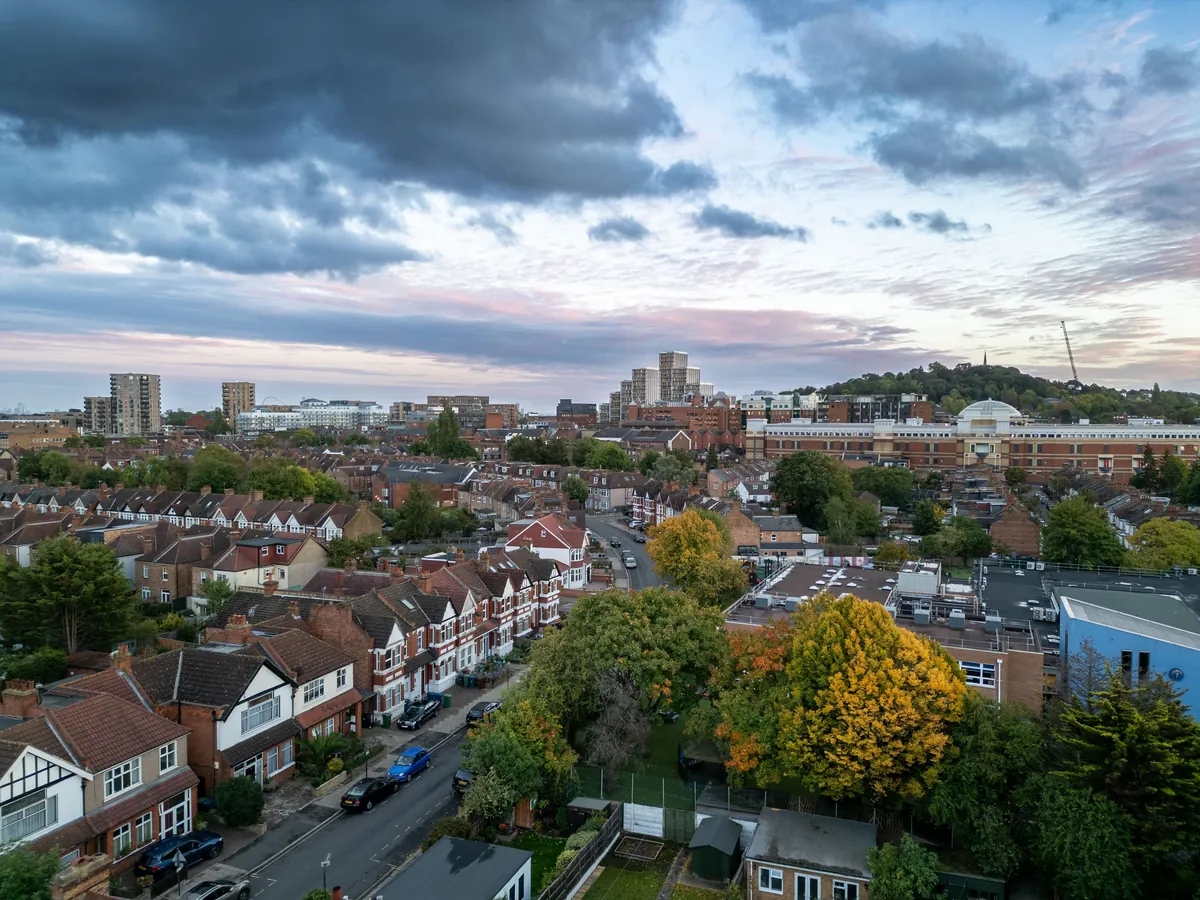
A row of London residential streets — mixed Victorian terraces and mansion blocks — in daylight, no single identifiable place.
The trust vacuum

How to spot a dishonest London neighbourhood guide

5
tells that separate a real guide from an advert — each checkable in the time it takes to read a page.

When I went through 63,973 London property sales for the research piece behind this site, the numbers weren't the only thing that surprised me. The other shock came from reading what's already written about these areas — every guide in love with its subject, every high street thriving, and not one willing to tell you the place was wrong for you.

The question I hear most from first-time buyers is some version of this: can you trust the area guides on Rightmove, on Zoopla, on the estate agent's site? Here is the test I'd give a friend — five tells, each one you can run in minutes.

Start here

The five tells, at a glance

A guide is probably selling to you, not informing you, if it shows any of these — and each one gets its own section below.

  1. No sources, or no dates. It quotes numbers with no source, or no date on the source.
  2. Only upsides. It lists only upsides and never a single trade-off.
  3. Vague adjectives. It leans on vague adjectives where a figure should be.
  4. Who profits. The publisher earns money when you buy or rent through them.
  5. Recycled copy. The same sentences appear in two areas with only the name swapped.
Tell one

No sources, or no date on the sources

A figure with no source and no date isn't evidence. It's decoration — and in London the number moves every year.

The fastest way to judge a guide's honesty is to ask one question of every claim: where did this come from, and when? An honest guide tells you. It writes "average 2-bed flat: £450,000 (Land Registry, Q3 2024)," not "property here offers real value." The source and the date are not decoration — they are the claim.

When you can't see where a number came from, assume one of two things: either the writer didn't check, or they'd rather you didn't. Neither earns your trust. The figures I'd act on are the ones I can trace.

Apply it

Take the three biggest claims on the page. For each, look for a named source and a date you can read. If a figure has neither, treat it as decoration, not evidence — and go to the original yourself: Land Registry for prices, Ofsted for schools, police.uk for crime, TfL for journey times.

Tell two

Only upsides, never a trade-off

A guide with only upsides has told you one thing for certain: it's selling.

Real places have trade-offs. The area with the fast train has the train noise. The flat with the extra bedroom is the one that needs the work. The street by the buzzy high street is the one that's loud on a Friday night. There is no London neighbourhood that is the right answer for every buyer, and anyone writing honestly about one knows it.

A guide that lists only positives has told you something — just not about the area. The honest "but" is the part you most need, because it's the thing you actually have to plan your life around.

Apply it

Before you trust a write-up, find its honest downside. If the guide names a genuine trade-off — and says who it does and doesn't suit — keep reading. If every sentence points one way, mark it as marketing and weigh it accordingly.

Tell three

Vague adjectives doing the work of data

Delete the area's name. If the sentence still stands, it was never about that area.

Watch for the words that sound like information and carry none. "Vibrant." "Bustling." "Sought-after." "Up-and-coming." "Excellent transport links." Each is a placeholder where a fact belongs, and each survives precisely because it can't be checked.

The test I use: delete the area's name. "Peckham is a vibrant, up-and-coming neighbourhood with excellent transport links" survives the deletion completely. Compare a real one: "The Overground from Peckham Rye reaches Canada Water in six minutes" — delete the name and it collapses, because it was carrying something specific.

Apply it

Highlight every adjective on the page. For each, ask whether a number or a name could replace it. The ones that can't be made specific — "vibrant", "desirable", "hidden gem" — are doing marketing's job, and you should mentally strike them out.

Tell four

Follow the money — who profits when you buy?

Ask who pays for the guide, and the rest of the tells explain themselves.

This is the tell that explains all the others. Property portals make their money from the agents who list on them. Agents make their money from completed sales. Developers make their money from new-build completions. Almost every source you'll read has a commercial reason to send you forward — and very little reason to send you home to think.

I'll be straight about my own position, because the test cuts both ways. Property Around London currently earns nothing from which area you choose — no commission, no referral fee, no agent or developer money. The plan is to fund the work through paid research for relocation firms and corporate mobility teams. Your postcode doesn't move our number either way.

Apply it

Find out who publishes the guide and how they make money. If they earn when you transact, trust the verifiable facts and discount the enthusiasm. If a source can show it earns nothing from your choice of area, that's the rare one whose judgement you can weigh more heavily.

Tell five

Recycled copy with the area name swapped

The same sentence in two different areas means nobody walked either street.

Open two guides from the same publisher, for two different areas, and read them side by side. If the structure is identical and the sentences rhyme — "a sought-after area popular with young professionals and families alike" in both, with only the name changed — you're reading a template, not research.

Genuine local knowledge resists copy-paste, because real areas don't share sentences. The thing that makes Catford worth writing about is not the thing that makes Walthamstow worth writing about. Sameness is the giveaway. When every area gets the same glowing paragraph, none of them got looked at.

Apply it

Pull up the same publisher's guide for a different area and read the two together. Count the sentences that repeat with only the name changed. The more matches you find, the less either page was actually about the place it claims to describe.

Run it on something you read this week

The five-minute version

Take the guide that nudged an area up or down your shortlist this week and run it through the five tells. It takes about five minutes.

1
Sources. Pick its three biggest claims and check each for a named source and a date.
2
Downsides. Scan for one honest trade-off. If there isn't one, mark the page as selling.
3
Adjectives. Highlight every word that survives deleting the area's name — that's the filler.
4
Money. Find out who publishes it and how they profit when you act.
5
Repetition. Open their guide for another area and count the recycled sentences.

By the end you'll know whether that guide earned the influence it had over your decision, or whether you moved a real choice on the strength of a brochure. Do it two or three times and the test stops being a checklist and becomes a reflex.

None of this is about any one website. It's the standard I try to hold this site to, and I'd rather you held me to it than took my word: every figure carries a named source and a date, every guide names the trade-offs, and we earn nothing from which area you choose. If you want to see it in full, start with what 63,973 London sales actually reveal.

Frequently asked

Frequently asked questions

Can you trust online London area guides? +
Treat them as a starting point, not a verdict. Judge any guide on five tests: does it cite sources with dates, does it name the area's downsides, does it use specific figures rather than vague adjectives like "vibrant", who profits when you buy through the publisher, and is the copy recycled across different areas. A guide that fails several of these is marketing, not advice.
Are portal and estate-agent area guides accurate? +
Often partly, but read them knowing the incentive. Portals and estate agents earn money when properties are listed and sold, which is a different goal from helping you choose the right area. That doesn't make every claim false — it means you should check the figures against a dated source and notice what the guide leaves out.
How do I research a London neighbourhood myself? +
Go to the primary sources directly: Land Registry for sold prices, Ofsted (reports.ofsted.gov.uk) for school ratings and inspection dates, police.uk for crime by postcode, and TfL's journey planner for real commute times. Cross-check any guide's claims against these, and always note the date of the data.
Why do neighbourhood guides only mention good things? +
Because most are written to support a sale. Real areas have trade-offs — noise, distance, cost, a slower line — and an honest guide names them so you can plan around them. A write-up with no downsides is usually selling, not informing.
What sources should a good neighbourhood guide cite? +
Named, dated, primary ones: Land Registry or Rightmove for prices, Ofsted for schools, police.uk or the Metropolitan Police for crime, TfL or National Rail for transport, and the local council for council tax. If a figure has no source and no date, don't rely on it.
The trust series

Want the next piece when it goes live?

This is part of a series on reading London property research honestly — how to read an Ofsted rating, a commute time, an area's crime score. One email when each one publishes. No spam, no marketing, unsubscribe anytime.

One email per new piece in this series — typically every four to six weeks. No spam, no marketing, unsubscribe anytime. See our privacy notice.