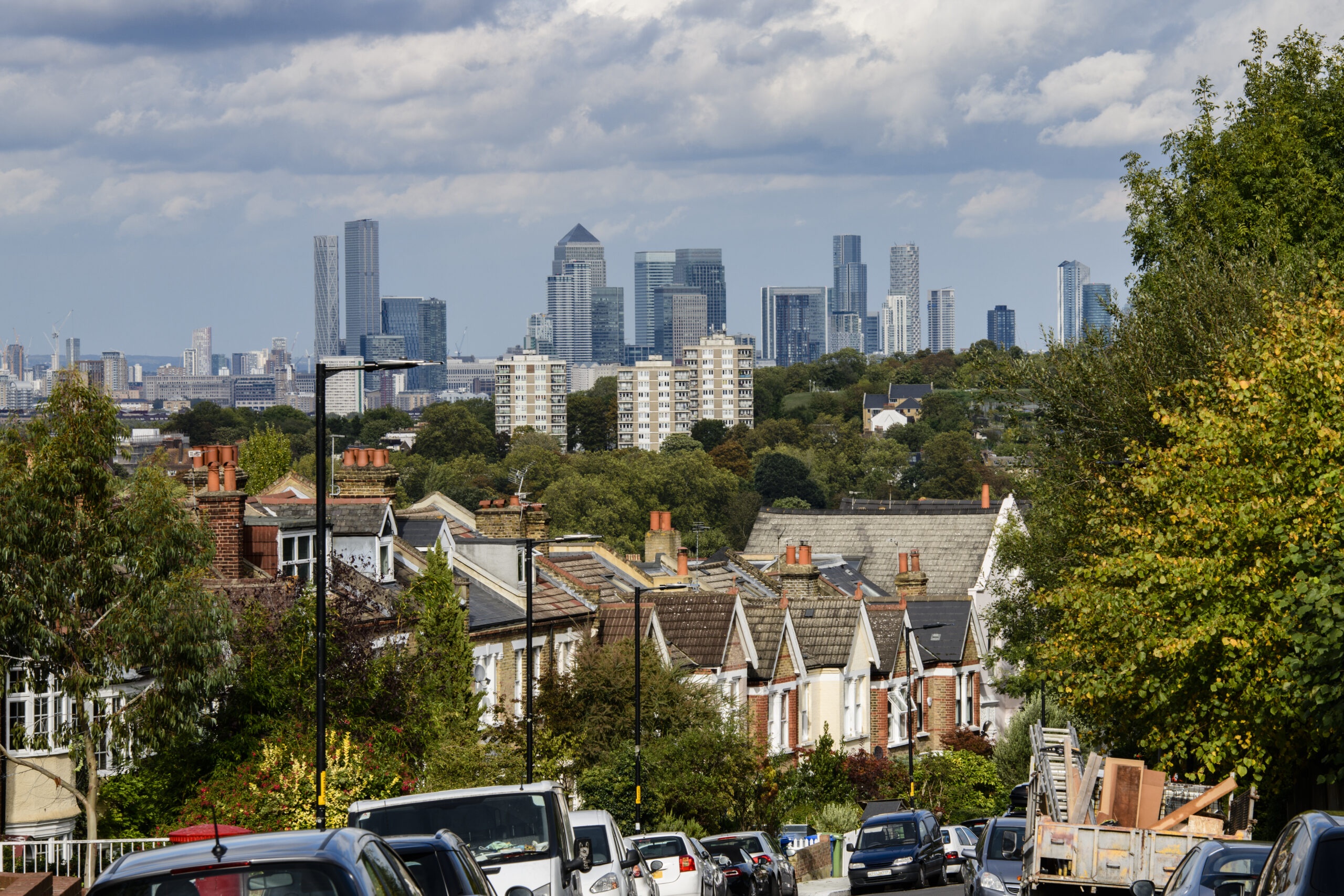
Property Prices in Dulwich
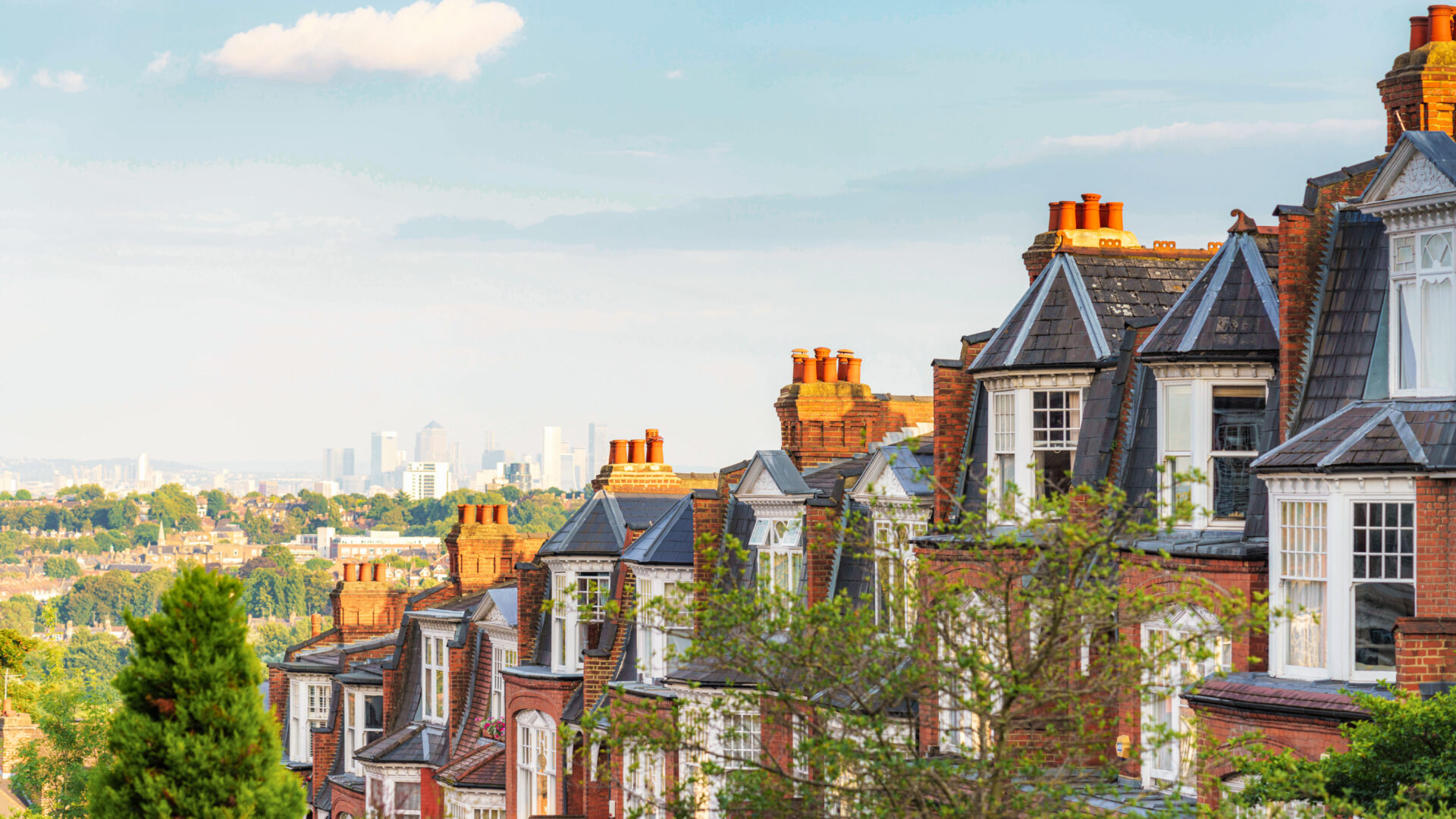
Source: HM Land Registry Price Paid Data — median sold prices over a rolling 12-month window
What Your Budget Buys
Source: HM Land Registry.
For lower prices nearby, see our Brixton guide.
Market Position & Budget Bands
Dulwich buys you a conservation-area village, a clutch of famous schools and genuine calm — and you pay handsomely for all three. The overall median sold price is £750k (HM Land Registry), almost level with adjacent East Dulwich and far above cheaper, better-connected Peckham one zone in. This is SE21, a postcode that straddles two boroughs — most of it Southwark, but the West Dulwich side in Lambeth, which matters once you reach council tax and parking. It is priced for the village, not the commute: there is no Tube here, only National Rail. It is also a genuinely thin, low-turnover, house-led market — little comes up, and buyers wait for the right property — so the medians describe the shape of the market rather than promising what any given street will do.
What Your Budget Buys
Flats are the entry point — period conversions and a smaller number of purpose-built blocks — from around £134k to £880k, typically £436k.
Houses are what Dulwich is really about, and they are expensive. Terraced homes sit at a £950k median (£455k to £2.83m); semi-detached houses at £1.83m (£552k to £3.39m); and detached houses — the large villas of the conservation area — at £2.15m, running up to £3.50m. With so few sales across the whole area, treat each figure as the shape of a scarce market rather than a shelf you can shop.
What Drives Values
Dulwich’s value rests on things that barely change: a protected conservation-area village of Georgian and Victorian houses, some of London’s best-known schools (Dulwich College, Alleyn’s, JAGS), the parks and the picture gallery, and a calm its buyers pay a premium for. What holds it up further is scarcity — a thin, tightly-held market where little comes to market. What tempers it: there is no Tube, only National Rail, so this is a village-and-schools play rather than a commuter one, and the entry price is high. It remains one of the few corners of south-east London still growing. The live median and by-type figures are in the cards above and on the price comparison page.
Leasehold vs Freehold
Dulwich’s flats — mostly conversions of the large period houses — are predominantly leasehold, so check the lease length and service-charge history, particularly on the grander converted villas. The terraced, semi-detached and detached houses are almost all freehold, though much of the estate sits under the Dulwich Estate scheme of management, which adds its own consents and charges — worth checking before you offer.
Rental Yields (Buy-to-Let Context)
Dulwich is a low-yield, capital-growth rental market — you buy here for the appreciation and the tenant covenant, not the income. One-bed flats let for roughly £1,650–£1,800 a month and two-beds for around £1,950–£2,250 (Zoopla SE21 listings), putting gross yields at roughly 3.5–4.5% — below what an outer-London or regional flat returns. Tenant demand is steady and skews to families and professionals who want the schools, the parks and the calm rather than a fast commute, so the tenant covenant is strong and voids are short.
How Dulwich compares nearby
Median sold price, all property types, against the nearest comparable areas we cover.
HM Land Registry · prices last updated 5 August 2026
Schools in Dulwich
🏫 Primary
🏛 Secondary
Dulwich Hamlet Junior School
Dulwich Village Church of England Infants' School
Rosendale Primary School
Dulwich Wood Primary School
Judith Kerr Primary School
Paxton Primary School
St Anthony's Catholic Primary School
Harris Boys' Academy East Dulwich
Kingsdale Foundation School
Data: Ofsted, 2026
School Overview
Schools are the reason most people say “Dulwich” — but the PAL school score of 42 only counts the state sector, and that gap is the whole story. There are 9 schools within reach rated Good or Outstanding, including 5 rated Outstanding by Ofsted, with 92% Good or Outstanding overall. Of those, twelve are state-funded and five are independent. The state picture is strong on primaries and thinner on secondaries; the fame rests almost entirely on the fee-paying schools, which the score does not credit. Both halves are covered below, honestly.
Primary Schools
The state primary offer is genuinely strong, with three Outstanding schools at its core. Dulwich Hamlet Junior School (Dulwich Village, SE21 7AL) is rated Outstanding (Ofsted, March 2023), and Dulwich Village CofE Infants’ School (SE21 7BU) is Outstanding (Ofsted, October 2023) — together they form the classic village infant-to-junior route. On the West Dulwich side, Rosendale Primary School (Rosendale Road, SE21 8LR) is Outstanding (Ofsted, April 2024), though it sits in Lambeth, not Southwark. The Good primaries fill in around them: Dulwich Wood Primary School on the Kingswood Estate (SE21 8NS) is Good (Ofsted, July 2022); Judith Kerr Primary School in Herne Hill (SE24 9JE), an English–German bilingual free school, is Good (Ofsted, May 2022); and St Anthony’s Catholic Primary School in East Dulwich (SE22 0LA) was Good at its last graded inspection (Ofsted, November 2021), though it converted to academy status in May 2024 and has no fresh inspection yet. Paxton Primary School (Good, Ofsted June 2024) is often mentioned locally but sits just outside the postcode in SE19.
Secondary Schools
State secondary choice is thinner than the primary list, but it includes two Outstanding schools. Harris Boys’ Academy East Dulwich (SE22) is Outstanding (Ofsted, November 2023) and posts a Progress 8 of +0.98 (Department for Education, 2023/24) — an exceptionally strong figure, placing it among the top performers nationally. Kingsdale Foundation School (Alleyn Park, SE21 8SQ) is Outstanding (Ofsted, March 2023), large and heavily oversubscribed. Its admissions are unusual and worth understanding, covered next.
Catchment Reality
A Dulwich address does not buy a state secondary place outright, because the two Outstanding secondaries do not admit on simple distance. Kingsdale uses fair banding plus aptitude scholarships: applicants sit three short online assessments and are placed into three ability bands, and the school admits a balanced intake across them, while up to the equivalent of 15% of places are reserved for music and sports aptitude (music by audition). Once banded, proximity to the school is the main remaining tie-breaker — so there is no guaranteed catchment, and the realistic advice is to register and prepare rather than to buy a specific street (Kingsdale Foundation School Admission Policy 2026/27). Harris Boys’ is a boys’ academy, so it serves only half the cohort, which sharpens the squeeze on girls’ secondary options nearby. For the Outstanding state primaries, faith and distance criteria bite: Dulwich Hamlet and Dulwich Village Infants’ draw tight admission radii in the village core, so if you are buying for those specifically, the streets immediately around SE21 7 are the ones that count. West Dulwich families fall under Lambeth admissions for Rosendale, not Southwark — another consequence of the borough boundary running through SE21.
Independent Options
Dulwich’s national reputation rests here, on the fee-paying schools, all descended from Edward Alleyn’s 1619 College of God’s Gift (the foundation split into separate schools in 1882, and into separate charities in 1995). Dulwich College (boys, SE21 7LD) charges around £31,986–£32,118 a year for day pupils (2026/27) and was inspected by the Independent Schools Inspectorate (ISI) in March 2025. Alleyn’s School (co-educational, Townley Road, SE22) charges around £32,490 a year for senior day pupils (2026/27), ISI-inspected October 2024. James Allen’s Girls’ School (JAGS) (East Dulwich Grove, SE22) charges around £30,438 a year for senior day pupils (2026/27), ISI-inspected November 2024, and posts an A-level average point score in the low 50s per entry (Department for Education, 2024/25 — an earlier figure of around 49.75 reflects a prior cohort). Dulwich Prep (Alleyn Park, SE21, now rebranded Dulwich Prep & Senior) runs to roughly £18,495–£30,255 a year depending on age (2026/27). These four are why “Dulwich” is shorthand for schools — and because they are private and ISI-inspected, they sit entirely outside the state-school score of 42. The result is an area whose schools are world-famous and whose state-school score is below average, both true at once.
For another area defined by its schools, see our Bromley guide.
Transport & Commute: Dulwich
Commute Times
Source: TfL Journey Planner, 2026. All times are station-to-station (boarding to alighting); add 5–10 minutes for walking to your nearest station and waiting.
For another rail-only SE suburb, see Beckenham.
Rail and Tube
Transport is Dulwich’s joint-weakest dimension on paper, and the reason is simple: there is no Underground. The network is National Rail only — but it is more useful than the score alone suggests, because the two main stations point at two different hubs. From West Dulwich (Zone 3), a direct Thameslink and Southeastern service reaches Victoria in 13 minutes — genuinely fast, and the headline link for anyone working the Victoria and West End axis. From North Dulwich (Zone 3), a direct Southern service reaches London Bridge in 15 minutes, the City and London Bridge axis. East Dulwich, Sydenham Hill and Herne Hill stations sit close by, widening the options. The catch is frequency and the lack of a Tube fallback: when a line is disrupted, there is no Underground alternative a short walk away, which is the honest reason the score reads 40 rather than something higher.
Bus Network
Buses do the orbital work the radial railways leave undone, linking Dulwich Village, West Dulwich, Herne Hill, East Dulwich and the surrounding commons and parks, and connecting through to Brixton, Peckham and Crystal Palace. For local trips — to the shops, the schools, the parks — the bus network is the everyday tool; for a fast run into central London, the stations are the only quick option.
Commute Times
| Destination | Route | Station-to-station |
|---|---|---|
| Victoria | Thameslink/Southeastern direct from West Dulwich | 13 min |
| London Bridge | Southern direct from North Dulwich | 15 min |
| Bank | Rail + change | 31 min |
| Canary Wharf | Overground via North Dulwich | 26 min |
Station-to-station, TfL Journey Planner, 08:30 weekday (refreshed June 2026). Add the walk to your station. West Dulwich → Victoria and North Dulwich → London Bridge are the two fast, direct runs; Bank and the deep City need a change and are slower. There is no Tube.
Cycling and Walking
Dulwich is walkable in pockets — the village crossroads, the Picture Gallery, Dulwich Park and the high street sit within an easy stroll of each other — but the area is spread out, and West Dulwich, East Dulwich and the village are separate walks rather than one continuous centre. The terrain rises toward Sydenham Hill in the south, so cycling is gently hilly that way and flatter toward Herne Hill. The whole area sits within the Ultra Low Emission Zone (ULEZ), which has applied London-wide since August 2023, so a non-compliant vehicle is charged daily here.
Driving and Parking
Dulwich gives reasonable road access toward the South Circular (the A205 runs through Dulwich Common and Tulse Hill), though none of it is quick at peak. The area is within the ULEZ but outside the Congestion Charge zone. Parking is changing: a new Controlled Parking Zone went live in January 2025 around Townley Road, Calton Avenue and East Dulwich Grove, operating short split hours (roughly 8:00–9:30am and 3:00–5:00pm) to deter school-run and commuter parking (Southwark Council, 2025). Much of the village remains uncontrolled, but the borough is rolling CPZs out, so check the specific street. Permit costs differ by borough — Southwark on the village side, Lambeth on the West Dulwich side — covered under Moving Practicalities.
Transport Verdict
Dulwich suits commuters to Victoria, the West End, London Bridge and the City fringe who want a fast, direct train and will trade the Tube for a village. The limitation is real and explains the score: there is no Underground, Bank (31 minutes) needs a change, and a disrupted line leaves no quick fallback — so anyone tied to a Canary Wharf or deep-City desk should weigh the daily reliance on a single rail route carefully, even though the Overground reaches the Wharf in 26 from North Dulwich.
Crime & Safety in Dulwich
Top Concern
Source: Metropolitan Police via data.police.uk · Population: ONS Census 2021 · Updated monthly
The Numbers
Safety is Dulwich’s standout dimension, and the numbers are plain. The area carries a PAL Safety Score of 80/100, and residential crime runs at around 80 crimes per 1,000 residents over the latest 12-month period (data.police.uk) — roughly 35% below the London average. This is genuinely low crime, not a quirk of how a busy town centre’s figures are calculated: Dulwich is a settled residential area with no large retail or nightlife district to inflate the count.
What the Data Tells You
The honest read is that Dulwich is a low-crime area, and one whose profile matters as much as its headline. It is theft-led rather than violence-led: the largest single category is Theft, at about 24% of recorded crime, which is what you would expect in an affluent, settled neighbourhood — opportunistic, low-level theft that follows value rather than the volume offending of a retail or nightlife district. There is no busy night-time economy here driving the figures up.
Street-Level Context
The pattern is quietly residential almost everywhere. The village core (SE21 7), the streets around College Road and the West Dulwich roads are settled and low-incident; what theft there is tends to follow value — homes, cars and bikes in an affluent area — rather than clustering in a single hotspot, because there is no town centre to concentrate it. The busier edges, where Dulwich meets Herne Hill, East Dulwich and the larger through-roads, carry marginally more activity than the village’s quiet interior, but the contrast is modest by London standards.
What Residents Say
Residents experience Dulwich as calm, and the data backs that up. The practical takeaway for a buyer is simply to match precautions to an affluent low-crime area: opportunistic theft is the realistic risk, so secure bikes with a proper D-lock, keep nothing visible in parked cars on the quieter roads, and treat the busier edges near the commons and through-routes with ordinary city sense after dark. None of this is unusual; it is the baseline care any affluent residential area warrants, in a place where the genuine low-crime figure is the headline, not a caveat.
Unlock the Complete Dulwich Guide
You’ve seen the headline data. Get the full picture — detailed narratives, council costs, community character, and our editorial verdict.
- 🎓 In-depth school, transport & crime analysis
- 🏛 Council tax & parking costs
- 🏘 Community character & local vibe
- ⭐ Editorial verdict, value assessment & future outlook
- 📦 Moving practicalities
By unlocking, you’re happy for us to email you this guide plus the occasional helpful update from Property Around London. No spam — unsubscribe anytime.
Council Fees in Dulwich
Council Tax (Annual)
| Band C | Band D | Band E |
|---|---|---|
| £1,749 | £1,967 | £2,404 |
Source: London Borough of Southwark, 2026
Council Tax Bands
Dulwich’s council tax depends on which borough your street sits in — the SE21 boundary runs between Southwark and Lambeth. On the Southwark side (Dulwich Village and most of SE21), the Band D charge is £1,967, with Band C at £1,748 and Band E at £2,404 (London Borough of Southwark, 2026/27). Southwark’s council tax is among London’s lower charges. On the West Dulwich side, Lambeth sets the bill, and its Band D is higher — roughly £2,047 for 2026/27 (London Borough of Lambeth, 2026/27) — so two neighbours a few streets apart can pay meaningfully different amounts. Most period flats fall in Bands C–E and the large village houses in Bands F–H.
Local Authority Services
Southwark and Lambeth each run their own collections, recycling and services, so what you get depends again on the boundary. Both provide kerbside recycling alongside general waste. Southwark charges £84 a year for garden waste and £37 for bulky-waste collection of up to ten items (London Borough of Southwark, 2026/27); Lambeth charges £99 a year for garden waste and tiers its bulky service by item count (London Borough of Lambeth, 2026/27). For a West Dulwich house with a garden, the Lambeth garden-waste charge is the dearer of the two.
Waste and Recycling
The split runs through the bins. A Southwark address (Dulwich Village side) gets the £84-a-year garden-waste subscription and £37-per-collection bulky waste; a Lambeth address (West Dulwich side) gets the £99-a-year garden subscription and a tiered bulky charge (London Borough of Southwark / London Borough of Lambeth, 2026/27). For a village flat the garden-waste charge is rarely relevant; for a house with a large garden — common in the village core — it is a small annual cost to factor in, and worth checking which borough you are in before assuming the rate.
Libraries and Leisure
Both boroughs run library and leisure provision near the area, and the village adds its own civic texture — the Dulwich Picture Gallery (England’s first purpose-built public art gallery, on College Road) and its grounds, plus Dulwich Park with its boating lake and café. Belair Park sits over in West Dulwich beside the station, and Sydenham Hill Wood and Dulwich Wood — London Wildlife Trust ancient woodland, the largest remnant of the old Great North Wood — climb the ridge to the south-east. These green assets are covered in the verdict and FAQs below.
Dulwich Community Character
For a comparable village-feel community, see Walthamstow.
Where the School Run Sets the Pace
Step into Dulwich Village on a Saturday and the first thing you notice is what's missing: traffic, crowds, noise. The Georgian high street runs past the white Old College, a duck pond and a working tollgate on College Road — London's last — and the loudest sound is often a scooter convoy of children heading to the park.
The shops cluster tightly around the village crossroads. Gail's at 91 Dulwich Village does a brisk pastry trade from 8am, Redemption Roasters at number 29 pulls a queue for coffee roasted by prison-trained baristas, and Village Books on Calton Avenue — trading since 1925 — anchors the independent end.
Walk five minutes east and the streets give way to Dulwich Park, where the boating lake, the Dulwich Clock Café and wide flat paths fill with buggies and dog-walkers. The shift from polished village to open green is the whole appeal — and most of what the morning offers.
Last Orders Come Early
Evenings concentrate almost entirely on the Crown & Greyhound, the grand Victorian pub on Dulwich Village locals call “the Dog.” Reopened in 2018 after nearly three years dark, now with a hotel and a large beer garden, it carries most of the area's after-dark trade — a roast, a fireside pint, a quiet table.
Beyond it, Dulwich goes to bed early. There are no late bars, no clubs and little reason to be on the streets after ten; the village empties and the residential roads fall silent. “Dulwich itself is lovely but dull,” as one resident put it on Mumsnet. For genuine nightlife, people head to Herne Hill, Peckham or Brixton.
The Village Shortlist
Redemption Roasters (29 Dulwich Village) — the social-enterprise coffee shop where the beans are roasted by young offenders trained at HMP The Mount. The sunlit garden seats thirty, and the back story gives the flat white more weight than most.
The Crown & Greyhound (73 Dulwich Village) — “the Dog” is the village's one true evening anchor, a Grade II-listed Victorian pub with rooms upstairs and a tree-shaded garden behind. Sunday roasts book out fast.
Dulwich Picture Gallery (Gallery Road) — England's first purpose-built public art gallery, opened in 1817 to Sir John Soane's design. Locals use the free Sculpture Garden and Flotsam & Jetsam café as much as the paintings.
Village Books (1D Calton Avenue) — independent since 1925, with a children's section that draws the school-run crowd. Author events and a strong family range keep it on first-name terms with regulars.
Dulwich Park (Dulwich Clock Café and boating lake) — the green space the village revolves around, where the café terrace, pedalos and rowing boats turn a flat loop of path into the default family Saturday.
Bluebells, Boats and Bonfire Night
Spring. Sydenham Hill Wood, the ancient woodland on the village's edge managed by the London Wildlife Trust, carpets with bluebells, wood anemone and ramsons through April and May.
Summer. Dulwich Park's boating lake opens for pedalos and rowing boats, and the Picture Gallery's Sculpture Garden becomes an outdoor extension of the village.
Autumn. Bonfire Night centres on the Dulwich Fireworks Display at Dulwich Sports Club each November — a long-running, family-focused fundraiser that reliably sells out in advance.
Winter. The Dulwich Village Christmas Stocking brings festive shopping, carols and choirs to the village in early December, with school pupils providing much of the music.
Source: Google Maps, OS Open Greenspace & editorial research, 2026

One of London's low-crime, greenest and most school-famous villages — Georgian calm and £768k price tags, 13 minutes from Victoria but no Tube.
Dulwich is a Georgian village of period houses, ancient woods and renowned schools — calm, green and expensive. The average home sells for £750,000. West Dulwich reaches Victoria in 13 minutes, though there is no Tube.
Dulwich scores 45/100 on the PAL Score — our weighted rating across six core criteria that define what makes a London neighbourhood work for buyers.
How We Score
Each criterion is normalised on a 0–100 scale across every London neighbourhood we cover, so a score describes how Dulwich compares with the rest of the city, not an absolute mark.
The Breakdown
| Criterion | Score (/100) | What it means |
|---|---|---|
| Safety | 80 | Genuinely low crime — around 35% below the London average, theft-led and quiet rather than violence-driven. |
| Local Amenities | 49 | Village shops, the Picture Gallery and parks, but spread out and without a large central high street. |
| Property Price Affordability | 44 | Expensive — a median of £750,000; the premium buys the village and schools, not the commute. |
| School Quality | 42 | Strong state primaries but thinner state secondaries; the famous schools here are private, which this score excludes. |
| Transport Connectivity | 40 | Fast direct trains to Victoria and London Bridge, but no Tube and no fallback when a line is down. |
| Green Space Access | 39 | Dulwich, Belair and Sydenham Hill woods are genuine assets, but the normalised score lands below average. |
Scores use the PAL 0–100 scale, z-score normalised across all London neighbourhoods and displayed as integers. See the PAL Score Architecture for methodology.
What This Means
Safety (80/100) carries Dulwich — it is comfortably the strongest dimension, and a real one: recorded crime runs around 35% below the London average and is theft-led rather than violent, so this is genuine calm rather than a statistical quirk. After that, the scores tell a story of a prestigious area that PAL measures on dimensions where prestige does not help. Affordability (44) is weak because Dulwich is expensive, with a median around £750,000. Schools (42) score below average because the metric counts state schools — strong on primaries, thinner on secondaries — and excludes the private Dulwich College, Alleyn’s and JAGS that make the name famous. Transport (40) is held down by the no-Tube, rail-only reality, even though West Dulwich reaches Victoria in 13 minutes and North Dulwich London Bridge in 15. Green space (39) is the lowest of all, which surprises people given Dulwich Park, Belair Park and the ancient woodland — the parks are real assets, but the normalised metric lands below average and we report it as it is. The Local Amenities score (49) reflects a village that is pleasant but spread out, without one large high street. The resulting 45/100 is a Fair score, and the honest reading is that it is Fair despite the prestige, not because the area is poor — PAL scores affordability, connectivity and state schools, and Dulwich’s fame rests on none of them.
For a bigger, busier South London option, see our Croydon guide.
💰 Value Assessment
At an average of £750,000, Dulwich is among the priciest neighbourhoods we cover — terraces around £950,000 and detached homes around £2.15m (HM Land Registry). It edges adjacent East Dulwich and sits far above Peckham one zone closer in. The premium buys safety, period houses and the schools, not connectivity. It has held value better than most of inner SE London over recent years — but the affordability score of 44/100 is honest: this is a buy for those who can stretch.
Our Recommendation
Who's Dulwich for?
Dulwich is likely to suit you if:
- Are buying for the schools and settling in. The state primaries are strong (three Outstanding) and the private ecosystem — Dulwich College, Alleyn’s, JAGS — is among London’s best, all within a short walk or drive.
- Commute to Victoria or London Bridge. West Dulwich runs direct to Victoria in 13 minutes and North Dulwich to London Bridge in 15 — two fast, direct links for a no-Tube area.
- Want a quiet, low-crime area. Recorded crime runs around 35% below the London average and is theft-led rather than violent — safety is Dulwich’s standout strength.
- Want a period house and green space. The village core is dominated by large Georgian, Victorian and Edwardian houses, with Dulwich Park, Belair Park and ancient woodland close by.
- Value scarcity holding value. Conservation controls and the Dulwich Estate keep supply tight, and prices are up 17.3% over five years (HM Land Registry) while Peckham has cooled.
Think twice if you:
- Are watching the budget. Dulwich is expensive — a median of £750,000 and a value score of 44 — and the premium over Peckham buys the village, not the commute.
- Need the Underground or a fast deep-City run. There is no Tube; Bank needs a change at 31 minutes, and a disrupted rail line leaves no quick fallback.
- Want lively evenings. This is a residential village with a quiet night-time scene — there is no real after-dark economy here.
- Plan to alter or extend a house. The Dulwich Estate’s Scheme of Management governs external changes on top of council planning, adding fees, a consultation period and lead time.
- Are buying a flat for yield. Gross yields sit at roughly 3.5–4.5% against high flat values — this is a capital-growth market, not an income one.
The Real Picture
Dulwich is a prosperous conservation-area village that scores merely Fair — and that contradiction is the point. It is safe, green, characterful and famous for its schools, but PAL measures affordability, connectivity and state schools, none of which are its strengths: it is expensive, rail-only with no Tube, and its school fame is private. What you actually get is calm, period houses, good state primaries, real green space and two fast trains, wrapped in a quiet that some buyers find idyllic and others find sleepy. It settles families and long-term rooters happily; it frustrates anyone who wants a Tube, a bargain or a buzzy evening.
Moving to Dulwich: The Practical Side
Council Tax
Dulwich straddles two boroughs, so the band depends on your street. Southwark side (Dulwich Village and most of SE21):
| Band | Annual charge (2025/26) |
|---|---|
| Band C | £1,748 |
| Band D | £1,967 |
| Band E | £2,404 |
Source: London Borough of Southwark, 2026/27. Bands below D are set by statute as fixed proportions of the Band D charge. The West Dulwich side falls in Lambeth, where Band D is higher (around £2,047, 2026/27). Confirm the current financial year on the relevant council’s website before relying on it
Parking
Parking rules differ by borough across the SE21 boundary, and the village is no longer entirely uncontrolled. A new Controlled Parking Zone went live in January 2025 around Townley Road, Calton Avenue and East Dulwich Grove, operating short split hours to deter school-run and commuter parking (Southwark Council, 2025). On the Southwark side, resident permits are emissions-based, running from about £99.90 a year for an electric vehicle to around £352.90 for a non-ULEZ-compliant diesel, with a ULEZ-compliant petrol mid-band near £225 (London Borough of Southwark, 2026/27). On the Lambeth (West Dulwich) side, permits are also emissions-based but pricier at the top, from about £136 a year to around £683 (London Borough of Lambeth, 2026/27). Much of the village core stays uncontrolled for now, but check the specific street, and check which borough it is in.
GP Surgeries
The West Dulwich/SE21 practice is The Old Dairy Health Centre (Croxted Road, SE21 8SZ), rated Good by the Care Quality Commission, though its last published inspection is dated (2014), so confirm the current position before relying on it. Nearby in SE22 are The Gardens Surgery (Good, CQC) and Dulwich Medical Centre at Crystal Palace Road (rated Requires Improvement at its July 2023 inspection, with a review noted as in progress). The nearest acute hospital with a 24-hour A&E is King’s College Hospital at Denmark Hill (SE5 9RS), run by King’s College Hospital NHS Foundation Trust — the major trauma centre for south-east London.
Utilities and Broadband
Inner-London coverage runs above the UK average of around 88% gigabit-capable (Ofcom Connected Nations 2025; thinkbroadband, 2026), with Virgin Media cable and Openreach full fibre both present in the area. No postcode-level percentage is published for SE21. Energy costs track the Ofgem outer-London regional average; the large period houses of the village core will have weaker energy ratings than newer flats, and many sit under the Dulwich Estate’s controls, which can limit external changes like external wall insulation or some glazing — so check the EPC and the Estate’s rules before planning energy work.
Removals and Access
Access is generally easier here than in dense inner London — the village and West Dulwich streets are wider and quieter than terraced Zone 2 — but two local wrinkles matter. First, the new Townley Road/Calton Avenue CPZ means a removals van on those streets may need a permit or dispensation during the controlled hours; arrange it in advance with the relevant council. Second, College Road carries a private tollgate run by the Dulwich Estate, so check your route if a large vehicle is approaching the village from the south. The flats around West Dulwich station can have the usual loading and lift constraints, so confirm access with the building before the day.
Frequently Asked Questions
Common questions about living in Dulwich, answered with data from our research.
Dulwich is expensive, and it is a thin market — only around 121 sales in the year to June 2026, most of them houses. The overall median sold price is £750,000 over the past year (HM Land Registry, to June 2026), but the median is a midpoint, not an entry price: the middle half of all sales ran from roughly £448,000 to £1.30m. Flats have a median £436k but start much lower and reach much higher (from £134k to £880k); terraced houses sit at a median £950k (from £455k to £2.83m); and semi-detached houses have a median £1.83m (from £552k to £3.39m), on a thinner set of sales. Detached homes barely trade — just four sales all year — so there is no reliable detached median; treat any single figure as noise rather than a benchmark. That puts Dulwich almost level with neighbouring East Dulwich (£760,000) and well above Peckham one Zone in (£525,000). The village core is dominated by large Georgian, Victorian and Edwardian semi-detached and terraced houses.
About 13 minutes to Victoria on a direct train from West Dulwich, and 15 minutes to London Bridge on a direct Southern service from North Dulwich — the two fast, headline links. Bank is around 31 minutes with a change, and Canary Wharf about 26 via the Overground from North Dulwich. These are station-to-station times (TfL, 08:30 weekday); add your walk to the station. There is no Underground in Dulwich — the network is National Rail only, so a disrupted line leaves no quick Tube fallback.
Yes, but with an important split. There are 9 schools within reach rated Good or Outstanding, including 5 rated Outstanding by Ofsted. The state primaries are strong — Dulwich Hamlet Junior, Dulwich Village CofE Infants’ and Rosendale are all Outstanding (Ofsted, 2023–2024) — and Harris Boys’ Academy East Dulwich (Outstanding, Ofsted November 2023) posts a Progress 8 of +0.98 (DfE 2023/24). But Dulwich’s national fame rests on its private schools — Dulwich College, Alleyn’s and JAGS — which are fee-paying and inspected by the ISI, not Ofsted, so they sit outside the state-school score.
Dulwich is a genuinely low-crime area — it is the neighbourhood’s standout dimension, with a PAL Safety Score of 80/100. Residential crime runs at around 80 crimes per 1,000 residents over the latest 12-month period (data.police.uk), roughly 35% below the London average. It is also theft-led rather than violent: the largest category is Theft, about 24% of recorded crime, and it tends to be opportunistic, low-level theft rather than the volume offending of a town centre.
It depends on which borough your street is in — SE21 straddles Southwark and Lambeth. On the Southwark side (Dulwich Village and most of SE21), the Band D charge is £1,967 for 2026/27, among London’s lower rates. On the West Dulwich side, Lambeth sets a higher Band D of around £2,047. So two neighbours a few streets apart can pay meaningfully different bills. Most period flats fall in Bands C–E and the large village houses in Bands F–H.
It depends what you want. Dulwich is the premium, quieter option — safer, greener, with the famous schools and a conservation-area village feel — and it has grown 17.3% over five years (HM Land Registry). Peckham is markedly cheaper (£525,000 median versus £750,000), Zone 2 with the Overground, livelier and grittier, but it has cooled (−0.9% over five years). If you want calm, schools and period houses and will trade connectivity, Dulwich wins; if you want a buzzier, better-connected area at a lower price, Peckham does.
No — Dulwich has no Underground station. The network is National Rail only, served mainly by West Dulwich (direct to Victoria in 13 minutes) and North Dulwich (direct to London Bridge in 15), with East Dulwich, Sydenham Hill and Herne Hill nearby. The Overground reaches Canary Wharf in about 26 from North Dulwich. The lack of a Tube — and of a quick alternative when a rail line is disrupted — is the main reason the transport score reads 40 despite those fast Victoria and London Bridge links.
The Dulwich Estate is the historic charity that owns the freehold of around 1,500 acres in Dulwich, descended from Edward Alleyn’s 1619 College of God’s Gift. It runs a statutory Scheme of Management, dating from 1974, that governs external alterations to roughly 3,800 freehold properties even after owners have bought their freehold. In practice, if you want to extend, convert a loft, replace windows or do significant external work, you typically need the Estate’s consent as well as council planning permission — with its own fees, a consultation period and several weeks of lead time. It is the single most defining feature of owning here, and the main reason so little is built.
Because PAL scores affordability, connectivity and state schools — not prestige or private schools. Dulwich is safe (its standout, with recorded crime around 35% below the London average), green and characterful, but it is expensive (value score 44), rail-only with no Tube (transport 40), and its school fame is private, so the state-school score is 42. Add those up and the overall lands at 45/100 — Fair. The score is low despite the prestige, not because the area is poor; it simply measures the things prestige does not buy.
Data from HM Land Registry, Ofsted, Metropolitan Police & TfL. Page last regenerated 31 August 2026.
Moving to Dulwich?
Get our free moving checklist and local tips delivered to your inbox.
No spam. Unsubscribe anytime.