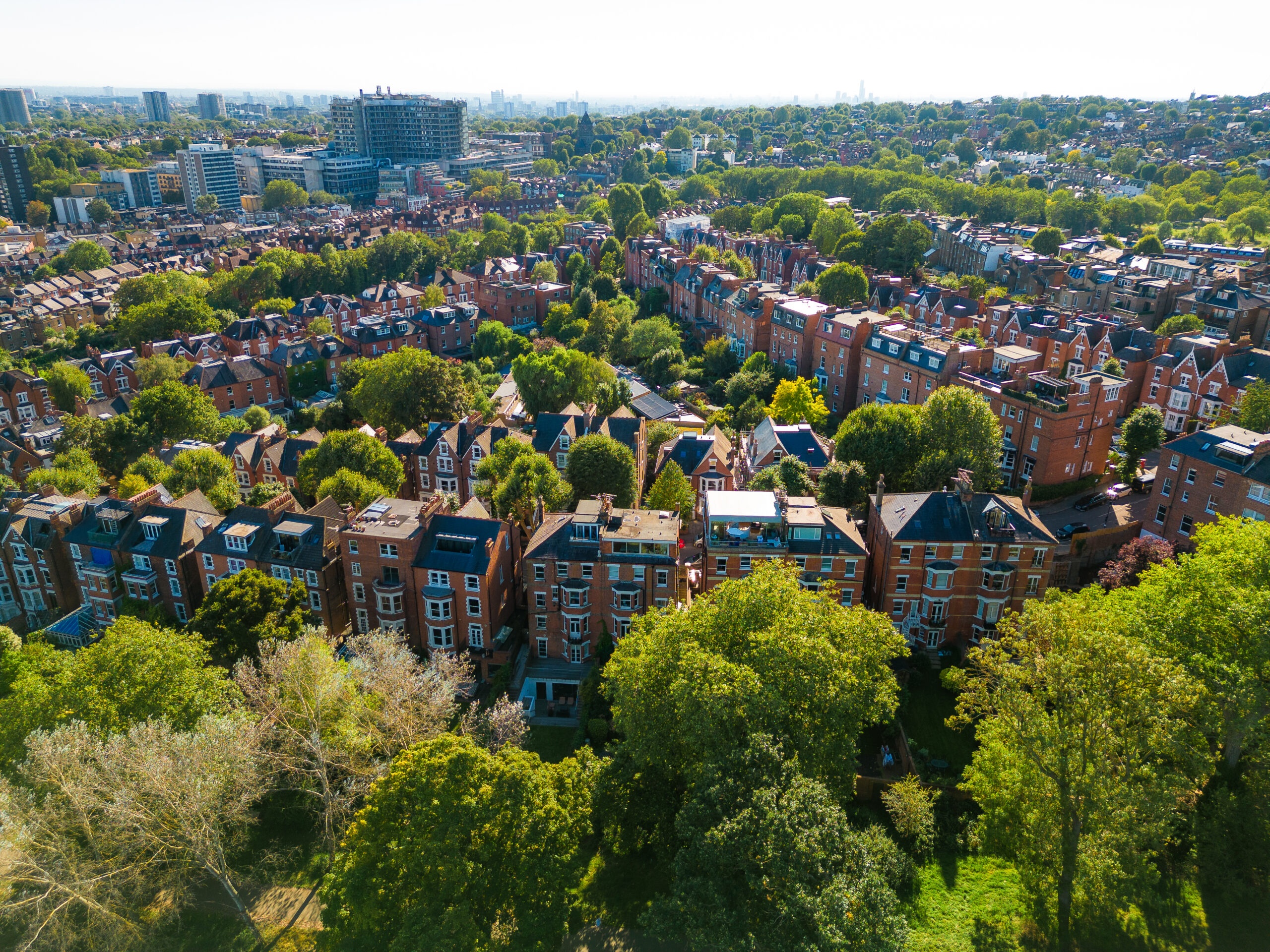
Property Prices in Hampstead
Source: HM Land Registry Price Paid Data — median sold prices over a rolling 12-month window
Source: HM Land Registry.
Market Position & Budget Bands
Hampstead rewards a warning before a headline. The overall median sold price is £980k (HM Land Registry) — the midpoint of the market — but read it for what it is: nearly four in five homes sold here are flats, so the midpoint sits in flat territory and says almost nothing about what a house costs. This is NW3, Zone 2, wholly within the London Borough of Camden, and one of the most expensive neighbourhoods in the country. It is best read as two markets — flats and houses — each with its own floor, middle and top, rather than as a single number. Most of the fabric is Georgian and Victorian houses, many long ago carved into period-conversion flats.
What Your Budget Buys
The flat ladder is the wide one, and the way most people buy into Hampstead: it starts from around £198k for a studio and climbs to £4.50m for the best mansion-block and penthouse stock off Fitzjohn’s Avenue, with the typical (median) flat about £850k. Many are period conversions carved from the Georgian and Victorian houses that dominate the fabric.
The house ladder is a separate, far pricier and much thinner market. Terraced houses — the Georgian survivors of Church Row, the Victorian villas of the hillside — start around £880k, with a typical sale near £2.19m and the dearest reaching £6.35m. Semi-detached and detached houses are rarer still — a bare handful trade in a year — at £3.85m and £11.96m respectively, running to the top of the London market; treat these as the shape of a scarce market rather than a going rate.
What Drives Values
Hampstead’s value rests on things nowhere else in London can replicate: the Heath, a genuine village on a hill, a Georgian and Victorian conservation-area fabric, the schools, and a global-buyer reputation that makes it a capital-preservation address in every cycle. What tempers it, if anything: entry is expensive at every level, the house market is thin and tightly held, and yields are among the lowest in the country — this is a place to hold for the address and the resilience, not for income or quick turnover. The live median and by-type figures are in the cards above and on the price comparison page.
Leasehold vs Freehold
Hampstead’s flats — overwhelmingly period conversions of the large Georgian and Victorian houses, plus the mansion blocks — are predominantly leasehold, so lease length and service-charge history are critical, and on the grander mansion-block stock the service charges can be substantial. The houses of Church Row and the hillside are largely freehold, though most sit within the conservation area, which governs what can be altered.
Rental Yields (Buy-to-Let Context)
Hampstead is a low-yield, capital-preservation rental market — you hold here for the address and the resilience, not the income. One-bedroom flats let for roughly £1,900–£2,600 a month and two-beds for around £2,800–£4,500, with the mansion-block and period-conversion stock at the top of those ranges (Zoopla and Rightmove NW3 listings), putting gross yields at roughly 2.5–3.5% — among the thinnest in London. Tenant demand is strong and international — academics, professionals and families drawn by the Heath, the village and the schools — so the tenant covenant is excellent even as the income is modest.
How Hampstead compares nearby
Median sold price, all property types, against the nearest comparable areas we cover.
HM Land Registry · prices last updated 5 August 2026
Schools in Hampstead

🏫 Primary
🏛 Secondary
Christ Church Primary School, Hampstead
Fitzjohn's Primary School
Hampstead Parochial Church of England Primary School
New End Primary School
St Luke's Church of England School
Data: Ofsted, 2026
School Overview
Schools are one of Hampstead’s real draws, but the story has two halves that a single score can only tell one of. Hampstead has 5 state schools, all rated Good or Outstanding with 1 rated Outstanding — a clean sweep on the state Ofsted picture, framed here across the wider NW3 catchment. Counting the independents, that is 14 schools in all. The defining feature, though, is that 9 of the 14 are independent, fee-paying schools — one of London’s densest private-school clusters. So the PAL schools score, which reads high, reflects the strong state Ofsted record; the area’s reputation for schooling rests heavily on fee-paying schools the score cannot credit. A state-only family and a private-school family therefore experience Hampstead’s “schools” very differently, and both cases are covered below.
Primary Schools
The state primary picture is strong: with all 5 of the area’s state schools rated Good or Outstanding and 1 Outstanding among them, a family relying on the state sector finds a genuinely good local offer across the NW3 catchment. On the independent side, Hampstead’s dense private cluster begins at pre-prep and prep level — The Hall School, a long-established boys’ preparatory school, and Devonshire House, a co-educational pre-prep and prep, are among the well-known names, alongside others in and around the Village. Because independent-school admissions run on assessment and registration rather than a catchment radius, a family targeting the private route is buying proximity and lifestyle rather than a school place tied to the address.
Secondary Schools
At secondary level the independent weighting is at its most pronounced, and this is where the two-halves story matters most. Hampstead’s best-known secondaries are fee-paying: University College School (UCS), a prominent independent school, and South Hampstead High School, an independent girls’ school, are among the names that give the area its schooling reputation. For a family relying on the state sector, the picture is the strong Ofsted record captured in the 5-state-school, 1-Outstanding summary across the wider NW3 catchment — good schools, but not the ones that carry the area’s fee-paying fame. The honest framing is that the “Hampstead schools” people talk about are, in large part, schools you pay for.
Catchment Reality
For state families, an NW3 address does not buy a place outright: popular state schools across the catchment run tight admission radii, so distance is the decisive criterion for community places and the last-offer distance against a specific address is the number that counts — not the postcode in general. For private families, the mechanism is entirely different: the well-known independents — UCS, South Hampstead High School, The Hall, Devonshire House and the rest of the cluster — admit on assessment and registration, often years ahead, so an address buys proximity and the daily logistics, not an offer. The practical advice is to work out which of the two routes you are on before you buy, because the two turn a Hampstead address into completely different things.
Transport & Commute: Hampstead
Commute Times
Source: TfL Journey Planner, 2026. All times are station-to-station (boarding to alighting); add 5–10 minutes for walking to your nearest station and waiting.
Rail and Tube
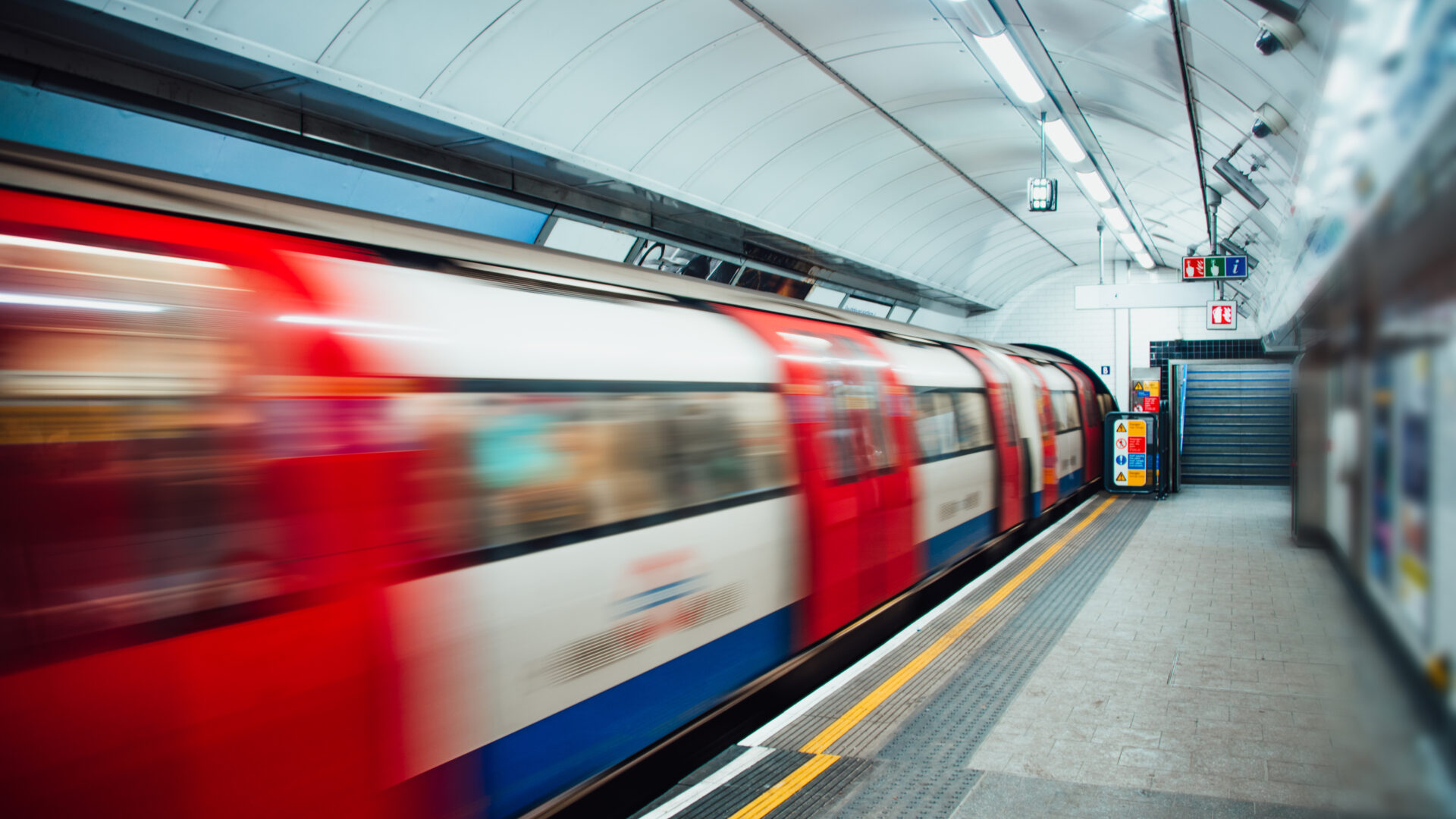
Transport is a genuine strength here, and it is worth leading with the fast bit. Hampstead sits on the Northern line (Edgware branch, Zone 2), and the station is a piece of Underground trivia in its own right — the deepest platforms on the network, 58.5 metres down, reached by lift or a 320-step spiral staircase rather than an escalator. From there the central-London access is quick and direct: King’s Cross in 11 minutes, Euston in 9, Oxford Circus in 14 (TfL Journey Planner, 08:30 weekday). Those are the headline numbers, and they are the reason the area’s connectivity is better than a Zone 2 hillside might suggest. Add the Overground at Hampstead Heath station (South End Green) and the Jubilee and Metropolitan lines a short way off at Finchley Road, and the everyday map widens further.
Bus Network
Buses handle the orbital trips the single Tube branch leaves undone, linking the Village and the High Street down toward Camden, across to Golders Green and Finchley Road, and along the Heath’s edges. On a steep hill with narrow lanes, the bus is the everyday tool for local journeys and for the routes the Northern line doesn’t serve; for a fast run into the centre, the Tube is the quick option.
Commute Times
| Destination | Route | Station-to-station |
|---|---|---|
| King’s Cross | Northern line direct from Hampstead | 11 min |
| Oxford Circus | Northern line direct | 14 min |
| Bank | Northern line direct | 20 min |
| Victoria | Northern line + change | 18 min |
| Canary Wharf | Change required | 35 min |
Station-to-station, TfL Journey Planner, 08:30 weekday (refreshed June 2026). Add the walk to your station — and, at Hampstead, the lift ride from the deepest platforms on the Underground. King’s Cross (11), Euston (9) and Oxford Circus (14) are direct and fast; Canary Wharf needs a change and is the one weak direction.
Cycling and Walking
Walking is the Village’s natural mode — the High Street, Flask Walk, Church Row and the Heath’s southern edge sit within an easy stroll of each other. The catch is the gradient: Hampstead is a genuinely steep hill, so the climb back from the Tube or the Heath is real exercise, and cycling is easy along the level stretches and stiff up the hill. The whole area sits within the Ultra Low Emission Zone (ULEZ), which has applied London-wide since August 2023, so a non-compliant vehicle is charged daily here.
Driving and Parking
Driving in and out of the Village is slow and space is tight — narrow historic streets, a hill and heavy weekend footfall make it the least convenient way to move. The area is within the ULEZ but outside the Congestion Charge zone. Controlled Parking Zones apply across the Village and the busier residential streets, so on-street parking is largely permit-controlled and scarce; check the specific street on the Camden parking map before assuming you can park. Permit costs are covered under Moving Practicalities.
Transport Verdict
Hampstead suits commuters to the West End, King’s Cross and the City fringe who value a fast, direct Northern line ride and will accept a deep station and a steep walk to reach it. The connectivity is genuinely good — King’s Cross in 11 minutes, Oxford Circus in 14 — but the score reads 51 because it is a single deep, moderately-slow Northern line branch in Zone 2, and Canary Wharf (35 minutes) needs a change and is the one awkward direction. Anyone tied to a Docklands desk should weigh that daily change; for a West End or King’s Cross commuter, the direct run is a real asset.
Crime & Safety in Hampstead
Top Concern
Source: Metropolitan Police via data.police.uk · Population: ONS Census 2021 · Updated monthly
The Numbers
Hampstead records a residential crime rate of 100 (the latest 12-month period, data.police.uk) — 21% below the London average. It earns a PAL safety score of 68/100: a lower-crime area on the numbers, though not the lowest-crime corner of London, because a busy, affluent high street draws the footfall of a destination village rather than a purely residential pocket. For a wealthy village with a tourist-drawing high street, a rate below the London average is a reassuring figure, and it is a real part of the area’s appeal.
What the Data Tells You
The honest read is that Hampstead is a low-crime area, and that the leading crime category tells you something specific about why the offending happens rather than raising an alarm. The top category is Theft, at roughly 29% of recorded crime — not violence. That is the footfall pattern of a wealthy village high street that draws tourists and shoppers: opportunistic theft — pickpocketing and shoplifting around the village and the Heath — concentrates where the crowds and the money are. It is texture, not a warning — the profile of a busy, affluent retail village rather than of a nightlife district or a high-volume-crime area. A rate 21% below the London average, with theft as the lead category, is exactly the pattern you would expect here.
Street-Level Context
The pattern is quietly residential across most of the area, with the concentration on and around the shopping streets. What theft there is follows the crowds — the High Street, Heath Street and the Village core on a busy summer Saturday put tourists, shoppers, bags and opportunity in the same narrow lanes, which is why theft leads the category list. Move off the High Street into the residential terraces and villa streets, or up toward the Heath, and the picture is settled and low-incident. The closer you buy to the High Street and the tourist footfall, the more of that everyday retail texture you take on; the quieter streets a few minutes out feel firmly residential.
What Residents Say
Residents experience Hampstead as calm and, if anything, sedate — a quiet village that gets busy on summer weekend afternoons and empties again by evening. The practical takeaway for a buyer is simply to match precautions to a busy, affluent high street: opportunistic theft is the realistic risk, so keep an eye on bags and phones along the High Street and Heath Street on a crowded weekend, secure bikes properly, and keep nothing visible in parked cars. None of this is unusual; it is ordinary city sense in a place where the genuine below-average crime figure is the headline, not a caveat.
Unlock the Complete Hampstead Guide
You’ve seen the headline data. Get the full picture — detailed narratives, council costs, community character, and our editorial verdict.
- 🎓 In-depth school, transport & crime analysis
- 🏛 Council tax & parking costs
- 🏘 Community character & local vibe
- ⭐ Editorial verdict, value assessment & future outlook
- 📦 Moving practicalities
By unlocking, you’re happy for us to email you this guide plus the occasional helpful update from Property Around London. No spam — unsubscribe anytime.
Council Fees in Hampstead
Council Tax (Annual)
| Band C | Band D | Band E |
|---|---|---|
| £1,962 | £2,208 | £2,698 |
Source: London Borough of Camden, 2026
Council Tax Bands
Hampstead sits within the London Borough of Camden. The Band D charge is £2,208, with Band A at £1,472, Band C at £1,962 and Band E at £2,698 for 2026/27 (London Borough of Camden, 2026/27). There is a wrinkle worth naming for Hampstead specifically: council tax bands are frozen at 1991 property values, so for the multi-million-pound houses here — most of which fall in the top Band H — the banding is almost irrelevant to the purchase. On a house worth several million pounds, the difference between council-tax bands is a rounding error against the price; the band matters far more to a flat buyer than to a house buyer at these levels.
Local Authority Services
Camden runs the borough’s collections, recycling and services across Hampstead. The council provides kerbside recycling alongside general waste collection, with garden-waste and bulky-waste collections available on the standard Camden terms — check the current charges and booking process on the Camden website before relying on them, as they are set annually. For a converted flat the garden-waste service is rarely relevant; for a house with a garden it is a small annual cost to factor in.
Waste and Recycling
Camden provides kerbside recycling alongside general waste collection across the neighbourhood, with garden-waste and bulky-waste collections as the chargeable extras on the standard borough terms. Because Hampstead sits wholly within Camden, the rate and the service are the same across the neighbourhood — there is no need to check which borough your street falls in.
Libraries and Leisure
Camden runs library and leisure provision in and around the area, but Hampstead’s defining amenity is green, not municipal: Hampstead Heath is the local back garden, with Kenwood House and its grounds on the northern edge and Golders Hill Park at the ornamental western end. These green assets are the area’s headline draw and are covered in the verdict and FAQs below.
Hampstead Community Character
The Village at the Top of the Hill
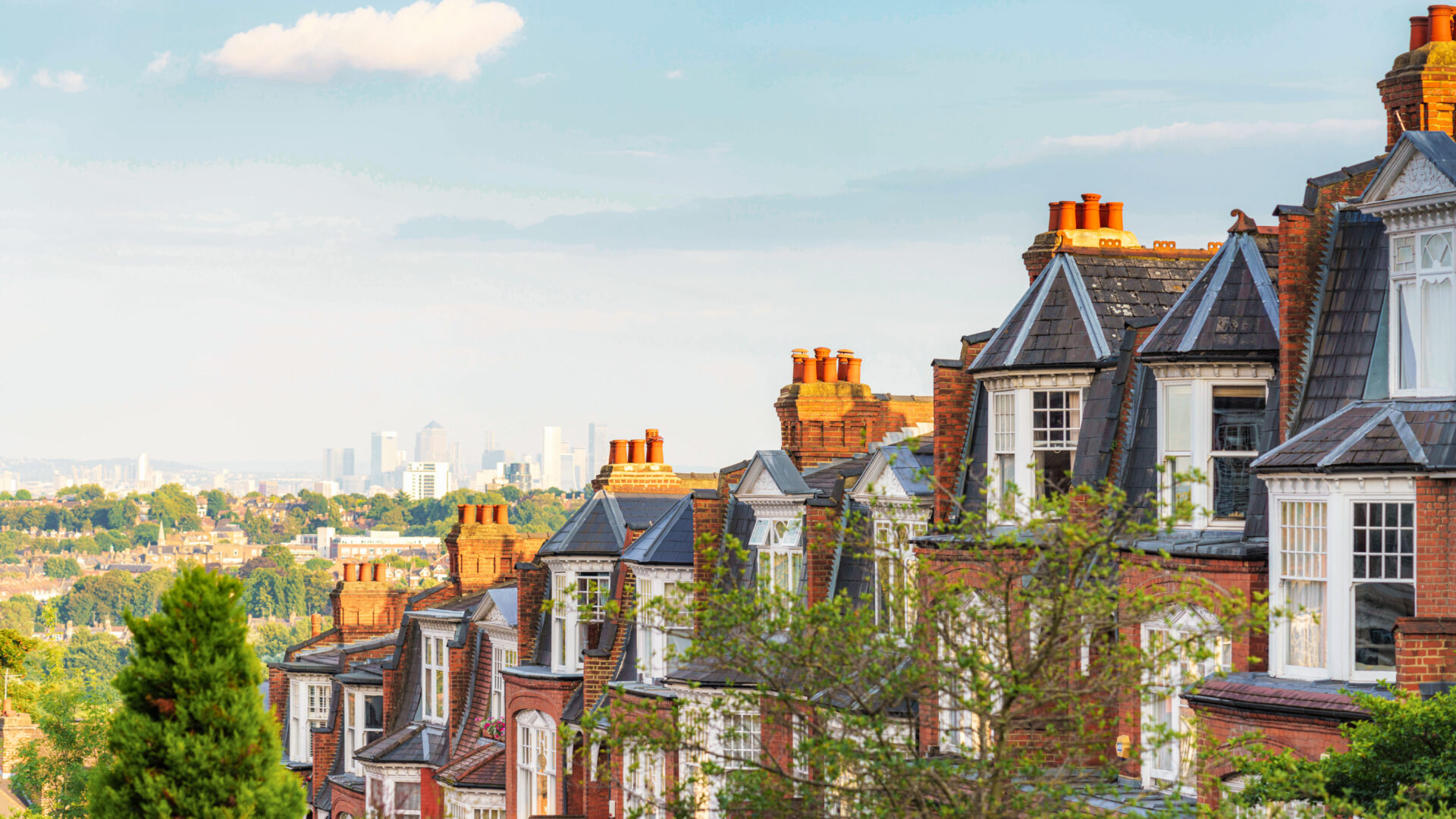
Getting here sets the tone. Hampstead station has the deepest platforms on the Underground, 58.5 metres down, reached by lift or a 320-step spiral staircase rather than an escalator. Step out and the High Street climbs — genuinely steep, narrow-pavemented — toward the Heath. This is a real Georgian village on a hill, not a marketing conceit. The lanes reward a slow wander: Flask Walk runs off the High Street past small independents, and Church Row holds one of London’s best-preserved Georgian terraces, its vista closing on the eighteenth-century parish church. A local planning quirk keeps estate agents from taking every corner unit, so the crêpe queue at La Crêperie de Hampstead — a pavement stall since 1977 — still shares the street with bookshops and cafés. Be honest about the timing, though: weekday mornings feel like the quiet village of the reputation, while summer Saturday afternoons do not, when Tube crowds fill the narrow streets. Keep climbing and the shops give way to the Heath’s edge, and the noise drops away within a few paces.
Last Film, Then Home
Hampstead goes quiet early, and residents don’t pretend otherwise. The evening runs on pubs and an early dinner, not late bars — a natural night out is a film at the Everyman on Holly Bush Vale, a cinema since 1933 with a bar, followed by a table nearby. Anyone wanting more heads down the hill to Camden or into town. “I think it’s probably more laid back than other similarly affluent areas of London,” as one local described it on the Mumsnet property forum. The evening concentrates in the old pubs: The Holly Bush, up a flight of steps off the High Street, keeps its Victorian wood-panelled rooms; The Flask on Flask Walk is a Young’s house; The Spaniards Inn sits out on the edge of the Heath. Most of them wind down by around midnight, and the residential streets are dark and still well before that.
The Regulars’ Shortlist
The everyday map here is a set of addresses the village actually uses, most of them a step off the tourist track. Ginger & White on Perrin’s Court is a small British café off the High Street — coffee and brunch, walk-ins only — and the weekend-morning queue is the tell that it stays more local than the chains a minute away. Kenwood House on Hampstead Lane is the free English Heritage house on the Heath’s northern edge, holding the Iveagh Bequest with a Rembrandt self-portrait and a Vermeer; locals use it as a walk-and-café destination, with the Brew House café spilling into the courtyard. Daunt Books on South End Road sits by the Heath station rather than on the High Street and shelves its travel section by country — a browsing bookshop used more by residents than day-trippers. The Holly Bush on Holly Mount is the pub up the steps that survives the weekend crowds by being just awkward enough to reach. And Burgh House on New End Square, a Grade I Queen Anne house of 1704, holds the local museum with the Buttery café below — free to enter, and quietly one of the village’s better places to sit.
The Heath Keeps the Calendar
The Heath drives the year here. In spring, daffodils and crocuses sheet across Golders Hill Park, the Heath’s ornamental western end, while the woodland between Kenwood and the ponds greens up. Summer is swimming season: the mixed bathing pond runs April to October, the men’s and ladies’ ponds year-round, and the unheated 60-metre Parliament Hill Lido draws the classic kite-and-view crowd on Parliament Hill itself. Autumn turns the Kenwood-to-ponds woodland gold and amber — Lime Avenue becomes a tunnel of colour and the paths empty to an almost contemplative quiet. Winter brings the Christmas-morning pond and lido swims, the High Street lights, and a large-scale winter light trail through the Kenwood grounds. Through all of it, the 790-acre Heath — Parliament Hill and its protected views over London, the ponds, the ancient woodland — is the single best reason to live here.
Source: Google Maps, OS Open Greenspace & editorial research, 2026

A Georgian village above the Heath — resilient while prime central fell, fast on the Northern line, very expensive. Green space and schools carry it.
Hampstead is a genuine Georgian village on a steep hill on the edge of the 790-acre Hampstead Heath, in the London Borough of Camden (NW3, Zone 2).
Hampstead scores 53/100 on the PAL Score — our weighted rating across six core criteria that define what makes a London neighbourhood work for buyers.
How We Score
Each criterion is normalised on a 0–100 scale across every London neighbourhood we cover, so a score describes how Hampstead compares with the rest of the city, not an absolute mark.
The Breakdown
| Criterion | Score (/100) | What it means |
|---|---|---|
| Green Space Access | 66 | Hampstead Heath, Kenwood and Golders Hill Park — the standout, and the single best reason to live here. |
| School Quality | 65 | 14 schools, all Good or Outstanding on the state picture; the fee-paying cluster the score can’t credit adds more. |
| Safety | 68 | 21% below the London average on recorded crime — a lower-crime area, theft-led off a busy, affluent high street rather than violent. |
| Transport Connectivity | 51 | Northern line direct — King’s Cross 11 min, Oxford Circus 14 — but a single deep Zone 2 branch, weak to Canary Wharf. |
| Local Amenities | 51 | The Village high street, independents and the Heath’s cafés give a genuine everyday offer. |
| Property Price Affordability | 29 | Very expensive — a median of £980,000 that hides a far dearer house market; the clear weakness. |
Scores use the PAL 0–100 scale, z-score normalised across all London neighbourhoods and displayed as integers. See the PAL Score Architecture for methodology.
What This Means
Green space (66/100) carries Hampstead, and rightly so — the 790-acre Heath, free Kenwood House and Golders Hill Park make this one of the best-served neighbourhoods in London for open space, and it is the single strongest reason to live here. Schools (65) sit close behind on the state Ofsted picture — 14 schools, all Good or Outstanding — though the score cannot credit the dense fee-paying cluster (UCS, South Hampstead High School, The Hall, Devonshire House) that carries the area’s schooling fame, so a private-school family gets even more than the number shows. Safety (68) is reassuring — 21% below the London average — with theft the lead category off a busy, affluent high street rather than any violent pattern. Transport (51) is a real if uneven strength: the Northern line runs direct to King’s Cross in 11 minutes and Oxford Circus in 14, but it is a single deep Zone 2 branch and Canary Wharf needs a change. Local amenities (51) reflect a genuine Village offer. Affordability (29) is the weakness that drags the total down hard — Hampstead is very expensive, and the £980,000 median understates a market where houses run to several million. The resulting 53/100 is a Good score, and the honest reading is that green space and schools carry it while affordability pulls it back: PAL scores value and connectivity, and Hampstead’s genuine strengths — the Heath, the schools, the resilience — are not the things that lift an affordability score.
✗ May Not Suit
💰 Value Assessment
At an average of £980,000 (HM Land Registry), Hampstead is priced for the Heath, the schools and a resilient prime address — and affordability is its clear weakness, value score 29. The most important thing to understand is that the £980,000 average is flat-heavy: flats average £850,000, but terraced houses average £2.19m, semi-detached £3.85m and detached £11.96m, so a house buyer should ignore the headline. Its five-year rise has been modest in isolation but genuinely resilient — prime central fell over the same period — while short-run rolling figures can be thin-market sold-mix artefacts rather than real repricing.
Our Recommendation
Who's Hampstead for?
Hampstead is likely to suit you if:
- Want the Heath on your doorstep. The 790-acre Hampstead Heath — Parliament Hill’s protected views, the bathing ponds, the lido, ancient woodland, plus free Kenwood House — is the standout reason to live here (green-space score 66).
- Value a resilient prime address. Hampstead is up 3.8% over five years (HM Land Registry) while prime central fell — Kensington −25.9%, Notting Hill −5.4% on the same measure.
- Commute to the West End or King’s Cross. The Northern line runs direct — King’s Cross in 11 minutes, Oxford Circus in 14 — fast central access from a Zone 2 hillside.
- Are set on the private-school route. UCS, South Hampstead High School, The Hall and Devonshire House sit in one of London’s densest independent clusters — you’re buying proximity to fee-paying schools.
- Want a mansion-block or period-conversion flat. From around £850k, the flat stock — mansion blocks and Georgian/Victorian conversions — is the realistic way into the Village.
Think twice if you:
- Are watching affordability. Hampstead is very expensive — a median of £980,000 that understates a bimodal market, £1,121 per square foot, and a value score of 29, the weakest dimension by far.
- Expect a house near the headline. The £980,000 headline buys a flat; houses run from around £880,000 for a terrace to £16.50m at the top, and freehold houses are a scarce minority.
- Work in Canary Wharf. The Northern line is direct west and central but not to Docklands — Canary Wharf needs a change at 35 minutes, the one weak direction.
- Rely on the state-school sector. Nine of the 14 schools are fee-paying; the state Ofsted picture is strong, but the area’s schooling fame rests on schools you pay for.
- Want lively evenings. This is a sedate village that turns in early — a film at the Everyman and an early dinner, not late bars; for more you head to Camden or into town.
The Real Picture
Hampstead is a genuine Georgian village on a steep hill on the edge of one of London’s great green spaces, and it feels like it — quiet, wealthy, international, sedate rather than lively, busy with tourists on a summer Saturday and dark and still by evening. You buy the Heath, the village and a prime address that held its value while prime central fell, and you accept, in return, prices that make affordability the weak point and a headline median that hides a market split between flats and rare, very expensive houses. It settles people who prize the Heath and the calm over the price tag. It frustrates anyone wanting a bargain, a house near the headline, or a buzz after ten.
Moving to Hampstead: The Practical Side
Council Tax
Hampstead is wholly within the London Borough of Camden.
The Band D charge is £2,208.
Parking
Controlled Parking Zones apply across the Village and the busier residential streets, so on-street parking is largely permit-controlled and scarce — check the specific zone for any address on the Camden parking map before assuming you can park on-street. Camden’s resident permits are emissions-based, so the cheaper end covers electric and low-emission vehicles and the charge rises with engine emissions; confirm the current band and price for your vehicle on the Camden website before you rely on it. On the steep, narrow Village streets, on-street space is genuinely tight, and a house with off-street parking commands a premium for exactly that reason.
GP Surgeries
Hampstead is served by NHS GP practices in and around the Village and NW3 more widely — check a specific surgery’s current accepting-patients status and its latest Care Quality Commission (CQC) rating directly before registering, as both change. The nearest major hospital with a 24-hour A&E is the Royal Free Hospital on Pond Street (NW3), a short distance from the Village — a large teaching hospital run by the Royal Free London NHS Foundation Trust, which is an unusual convenience for a residential area of this kind.
Utilities and Broadband
NW3 is served by the usual mix of Virgin Media cable and Openreach full fibre, in line with inner-London coverage that runs above the UK average of around 88% gigabit-capable (Ofcom Connected Nations 2025). On energy, the older housing matters: many of Hampstead’s period conversions and mansion-block flats, and the listed and conservation-area houses, carry weaker energy ratings and higher running costs than a modern flat, and listed-building status can constrain what upgrades are permitted — check the EPC and any listing before you buy, because a period Hampstead home can cost more to run than its address suggests.
Removals and Access
Hampstead’s Village streets are the classic access challenge — steep, narrow, historic and often within a Controlled Parking Zone, so a removals van may need a permit or dispensation; arrange it in advance with Camden. Flats in converted houses and older mansion blocks may have no lift and awkward, narrow staircases, so confirm access and any furniture-size constraints with the building before the day. The busiest stretches of the High Street and Heath Street are best avoided for a large vehicle at peak, especially on a summer weekend; the quieter residential streets give easier loading, though the gradient still makes for hard work.
Frequently Asked Questions
Common questions about living in Hampstead, answered with data from our research.
Far more than the headline median suggests. The overall median sold price is £980,000 (HM Land Registry, to June 2026), but that figure is flat-heavy — it reflects a flat market, not a house market. The median flat is £870k, but terraced houses run to £2.24m, semi-detached £3.80m and detached £8.08m. Freehold houses — the Georgian terraces of Church Row, the Victorian villas up the hill — are a scarce, prized minority, which is why typical house prices sit so far above the £980,000 headline. Budget for a house accordingly: they run from around £880k for the cheapest terrace to several million at the top.
Quickly, on the Northern line. From Hampstead station — the deepest on the Underground, 58.5 metres down — it’s 11 minutes to King’s Cross, 9 to Euston and 14 to Oxford Circus, all direct (TfL, 08:30 weekday). Bank is around 20 minutes and Victoria 18 with a change. The one weak direction is Canary Wharf, roughly 35 minutes with a change. These are station-to-station times; add your walk to the station and the lift ride at Hampstead. The Overground at Hampstead Heath station and the Jubilee line at nearby Finchley Road widen the options.
Yes, but read the two halves. Hampstead has 14 schools, with 1 rated Outstanding and 100% rated Good or Outstanding (Ofsted) across the wider NW3 catchment — a strong state picture. The defining feature, though, is that 9 of the 14 are independent, fee-paying schools, including well-known names like University College School (UCS) and South Hampstead High School — one of London’s densest private clusters. So a state-only family and a private-school family experience “Hampstead schools” very differently: the state offer is genuinely good, but the area’s schooling fame rests largely on schools you pay for.
Hampstead is a low-crime area, with a PAL Safety Score of 68/100. Recorded crime runs 21% below the London average on a severity-weighted basis (the latest 12-month period, data.police.uk). On a residential basis — visitor and footfall theft set aside — the rate is 100 per 1,000 residents, 22% below the London average. The largest category is Theft at about 29% of offences.
Council tax is set by the London Borough of Camden. The Band D charge is £2,208 for 2026/27, with Band A at £1,472, Band C at £1,962 and Band E at £2,698 (Camden, 2026/27). One quirk matters here: bands are frozen at 1991 property values, so most of Hampstead’s multi-million-pound houses fall in the top Band H, where the banding is almost irrelevant against the purchase price. The band matters far more to a flat buyer than to someone buying a several-million-pound house.
They are close peers rather than clear rivals. Belsize Park is adjacent and effectively price-twinned with Hampstead at around £1,090,000, more flat-dominated and a shade less of a village; Highgate sits across the Heath with a similar village-on-a-hill character; St John’s Wood and Primrose Hill are the other prime-North-London peers. None has a published PAL guide yet, so we name them as context rather than compare figures directly. The more telling comparison is against prime central: Hampstead rose 3.8% over five years while Kensington fell 25.9% and Notting Hill 5.4% — a resilient corner of prime North London.
Yes — Hampstead is on the Northern line (Edgware branch, Zone 2), and its station has the deepest platforms on the Underground, 58.5 metres down, reached by lift or a 320-step staircase. The line runs direct to King’s Cross in 11 minutes, Euston in 9 and Oxford Circus in 14. There is also the Overground at Hampstead Heath station (South End Green) and the Jubilee and Metropolitan lines a short way off at Finchley Road. The one awkward direction is Canary Wharf, which needs a change at around 35 minutes — the reason the transport score reads 51 despite the fast central links.
Because PAL scores affordability and connectivity, not desirability. Hampstead’s genuine strengths — the 790-acre Heath (green-space score 66), strong schools (65), a low-crime profile (68) and fast central transport (51) — are real. But it is very expensive, and affordability (29) is the weakest dimension by a distance, which drags the overall to 53/100 — Good. The score is held down by the price, not because it is a poor place to live; it simply measures the things a prime reputation does not make cheaper.
Hampstead Heath is the area’s defining asset — around 790 acres of open space on the Village’s doorstep. It holds Parliament Hill and its protected views over London, the bathing ponds (men’s and ladies’ year-round, a mixed pond April to October), the unheated 60-metre Parliament Hill Lido, and ancient woodland. On the northern edge sits Kenwood House, a free English Heritage house with a Rembrandt self-portrait and a Vermeer, and at the ornamental western end is Golders Hill Park. It is used year-round — swimming, kite-flying, autumn woodland walks, Christmas-morning pond swims — and it is the single best reason people move here.
No — Hampstead is sedate, and residents don’t pretend otherwise. The evening runs on old pubs and an early dinner, not late bars: a natural night out is a film at the Everyman on Holly Bush Vale (a cinema since 1933) followed by a table nearby, or a drink at The Holly Bush, The Flask or The Spaniards Inn. Most wind down by around midnight and the residential streets are quiet well before that. For a proper late night, you head down the hill to Camden or into town — the Northern line makes that easy.
Data from HM Land Registry, Ofsted, Metropolitan Police & TfL. Page last regenerated 31 August 2026.
Moving to Hampstead?
Get our free moving checklist and local tips delivered to your inbox.
No spam. Unsubscribe anytime.