Property Prices in Crystal Palace
Source: HM Land Registry Price Paid Data — median sold prices over a rolling 12-month window
What Your Budget Buys
Source: HM Land Registry.
For another affordable SE family area, see our Beckenham guide.
Market Position & Budget Bands
Crystal Palace buys you a hilltop, an independent high street and a 200-acre park — but not five years of growth, and that flat line is the whole market story. The overall median sold price is £440k (HM Land Registry), above cheaper, faster-moving Penge one stop south and below dearer Sydenham one stop north. This is a flat-led market: the Triangle is a parade of shops with flats above, and the surrounding Victorian streets were carved into conversions long ago, so a big slice of the stock is one- and two-bed flats rather than family houses. The flat end is liquid — usually something to buy and a buyer when you sell — while the house end is thinner and the detached end thinnest of all, so patience matters more the further up the ladder you go. The hill, the park and the Triangle are the premium you pay over the streets next door.
What Your Budget Buys
Flats are the market — Victorian conversions on the streets around the Triangle and above its shops. They run from £88k at the entry level to £843k for the largest, typically £368k.
Houses are the thinner, pricier end. Terraced homes sit at a £600k median (£260k to £1.05m); semi-detached family houses at £723k (£255k to £1.43m); and detached houses — the grandest hilltop villas — at £854k, running up to £2.06m, though few trade in a typical year.
What Drives Values
Crystal Palace’s value rests on things that don’t move month to month: the hilltop position and the views, Crystal Palace Park, one of south London’s most distinctive independent high streets on the Triangle, and Overground and rail links across the area. What tempers it: this is a stable market that has gone almost nowhere for years — the appeal is the lifestyle and the character rather than growth — and it is flat-heavy, so it suits a buyer who wants the scene and the park rather than a fast-appreciating family house. The live median and by-type figures are in the cards above and on the price comparison page.
Leasehold vs Freehold
Crystal Palace’s flats — overwhelmingly Victorian conversions around and above the Triangle — are predominantly leasehold, so lease length and service-charge history (especially on older converted houses) are the first things to check. The terraced, semi-detached and detached houses are almost all freehold.
Rental Yields (Buy-to-Let Context)
Crystal Palace is a steady-yield rental market driven by the Overground and the Triangle. One-bed flats let for roughly £1,250–£1,450 a month and two-beds for £1,520–£1,820 (ONS achieved rents for Croydon alongside SE19/SE20 asking-rent data), putting gross yields around 4–4.6% on a one-bed and roughly 4.9–5.8% on a two-bed — respectable for Zone 4, the two-bed the stronger income play. Tenant demand skews young — single renters and couples drawn by the high street and the park — and voids are short for well-priced flats.
How Crystal Palace compares nearby
Median sold price, all property types, against the nearest comparable areas we cover.
HM Land Registry · prices last updated 5 August 2026
Schools in Crystal Palace
🏫 Primary
🏛 Secondary
Rockmount Primary School
St Joseph's RC Junior School
Adamsrill Primary School
All Saints CofE Primary School
Cypress Primary School
James Dixon Primary School
St Joseph's RC Infant School
Harris City Academy Crystal Palace
Data: Ofsted, 2 September 2026
School Overview
Crystal Palace has a genuinely good state-school offer, anchored by a rare Outstanding secondary. There are 8 state schools rated Good or Outstanding within reach, including 3 rated Outstanding by Ofsted — though that headline needs an honest footnote, because Ofsted changed how it grades schools in September 2024 and two of those three Outstanding badges are now historic rather than freshly re-confirmed (see below). The standout is the Outstanding secondary, which is the real draw for families and unusual for a Zone 4 area straddling five boroughs.
Primary Schools
The Outstanding primaries sit on the Upper Norwood hill. Rockmount Primary School (Chevening Road, SE19 3ST) holds an Outstanding grade from its last full graded inspection (Ofsted, May 2015); its most recent visit, an ungraded inspection in June 2025, was strongly positive but issued no new single-word grade under the post-September-2024 framework. St Joseph’s RC Junior School (Woodend, SE19 3NU), a Catholic junior school, is likewise Outstanding on its last graded inspection (Ofsted, June 2018), with an ungraded December 2024 inspection since. Strong Good options nearby include James Dixon Primary School (William Booth Road, Anerley, SE20 8BW), Good (Ofsted, June 2024), Cypress Primary School (SE25 4AU), Good (Ofsted, October 2019), and Adamsrill Primary School in Sydenham (SE26 4AQ). One honest caution: All Saints CofE Primary in Upper Norwood was inspected in December 2024 and rated Requires Improvement for quality of education, with its other areas Good — so it is not a blanket-strong option, and the area’s offer is not uniformly Good or Outstanding once you read the most recent reports.
Secondary Schools
The secondary that draws families is Harris City Academy Crystal Palace (Maberley Road, SE19 2JH), an 11–18 academy rated Outstanding across every area at a full graded inspection in April 2025 — a genuinely current Outstanding, and the most valuable school asset in the neighbourhood. The other secondaries are solid rather than exceptional: The Norwood School (Crown Dale, SE19 3NY) is Good (Ofsted, February 2023), and St Joseph’s College (Beulah Hill, SE19 3HL), a Catholic boys’ school, was last graded Good (Ofsted, February 2020) before an ungraded inspection in March 2025. Since September 2024 Ofsted has stopped issuing single-word overall grades, so for any school inspected after that date, verify the current position at reports.ofsted.gov.uk before relying on a rating.
Catchment Reality
The catchment reality here is shaped by two things: faith criteria and the five-borough boundary. Harris City Academy Crystal Palace is heavily oversubscribed and admits by fair-banding ability tests plus distance, not on a simple residential catchment, so a Crystal Palace address helps but does not guarantee a place — register directly with the academy in addition to your home borough’s common application form. The Catholic schools — St Joseph’s RC Junior, St Joseph’s College — and All Saints CofE apply religious oversubscription criteria (baptism or church-attendance evidence) that override distance for practising families. The cross-borough effect is the quirk that catches people out: your home borough runs your application, but it allocates places at schools in whichever of the five boroughs the school physically sits, so families here routinely apply across boundaries. If you are buying for a specific school, confirm both the admissions authority and the latest published last-distance offer for that school before you commit to a street.
Independent Options
Independent provision near Crystal Palace shifted recently. Virgo Fidelis Convent Senior School in Upper Norwood closed in 2021, so it is no longer an option despite lingering in older directories. The currently-operating independent on that Central Hill site is Fidelis College (SE19), a co-educational Catholic-ethos school for ages 4–18 formed in 2025 from the merger of The Laurels and The Cedars schools. An ISI Routine Inspection on 10–12 March 2026 found three of five standards not met — leadership and management, pupils’ health and wellbeing, and safeguarding — with mandatory actions centred on attendance register compliance; quality of education and social and economic education were met. ISI routine inspections assess each standard as met or not met and do not issue a single overall grade. This report is from March 2026; check isi.net for any subsequent inspection before relying on this record. Oakfield Preparatory School (now branded Alleyn’s Oakfield), a co-ed prep just over in West Dulwich (SE21), is within a short drive and inspected by the Independent Schools Inspectorate. Confirm current fees and admissions directly with each school.
For another strong-schools area, see our Bromley guide.
Transport & Commute: Crystal Palace
Commute Times
Source: TfL Journey Planner, 2026. All times are station-to-station (boarding to alighting); add 5–10 minutes for walking to your nearest station and waiting.
For an inner-SE area with the Tube, see Brixton.
Rail and Tube
Transport is the dimension where Crystal Palace gives and takes in equal measure, and the headline is blunt: there is no Underground. The backbone is instead the London Overground (Windrush line) from Crystal Palace station, which runs direct to Canada Water, Shoreditch High Street, Dalston and Highbury — and, via the change at Canada Water onto the Jubilee, delivers the area’s standout link, Canary Wharf in 25 minutes. Alongside it, Southern rail from the same station runs direct to Victoria in 28 minutes and to London Bridge in 23 minutes. Gipsy Hill, Penge West and Sydenham Hill stations sit within walking distance of the edges, adding fallback routes. The combination of a fast Overground and direct Southern services is genuinely useful — but it is rail, not Tube, and the difference matters at peak.
Bus Network
Local buses climb the hill and link the Triangle, the Park, the stations and the surrounding suburbs across all five boroughs and into Brixton, Croydon and Lewisham. Because the rail lines are radial, the bus network does the orbital work — moving you between the hilltop, the park and the outer stations — while the stations handle the fast trips into town. The hill itself is the catch: the Triangle sits well above the stations, so any walk up from Crystal Palace, Gipsy Hill or Penge West is a genuine climb.
Commute Times
| Destination | Route | Station-to-station |
|---|---|---|
| Victoria | Southern direct from Crystal Palace | 28 min |
| Canary Wharf | Overground to Canada Water + Jubilee | 25 min |
| Bank | Rail + change | 36 min |
| King’s Cross St Pancras | Rail + change | 45 min |
Station-to-station, TfL Journey Planner, 08:30 weekday (refreshed June 2026). Add the time to reach and board your station — and, from the Triangle, the climb down to it. London Bridge is a direct 23 minutes on Southern; Waterloo is 31 minutes. The Overground to Canada Water is the fast link, with the Jubilee change making Canary Wharf the standout run.
Cycling and Walking
The Triangle is compact and walkable once you are on it — Westow Hill, Church Road and Westow Street meet at a single hilltop junction, with the Park a short walk down Church Road. The terrain is the defining feature: Crystal Palace sits on one of south London’s highest points, so cycling and walking are rewarding downhill and a workout up. Crystal Palace Park itself gives traffic-free walking and cycling across roughly 200 acres. The whole area sits within the Ultra Low Emission Zone (ULEZ), which has applied London-wide since August 2023, so a non-compliant vehicle is charged daily here.
Driving and Parking
Crystal Palace gives reasonable road access across south London but nothing fast at peak, and the hilltop road layout is tight. The area is within the ULEZ but well outside the Congestion Charge zone. Parking is where the five-borough split bites hardest: which council governs your street determines what restrictions apply and where to check. Confirm which borough you are in and read local signs before assuming anything about on-street parking.
Transport Verdict
Crystal Palace suits commuters to Canary Wharf, the East London corridor and Victoria who will trade the Underground for an Overground-and-Southern combination that, on its best routes, is genuinely fast. The limitations are real and explain the middling score: there is no Tube, the hill means a climb to the Triangle from every station, and the Overground runs busy at peak. Anyone who needs a turn-up-and-go Underground at the end of the road should weigh that carefully.
Crime & Safety in Crystal Palace
Top Concern
Source: Metropolitan Police via data.police.uk · Population: ONS Census 2021 · Updated monthly
The Numbers
Crystal Palace records a residential crime rate of 124 per 1,000 residents over the latest 12-month period (Metropolitan Police recorded crime via data.police.uk) — 4% below the London average, and a PAL safety score of 54/100. That is genuinely middling: only marginally below the London average, neither a low-crime haven nor an elevated area. The pattern behind the number is the Triangle’s evening economy — the bars, restaurants and Saturday-night footfall along the high street concentrate opportunity — set against quieter residential streets further out. The 12-month trend is Stable (+0.2%).
What the Data Tells You
The data tells a balanced story. Crystal Palace sits just below the London average — 4% below it, with a safety score of 54/100 — which places it squarely in the middle of the pack rather than notably low-crime. The largest category is Violence and sexual offences at 27%, a typical South London profile. This is not an area to label “safe” or “high-crime” — it is a middling neighbourhood where a lively hilltop high street sits alongside settled residential streets.
Street-Level Context
The pattern follows the evening economy. The Triangle — Westow Hill, Westow Street and Church Road, with their bars, restaurants and Saturday-night footfall — is the main focus for recorded incidents, exactly as you would expect of a hilltop strip that draws people out after dark. Move off the high street into the residential Victorian streets that fan out from it, and the picture is quieter and firmly suburban. The closer you live to the Triangle, the more of its evening texture you take on; the further out toward Anerley, Gipsy Hill or the Park-side streets, the calmer it gets.
What Residents Say
Residents draw the same line the data does: the Triangle is lively and sees the bulk of the evening incidents, while the residential streets are settled. The practical takeaway is straightforward. If you are renting or buying a flat above a Triangle shop, treat it as high-street living — keep an eye on valuables on a busy Saturday night and use a D-lock for any bike left near the station or the bars. If you are out on the quieter streets toward the Park or Anerley, the everyday experience is ordinary outer-suburban.
Unlock the Complete Crystal Palace Guide
You’ve seen the headline data. Get the full picture — detailed narratives, council costs, community character, and our editorial verdict.
- 🎓 In-depth school, transport & crime analysis
- 🏛 Council tax & parking costs
- 🏘 Community character & local vibe
- ⭐ Editorial verdict, value assessment & future outlook
- 📦 Moving practicalities
By unlocking, you’re happy for us to email you this guide plus the occasional helpful update from Property Around London. No spam — unsubscribe anytime.
Council Fees in Crystal Palace
Council Tax (Annual)
| Band C | Band D | Band E |
|---|---|---|
| £2,311 | £2,600 | £3,178 |
Parking
Source: London Borough of Croydon, 2026
Council Tax Bands
Here is the fact that defines living in Crystal Palace, and most buyers miss it: the neighbourhood straddles five London boroughs, and your council tax depends entirely on which one your street sits in. The headline London Borough of Croydon Band D charge is £2,600 (2026/27) — the Croydon figure that covers the Triangle and Upper Norwood. But the same Band D home costs Bromley £2,140 on the Park, Church Road and SE20 side, Lewisham £2,237 on the Sydenham side, Lambeth £2,047 on the Gipsy Hill side, and Southwark £1,967 on the northern edge (each council, 2026/27). That is a spread of more than £630 a year for an identical home in the same neighbourhood. Croydon’s Band D is among the very highest in London — second only to Kingston upon Thames (£2,609) for 2026/27 — the cumulative result of repeated near-5% rises after the council’s financial difficulties. Check which borough your specific street is in before you budget.
Local Authority Services
Because five councils meet here, services differ street to street as much as the tax does. Bin collection schedules, recycling rules and garden-waste charges are set separately by each borough, so a neighbour across a boundary line can be on a different collection day with different bins. Garden waste is a paid subscription across these councils — roughly £90 a year in Croydon and around £100 in Lewisham, with the others charging on their own schemes (each council, 2026).
Waste and Recycling
Each of the five boroughs provides kerbside recycling alongside general waste, but on its own timetable and with its own rules. The single most useful thing a new resident can do is run their exact address through the relevant borough’s collection-day lookup, because there is no single Crystal Palace schedule — the answer changes with the postcode and the borough boundary running through the area.
Libraries and Leisure
Upper Norwood Library on Westow Hill serves the Triangle, and leisure is dominated by Crystal Palace Park and the National Sports Centre within it. The Park, run by the London Borough of Bromley with day-to-day management delegated to the Crystal Palace Park Trust since 2023, is the area’s defining green asset — the 1854 dinosaurs, the boating lake, the maze and the Italian terraces of the lost Palace — and it is mid-way through a major restoration covered in the verdict and FAQs below.
Crystal Palace Community Character
For a comparable independent-village feel, see Walthamstow.
Up the Hill, Past the Antiques
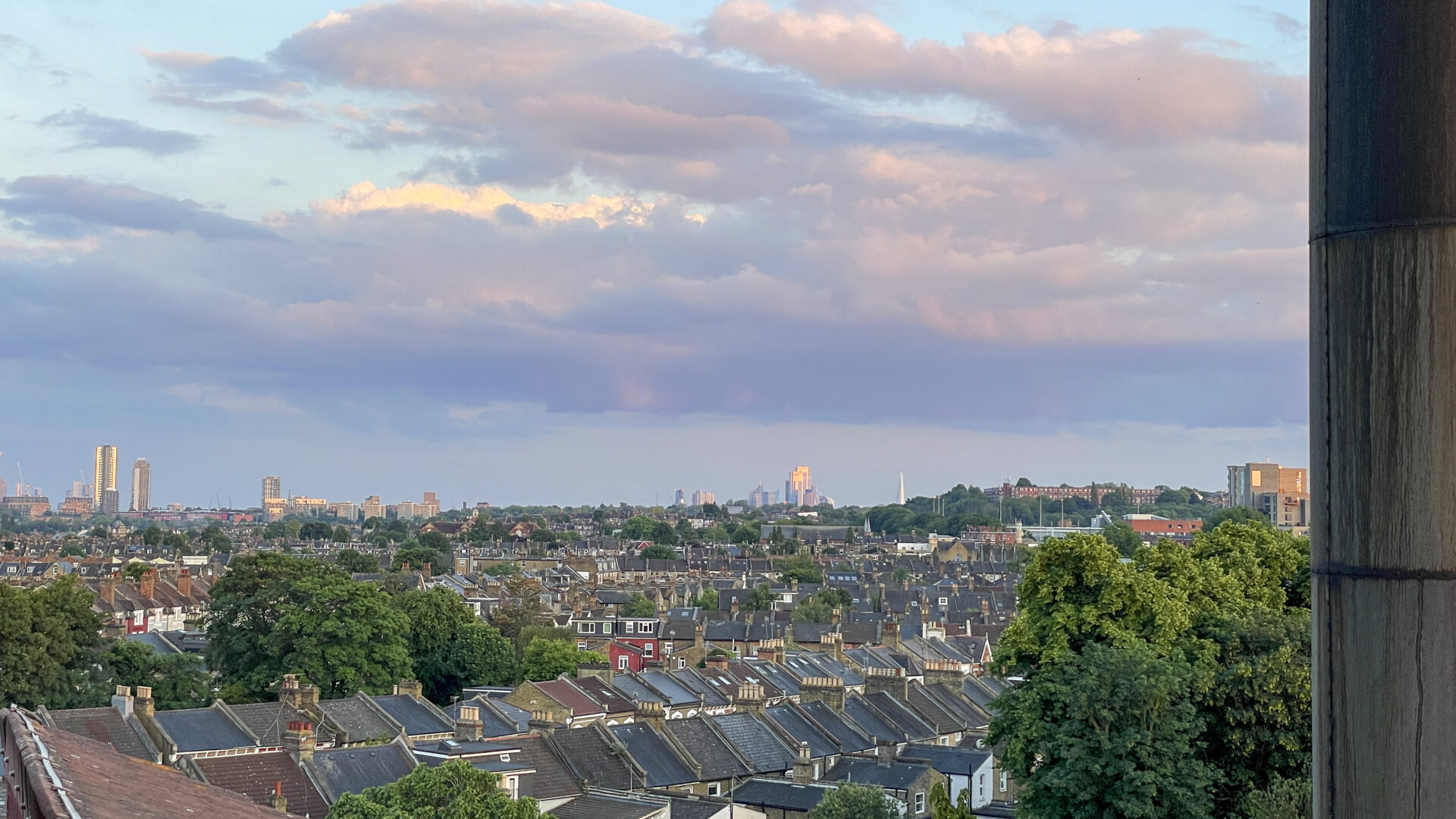
Step out at Crystal Palace station and the first thing you notice is the gradient. This is one of the highest points in London, and the walk up to the Triangle — the wedge of Church Road, Westow Hill and Westow Street — earns the views over the city. Bring decent shoes; the hills here are not a figure of speech.
By mid-morning the Crystal Palace Food Market is in full swing down Haynes Lane, open every Saturday from 10am, with Sussex and Kent produce and a queue that builds steadily. Round the corner, Haynes Lane Market stacks two floors of vinyl, vintage clothes and bric-a-brac, Thursday to Sunday.
The independents thin out as you head for Crystal Palace Park, where Brown and Green's café sits by the gates. “It feels like a real community, and people are very friendly here,” as one parent described it on Mumsnet. The contrast between the busy Triangle and the wide, faded-grand park is the whole place in a nutshell.
Last Orders on the Triangle
The evening concentrates on the Triangle's pubs. Westow House on Westow Hill is the social anchor, reopened after a 2026 refit; The White Hart at 96 Church Road runs to open fires and mismatched furniture and was once voted the area's best by Londonist readers; The Sparrowhawk does later cocktails and the odd live set. The Everyman at 25 Church Road, a restored 1928 cinema, draws an after-dinner crowd to its bar-and-sofa screens.
Beyond the Triangle, it goes quiet. The residential streets sloping away towards Gipsy Hill and Penge wind down early, and with no Tube, a late night out usually means the last Overground or a taxi up the hill. This is a neighbourhood that does its socialising before eleven, not a destination for after.
The Triangle Regulars
Crystal Palace Food Market (Haynes Lane, SE19) — the Saturday-morning fixture, 10am to 3pm, part of the local Transition Town movement. Most produce travels from Sussex and Kent, and regulars treat the weekly shop as a social event.
Westow House (Westow Hill) — the Triangle's living room. Following its 2026 refurbishment it installed a tank pouring Gipsy Hill's Hepcat lager, and the corner site catches the afternoon sun.
The White Hart (96 Church Road) — the locals' pick, all open fires and a well-kept cellar, with homely food and a Sunday roast that pulls a crowd off the hill.
Haynes Lane Market (off Westow Street) — two floors of vintage clothes, vinyl and antiques, Thursday to Sunday. The kind of indoor warren you go in for one record and leave an hour later.
Brown and Green (Crystal Palace Park) — the café by the park gates and station, a reliable family-and-buggy stop before or after a loop of the grounds. Branches also sit in the Triangle and at Gipsy Hill station.
Concerts on the Terraces, Hoardings Round the Dinosaurs
Spring. The park starts filling out, though through 2026 the famous Grade I-listed dinosaurs sit behind construction hoarding as the long-running restoration continues — worth knowing before you promise a child the world's first dinosaur sculptures.
Summer. Festival Republic's open-air concerts take over the Italian Terraces in late June and early July, and the volunteer-run Crystal Palace Overground Festival brings music and stalls to Westow Park and the Triangle.
Autumn. The hilltop position shows its hand — the views over London sharpen in the clear air, and the 219-metre transmitter mast, lit at night, is the landmark you navigate home by.
Winter. The Triangle's pubs come into their own, the park empties to dog-walkers, and the one-way system around the shops gets its predictable festive snarl-up.
Source: Google Maps, OS Open Greenspace & editorial research, 2026

A hilltop indie village around a big park — affordable, Overground-linked, and famously split across five boroughs and their council-tax bills.
Crystal Palace is a hilltop village built around a big Victorian park — indie shops, the famous dinosaurs, and one of London’s best views. The average home sells for £440,000.
Crystal Palace scores 52/100 on the PAL Score — our weighted rating across six core criteria that define what makes a London neighbourhood work for buyers.
How We Score
Each criterion is normalised on a 0–100 scale across every London neighbourhood we cover, so a score describes how Crystal Palace compares with the rest of the city, not an absolute mark.
The Breakdown
| Criterion | Score (/100) | What it means |
|---|---|---|
| Property Price Affordability | 59 | The draw: a Zone 4 hilltop with a park and an independent high street at an entry price below inner London. |
| School Quality | 54 | A genuinely good state offer anchored by Harris City Academy Crystal Palace, a current Outstanding secondary. |
| Safety | 54 | Middling — 4% below the London average, with the Triangle’s evening economy the main focus and quieter residential streets beyond. |
| Transport Connectivity | 51 | A fast Overground to Canada Water and direct Southern to Victoria, but no Tube and a hill to climb. |
| Green Space Access | 50 | The 200-acre park is the asset, though the lost-Palace site itself is faded and only now being restored. |
| Local Amenities | 43 | The score weights services density; it understates the Triangle’s independents, antiques and food scene. |
Scores use the PAL 0–100 scale, z-score normalised across all London neighbourhoods and displayed as integers. See the PAL Score Architecture for methodology.
What This Means
Affordability (59/100) is Crystal Palace’s highest mark and its honest headline — you get a hilltop, a 200-acre park and a real independent high street at a Zone 4 entry price that buys far less in inner London, which is why first-time buyers and priced-out families look here. Schools (54) come next, carried by Harris City Academy Crystal Palace, a current Outstanding secondary that is rare for the zone. Safety (54) and transport (51) sit mid-table: crime is 4% below the London average, middling rather than reassuring, and transport offers a fast Overground and direct Southern trains but no Underground and a climb to the Triangle from every station. Green space (50) reflects the park’s size honestly, while acknowledging the Palace site is faded and mid-restoration. The Local Amenities score (43) deserves a caveat: it weights services density, so it understates the Triangle’s independents, antiques and food scene, which make the place feel richer than 43 suggests. The resulting 52/100 is a Good score that rewards a buyer who wants character, a park and an affordable hilltop — and warns off anyone who needs a Tube or is banking on fast growth.
For another affordable, changing SE area, see our Catford guide.
✗ May Not Suit
💰 Value Assessment
At an average of £440,000, Crystal Palace is one of the more affordable hilltop options in South London — flats around £367,500 and terraces £600,000 (HM Land Registry). It sits above adjacent Penge and below Sydenham. The market is flat — neither falling like inner SW London nor booming. The affordability score of 59/100 is the highest of the six — the value is real, though a hilltop villa runs well past a million.
Our Recommendation
Who's Crystal Palace for?
Crystal Palace could be a strong fit if you:
- Commute to Canary Wharf or the East London corridor. The Overground (Windrush line) to Canada Water plus a Jubilee change reaches Canary Wharf in 25 minutes — the area’s standout link.
- Want an independent high street, not chains. The Triangle’s food, antiques and indie shops give Crystal Palace a genuine character that its amenities score understates.
- Have school-age children. Harris City Academy Crystal Palace is a current Outstanding secondary (Ofsted, April 2025) — rare for a Zone 4 area, and a real draw.
- Want a big park on your doorstep. Crystal Palace Park runs to roughly 200 acres, with the 1854 dinosaurs, a boating lake and the National Sports Centre mid-restoration.
- Value a stable price over a hot market. Values are essentially flat over five years (+0.9%, HM Land Registry), so you negotiate rather than bid.
Think twice if you:
- Need the Underground at the end of the road. There is no Tube; it is Overground and Southern rail only, with a climb up to the Triangle from every station.
- Are banking on capital growth. Crystal Palace is up just 0.9% over five years, behind neighbouring Penge’s 5.2% (HM Land Registry).
- Want a single, predictable council bill. The five-borough split means a £630-plus Band D spread street to street, with the Croydon side near London’s highest at £2,600.
- Expect a polished, restored landmark park. The lost Palace site is faded, and the regeneration — though now under way — has stalled for years.
- Want a quiet, low-crime suburb. Crystal Palace is middling for crime, only 4% below the London average, with the Triangle’s evening economy the main focus for incidents.
The Real Picture
Crystal Palace is a hilltop village with a proper independent high street, a huge faded park and a five-borough postcode that complicates everything from bins to council tax. You move here for the Triangle, the Overground into east London, the Outstanding secondary and the view from the top of the hill — and you accept, in return, no Tube, a flat market, a climb home, and the admin of working out which borough you actually live in. For someone who wants character and a park over a rising price and a turn-up-and-go Tube, it fits beautifully. For a growth-chaser or an Underground commuter, it is the wrong hill.
Moving to Crystal Palace: The Practical Side
Council Tax
Crystal Palace straddles five boroughs, so your band charge depends on which one your street sits in. The headline figures for the most common boroughs:
| Band | Croydon (Triangle/Upper Norwood) | Bromley (Park/SE20) | Lambeth (Gipsy Hill) |
|---|---|---|---|
| Band C | £2,311 | £1,902 | £1,820 |
| Band D | £2,600 | £2,140 | £2,047 |
| Band E | £3,178 | £2,616 | £2,502 |
Source: each council, 2026/27. Croydon Band C/D/E shown for the Triangle and Upper Norwood; Bromley and Lambeth Band D shown for their sides of the neighbourhood, with Lewisham (£2,237) and Southwark (£1,967) Band D for the Sydenham and northern edges. Bands below D are fixed statutory proportions of Band D. Confirm the current year’s figure for your exact street’s borough before relying on it.
Parking
Crystal Palace sits where several borough boundaries meet; which council governs your street determines the parking rules that apply and where to check. The Triangle — Westow Hill, Westow Street, Church Road — falls in Croydon, which operates no Controlled Parking Zone covering the Triangle (London Borough of Croydon CPZ list, 2026). The Gipsy Hill side (SE27) is Lambeth; a CPZ for the area was proposed in 2021 and not implemented (London Borough of Lambeth, 2022). The Crystal Palace Park side is Bromley, which operates no Controlled Parking Zone covering Crystal Palace (London Borough of Bromley CPZ list, 2026). Non-CPZ restrictions — single yellow lines, time-limited bays — can still apply on individual streets. Check local signs and confirm restrictions for your specific address with the relevant borough.
GP Surgeries
The Crystal Palace area is served by practices including the Upper Norwood Group Practice (Chaucer House, 130 Church Road, SE19 2NT) on the SE19 side, and Anerley Surgery (224 Anerley Road, SE20 8TJ) and The Park Group Practice (113 Anerley Road, SE20 8AJ) on the SE20 side — all rated Good by the Care Quality Commission (CQC ratings as displayed, June 2026; no Crystal Palace surgery currently holds an Outstanding rating). The nearest acute hospital with a full 24-hour A&E is Croydon University Hospital in Thornton Heath (CR7 7YE), about four miles south-west, run by Croydon Health Services NHS Trust; its current CQC rating is Requires Improvement. For major trauma, stroke or cardiac care, King’s College Hospital at Denmark Hill (SE5 9RS), about six miles north, is south-east London’s major trauma centre. Check current ratings if hospital quality matters to you.
Utilities and Broadband
Broadband is well served. The boroughs covering Crystal Palace run about 93–95% gigabit-capable and roughly 75–84% full-fibre (thinkbroadband, June 2026) — Croydon (SE19) around 79% full fibre, Bromley (SE20) around 75%, Lambeth’s edge around 84% — all above the UK gigabit average of about 89% (Ofcom Connected Nations 2025), driven by heavy Virgin Media cable alongside Openreach full fibre. Energy costs track the Ofgem outer-London regional average; older Victorian conversions on the hill will have weaker energy ratings than newer flats, so check the EPC before you buy.
Removals and Access
Crystal Palace’s hilltop approach is the main practical constraint — large vehicles climb slowly on the approach roads. Flats above shops on Westow Hill and Church Road often have no off-street loading and steep internal stairs, so brief your removals firm on access and book early. Check with the relevant borough whether a permit or dispensation is needed before the move day, and confirm which borough your specific street falls in first. The quieter residential streets toward the Park, Anerley and Gipsy Hill give easier access.
Frequently Asked Questions
Common questions about living in Crystal Palace, answered with data from our research.
The median flat in Crystal Palace sold for £367k over the past year (HM Land Registry, to June 2026), with the Triangle conversions and purpose-built blocks making up most of the market. That puts Crystal Palace above neighbouring Penge, where flats sell for about £341,000, and just below Sydenham at roughly £410,000. The flat market here is essentially flat in price terms — values are up just 0.9% over five years — so there is more room to negotiate than in faster-moving Penge one stop south.
About 28 minutes to Victoria on a direct Southern train, and 23 minutes to London Bridge. The standout link is the London Overground (Windrush line) to Canada Water, which puts Canary Wharf within 25 minutes via a Jubilee-line change. Bank is about 36 minutes with a change. These are station-to-station times (TfL, 08:30 weekday); add your walk to the station, and from the Triangle, the climb down the hill to it. There is no Underground, so the Overground and Southern services do all the heavy lifting.
Yes, with one caveat. There are 13 state schools rated Good or Outstanding within reach, including 3 rated Outstanding, anchored by Harris City Academy Crystal Palace — a current Outstanding secondary (Ofsted, April 2025), which is rare for Zone 4. The caveat: two of those Outstanding badges (Rockmount, St Joseph’s RC Junior) date from 2015 and 2018 and were not regraded at their recent ungraded inspections, and All Saints CofE was rated Requires Improvement for quality of education in December 2024. Verify any school’s current position at reports.ofsted.gov.uk before buying for catchment.
Crystal Palace is a low-crime area, with a PAL Safety Score of 54/100. Recorded crime runs 4% below the London average on a severity-weighted basis (the latest 12-month period, data.police.uk). On a residential basis — visitor and footfall theft set aside — the rate is 124 per 1,000 residents, 4% below the London average. The largest category is Violence and sexual offences at about 27% of offences.
It depends which of five boroughs your street sits in — the defining quirk of the area. The Croydon side (the Triangle and Upper Norwood) charges a Band D of £2,600 for 2026/27, among the highest in London. But the same Band D home costs £2,140 on the Bromley side, £2,047 on the Lambeth (Gipsy Hill) side, £2,237 on the Lewisham (Sydenham) side and £1,967 on the Southwark edge — a spread of more than £630 a year. Always check the borough of your specific street before you budget.
It depends what you want. Crystal Palace is dearer — the median flat is about £367k against Penge’s £341,000 (HM Land Registry, June 2026) — and you pay that premium for the hilltop, the 200-acre park and the Triangle’s independent high street. Penge, one stop south and sharing the SE20 postcode, is cheaper across the board and has grown faster (+5.2% over five years against Crystal Palace’s +0.9%). Crystal Palace is the character-and-park choice; Penge is the value play with better recent growth.
Crystal Palace is the only London neighbourhood that touches five boroughs, which meet near the historic Vicar’s Oak crossroads at the top of the hill. The Triangle and Upper Norwood are Croydon; the Park, Church Road and the SE20 streets are Bromley; Gipsy Hill to the west is Lambeth; Sydenham to the north is Lewisham; and Southwark holds the northern edge. It is not trivia — council tax, bin collections, parking permits and school admissions all differ depending on which borough your specific street falls in.
Yes — Crystal Palace Park runs to roughly 200 acres and holds the Grade I-listed 1854 dinosaurs (the world’s first dinosaur sculptures), a boating lake, a maze and the Italian terraces of the Palace that burned down in 1936. It is run by the London Borough of Bromley with the community-led Crystal Palace Park Trust managing it day-to-day since 2023. A roughly £52m restoration is under way: dinosaur and terrace conservation began in May 2025 and is due to complete in late 2026, with the 1865 subway restored in 2024. The site has been faded for years, so this is overdue.
No — Crystal Palace has no Underground station. The main station, Crystal Palace, is served by the London Overground (Windrush line) and Southern rail, with Gipsy Hill, Penge West and Sydenham Hill nearby. The Overground runs direct to Canada Water, Shoreditch and Highbury, and a Jubilee-line change at Canada Water reaches Canary Wharf in 25 minutes; Southern runs direct to Victoria in 28 minutes and London Bridge in 23. The trade-off is the hill — every station sits below the Triangle, so you climb home.
For income it is steady. One-bed flats let for roughly £1,250–£1,450 a month and two-beds for £1,520–£1,820 (ONS and SE19/SE20 listings, 2025–26), giving gross yields around 4–4.6% on a one-bed and 4.9–5.8% on a two-bed against flat values of about £367k. Demand skews young — renters drawn by the Triangle’s food and indie scene and the Overground into east London — plus families priced out of inner zones. London rent growth has cooled to under 2% a year, so void risk for sensibly-priced flats is low.
Data from HM Land Registry, Ofsted, Metropolitan Police & TfL. Page last regenerated 31 August 2026.
Moving to Crystal Palace?
Get our free moving checklist and local tips delivered to your inbox.
No spam. Unsubscribe anytime.