Property Prices in Ilford
Source: HM Land Registry Price Paid Data — median sold prices over a rolling 12-month window
Source: HM Land Registry.
Buyers priced out of inner London weigh Ilford against value-focused outer centres like Croydon.
Market Position & Budget Bands
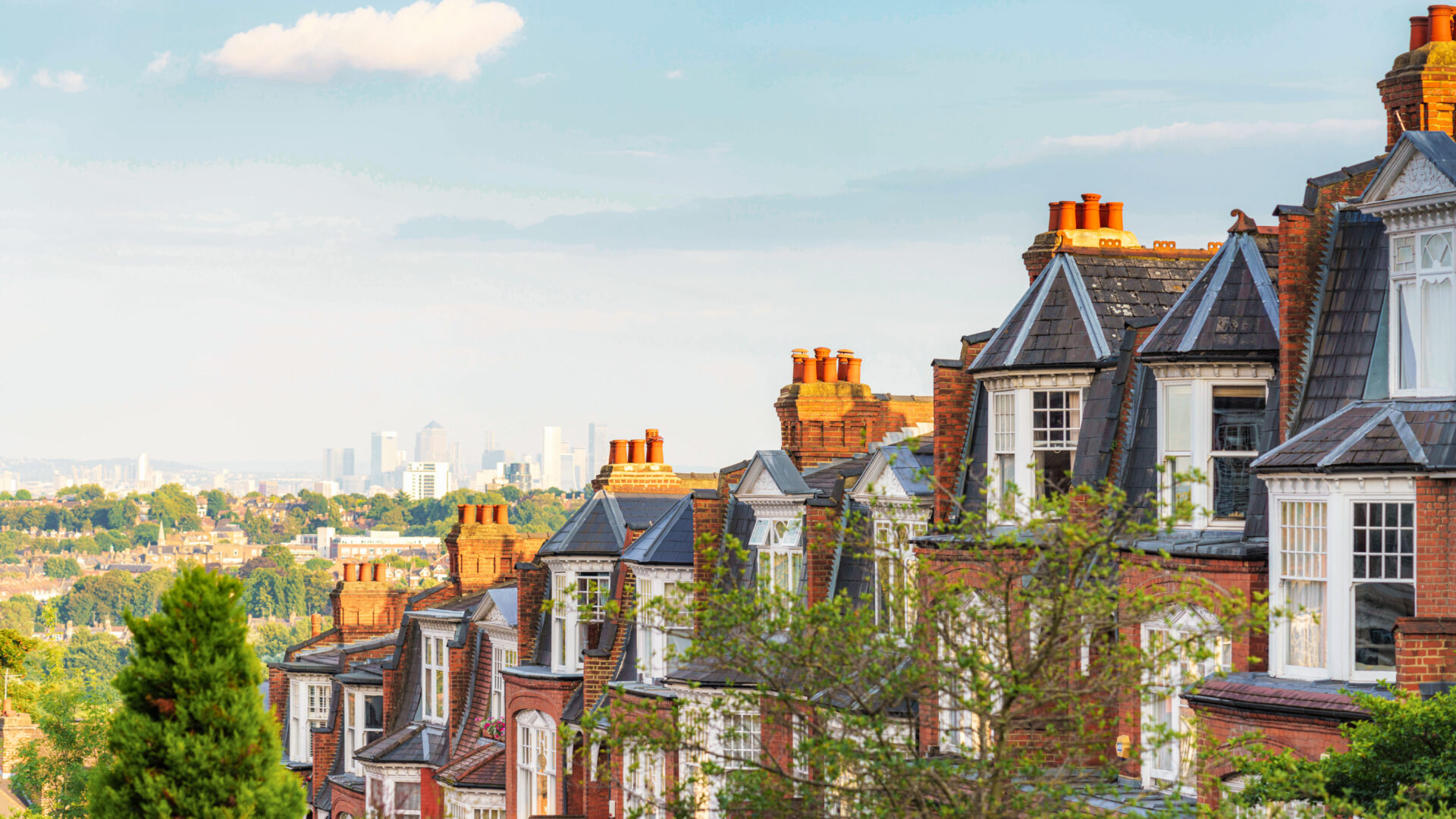
Ilford rewards buyers who want a whole house rather than a flat, and who can live with a town centre that is changing slowly. The overall median sold price is £500k (HM Land Registry) — higher than nearby Stratford or Romford, not because Ilford is grander but because more of what sells here is houses. It is a deep, liquid, family-house market: roughly four in five sales are houses, with terraces the single biggest slice, so a buyer has real choice rather than a handful of listings to fight over. Look at flats alone and the picture flips — the median Ilford flat is well under Stratford’s — and it is about the cheapest way onto the Elizabeth line, which since it arrived has been the main reason values point up rather than sideways. The Edwardian and 1930s houses sit north and east of the High Road around Valentines Park, Cranbrook and Seven Kings; the flats cluster centrally around Ilford Lane, Loxford and the station.
What Your Budget Buys
Flats are the cheaper, central end — older purpose-built and ex-local-authority blocks around Ilford Lane and Loxford, period conversions near the station, and newer build by the Elizabeth-line works — from around £84k to £510k, typically £260k.
Houses are where most family buyers end up. Terraced homes — three- and four-bed Edwardian and 1930s stock with gardens, the single biggest slice of the market — sit at a £525k median (£200k to £960k); semi-detached houses at £600k (£230k to £1.07m); and detached houses, the thinner top end, at £670k (£381k to £1.22m).
What Drives Values
Ilford’s case is the Elizabeth line and the house. A fast, direct run into the City, Canary Wharf and the West End from one of the cheapest addresses on the line, whole family houses with gardens where inner east London offers flats, and Valentines Park on the doorstep — that combination is what has kept values rising while pricier neighbours drifted. What tempers it: the town centre is changing only slowly, and the flat end is investor-heavy and more exposed to new-build supply, so the house market north and east of the centre is the steadier bet. The live median and by-type figures are in the cards above and on the price comparison page.
Leasehold vs Freehold
Ilford’s flats — the older blocks around Ilford Lane and Loxford, the station conversions and the newer developments — are predominantly leasehold, so check the lease length and service-charge history, especially on the newer build. The Edwardian and 1930s terraced and semi-detached houses north and east of the High Road are almost all freehold.
Rental Yields (Buy-to-Let Context)
Ilford is one of the stronger gross-yield plays on the Elizabeth line, which is why it draws investors. One-bed flats let for roughly £1,300–£1,775 a month and two-beds for £1,750–£2,200 (Rightmove listings), putting gross yields around 6–8%. Tenant demand is deep and varied — commuters who want the fast train, families priced out of inner east London, and sharers — so voids are short, though the investor-heavy central flat market means new supply competes for the same tenants.
How Ilford compares nearby
Median sold price, all property types, against the nearest comparable areas we cover.
HM Land Registry · prices last updated 5 August 2026
Schools in Ilford

🏫 Primary
🏛 Secondary
Cleveland Road Primary School
Grove Primary School
St Bede's Catholic Primary School
Aldborough Primary School
Chadwell Primary School
Gordon Primary School
Mayespark Primary School
Newbury Park Primary School
South Park Primary School
SS Peter and Paul's Catholic Primary School
St Aidan's Catholic Primary Academy
William Torbitt Primary School
Winston Way Academy
Woodlands Primary School
Ark Isaac Newton Academy
Loxford School
Seven Kings School
Atam Academy
Oaks Park High School
The Palmer Catholic Academy
Data: Ofsted, 2 September 2026
School Overview
Schools are Ilford’s strongest everyday selling point. There are 20 schools rated Good or Outstanding within reach, including 6 rated Outstanding by Ofsted, and the Outstanding grades span both phases — unusual for outer east London. The closest and most relevant schools are listed in the cards below; Redbridge as a borough consistently ranks among London’s better local authorities for school outcomes.
Primary Schools
The primary offer is broad and strong. Cleveland Road Primary (IG1 1EW) is rated Outstanding (Ofsted, September 2018) and Highlands Primary (IG1 3LE) is Outstanding (Ofsted, March 2019). Behind them sits a deep bench of Good schools: Gordon Primary (Good, Ofsted February 2024), Christchurch Primary (Good, Ofsted November 2022), Winston Way Academy (Good, Ofsted June 2023), St Aidan’s Catholic Primary Academy (Good, Ofsted September 2022), plus Cranbrook, Woodlands and SS Peter and Paul’s Catholic primaries. Note that the two Outstanding gradings predate Ofsted’s September 2024 move away from single-word judgements, so they are now several years old — verify the latest position at reports.ofsted.gov.uk before relying on a rating.
Secondary Schools
Secondary is where Ilford stands out. Loxford School (IG1 2UT) is rated Outstanding (Ofsted, November 2023) — a recent inspection, not a legacy grade — and Ark Isaac Newton Academy (IG1 1FY) is Outstanding (Ofsted, October 2018). The Ursuline Academy Ilford, a Catholic girls’ school, is rated Good (Ofsted, March 2012, now dated). On performance, Seven Kings School nearby posts an Attainment 8 of 64.1 and a Progress 8 of +1.12 (Department for Education, 2023/24) — well above average — and Ark Isaac Newton Academy leads locally at A-level. Two recently-inspected Outstanding secondaries in one area is rare.
Catchment Reality
The strong schools are oversubscribed, and admissions are distance-driven, so proximity decides places in a normal year. Loxford and the Outstanding primaries draw tight last-distance radii; if you are buying for a specific school, check that school’s published cut-off distance for the most recent year rather than assuming the whole of IG1 qualifies. Redbridge runs the Catholic and community schools under different criteria — faith schools weight worship and parish — so a single address can sit inside one catchment and outside another. There are no grammar schools in Ilford itself, though the Redbridge selective schools (in Barkingside and Woodford) are within the borough.
Independent Options
Independent provision in central Ilford is thin — Read Academy Education (IG1, rated Good by Ofsted, July 2023) is the main local option. Families wanting larger independents typically look to Bancroft’s in Woodford Green or the schools around Buckhurst Hill and Loughton, a short drive or Central line ride north.
Like Seven Sisters, Ilford gives families a cluster of strong state schools within reach.
Transport & Commute: Ilford
Commute Times
Source: TfL Journey Planner, 2026. All times are station-to-station (boarding to alighting); add 5–10 minutes for walking to your nearest station and waiting.
Ilford shares the Elizabeth line with Stratford, the regenerated hub a few stops west.
Rail and Tube
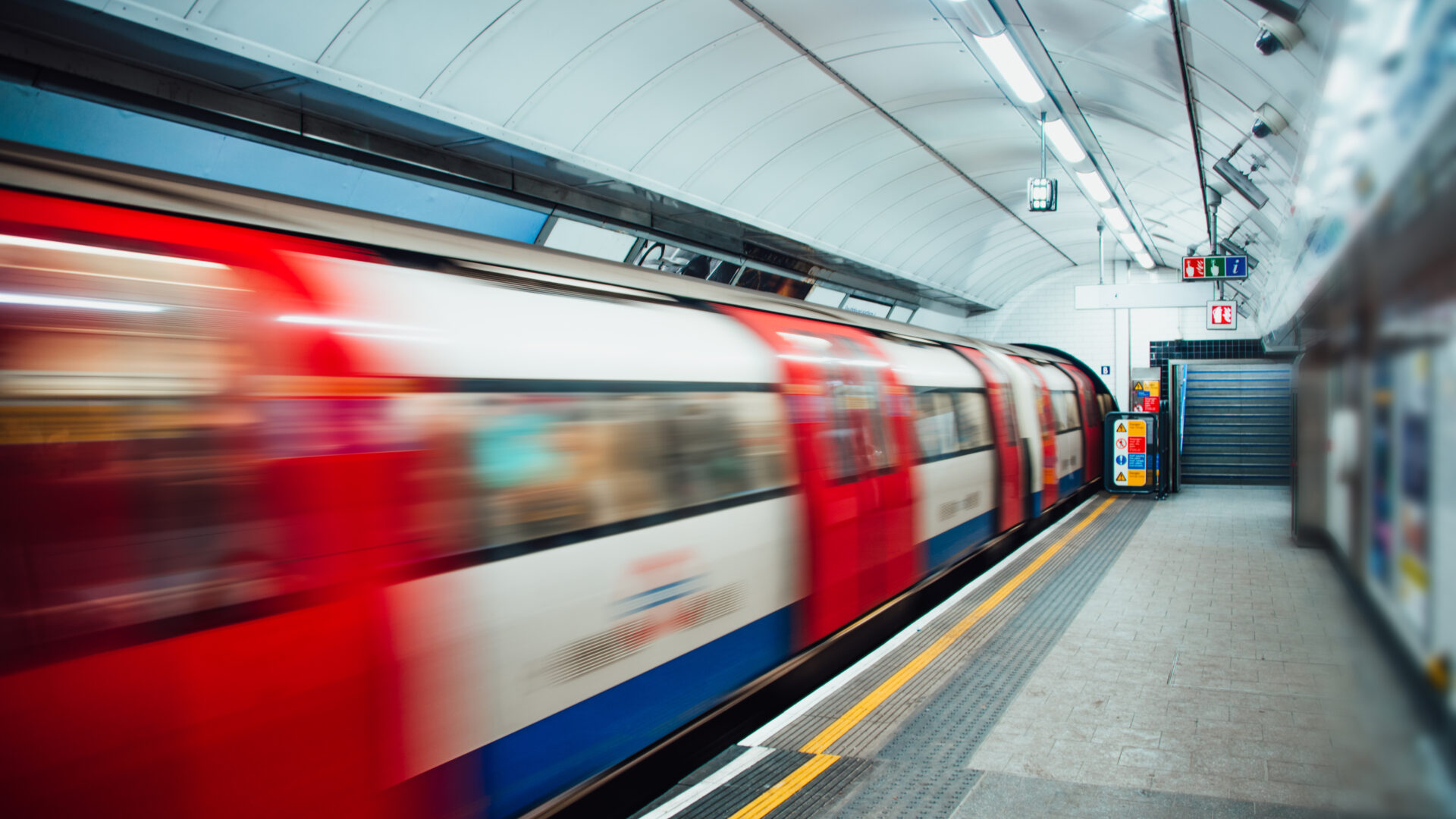
Transport is the reason Ilford’s prices have held up. Ilford station sits on the Elizabeth line (Zone 4) and is also served by Greater Anglia mainline trains, putting Liverpool Street 18 minutes away and the Elizabeth line’s central spine — Farringdon, Tottenham Court Road, Bond Street, Paddington — on a single direct train. For the Underground proper, Gants Hill and Newbury Park (both Central line, Zone 4) are a short bus ride or walk north of the centre, giving a second route into the City and West End.
Bus Network
Ilford has one of east London’s busier bus interchanges, fanning out from the station and the High Road across Redbridge, Newham and Barking & Dagenham, with night services on the core corridors. Combined with the Elizabeth line and the Central line at Gants Hill, getting home late is straightforward.
Commute Times
| Destination | Route | Station-to-station |
|---|---|---|
| Liverpool Street | Elizabeth line (direct) | 18 min |
| Canary Wharf | Elizabeth line, change at Whitechapel | 20 min |
| Bank | Elizabeth line + change | 27 min |
| King’s Cross St Pancras | Elizabeth line + change | 29 min |
Station-to-station, TfL Journey Planner, 08:30 weekday. Add the time to reach and board your station. The Elizabeth line runs direct through the central tunnel to Heathrow and Reading without changing platforms.
Cycling and Walking
The terrain is flat, which makes Ilford easy on foot and by bike. Valentines Park is a 0.4-mile walk from the station, and the High Road, the Exchange shopping centre and Cranbrook Road’s shops are all within a 10-minute walk of the platforms. On-road cycling along the A118 High Road and Ilford Hill is busy and unforgiving; quieter routes run through the residential streets north toward Wanstead Park and the River Roding. The area sits within the Ultra Low Emission Zone (ULEZ).
Driving and Parking
The A12 and A406 (North Circular) are minutes away, giving quick road access east toward the M11 and M25 and west into London — though both are congested at peak. Ilford is within the ULEZ but outside the Congestion Charge zone. Central IG1 is covered by Controlled Parking Zones, so on-street parking near the station and High Road is permit-controlled and tight; the residential streets further out are easier.
Transport Verdict
Ilford suits commuters to the City, the West End and (with one change) Canary Wharf who want a direct Elizabeth line train at an outer-London price. The limitation is that the fast line is the Elizabeth line only — the nearest Underground is a bus ride away — so households who need the Tube on their doorstep should weigh Gants Hill itself.
Crime & Safety in Ilford
Top Concern
Source: Metropolitan Police via data.police.uk · Population: ONS Census 2021 · Updated monthly
The Numbers
Ilford earns a PAL Safety Score of 50/100, benchmarked against every London neighbourhood we track — a score that sits right around the London average. Its residential crime rate is 125, close to the London-wide level rather than notably above or below it. Year-on-year the recorded-crime trend is Stable (+0.4%). Violence and sexual offences are the largest single category at about 29%, followed by theft and antisocial behaviour (data.police.uk, the latest 12-month period).
What the Data Tells You
The honest read is that Ilford is genuinely middle-of-the-road for London — neither a low-crime suburb nor a high-crime hotspot, but right around the average. That average masks a real split: the volume is concentrated in the town centre, where the footfall is, while the residential streets carry noticeably less. Buyers who want the quietest ground in their budget will find it in Wanstead or the Redbridge streets further north; buyers comfortable with an ordinary, busy outer-London centre will find the residential streets calmer than the town-centre figures suggest.
Street-Level Context
The split between centre and suburb is sharp. Met Police neighbourhood data puts the Clementswood streets around the station and Ilford Lane among the busiest for crime in the area, while the quieter Newbury streets to the north-east record markedly less — a wide gap within a single postcode. The town centre carries the problems you would expect of a major transport hub: a police dispersal zone has covered Ilford Station and York Road in response to persistent antisocial behaviour and street drinking (Ilford Recorder), the council runs an antisocial-behaviour taskforce focused on the centre, and a violent “steaming” robbery hit a High Road sports shop in March 2025 (London Borough of Redbridge, March 2025). Move a few streets out toward Valentines Park and the picture is ordinary suburban.
What Residents Say
Residents tend to draw the same line the data does. “There are pockets of Ilford with some lovely Victorian housing stock around Valentine’s Park, but the bits near the station are really not very nice,” one local wrote on a Mumsnet housing thread (2021) — a fair summary of the centre-versus-suburb divide that runs through the area. The practical takeaway for a buyer: the closer you are to the station and the High Road, the more of the town-centre texture you take on.
Unlock the Complete Ilford Guide
You’ve seen the headline data. Get the full picture — detailed narratives, council costs, community character, and our editorial verdict.
- 🎓 In-depth school, transport & crime analysis
- 🏛 Council tax & parking costs
- 🏘 Community character & local vibe
- ⭐ Editorial verdict, value assessment & future outlook
- 📦 Moving practicalities
By unlocking, you’re happy for us to email you this guide plus the occasional helpful update from Property Around London. No spam — unsubscribe anytime.
Council Fees in Ilford
Council Tax (Annual)
| Band C | Band D | Band E |
|---|---|---|
| £2,040 | £2,295 | £2,804 |
Parking
Source: London Borough of Redbridge, 2026
Council Tax Bands
Ilford sits within the London Borough of Redbridge, where the Band D charge is £2,295 — close to the outer-London average and a little above neighbouring Newham. Most Ilford flats fall in Bands B–C and most terraced houses in Bands C–D, so the typical bill is moderate for the area.
Local Authority Services
Redbridge is a stable, mid-performing outer-London authority and an active partner in the town-centre regeneration alongside the Greater London Authority. Resident parking permits are inexpensive by London standards, and the borough’s garden-waste collection is unusually generous (see below).
Waste and Recycling
Redbridge collects general rubbish and recycling weekly, with a borough-wide wheelie-bin rollout due to move some areas to fortnightly recycling from 2027 (London Borough of Redbridge). Garden-waste collection is free — there is no annual subscription, only a small charge per official green sack — which is rare among London boroughs and a genuine saving for households with a garden.
Libraries and Leisure
The Redbridge Central Library on Clements Road (IG1), which also houses the borough museum, is the main library for the centre. For sport, Loxford Leisure Centre on Loxford Lane (IG1) has a 25-metre pool and is the closest to central Ilford, with Mayfield in Goodmayes and Fullwell Cross in Barkingside a little further out. Valentines Park — covered below — is the area’s standout public asset.
Ilford Community Character
Ilford's Elizabeth line arrival echoes the regeneration reshaping Canning Town to the south.
Ten Minutes from the High Road to the Mansion
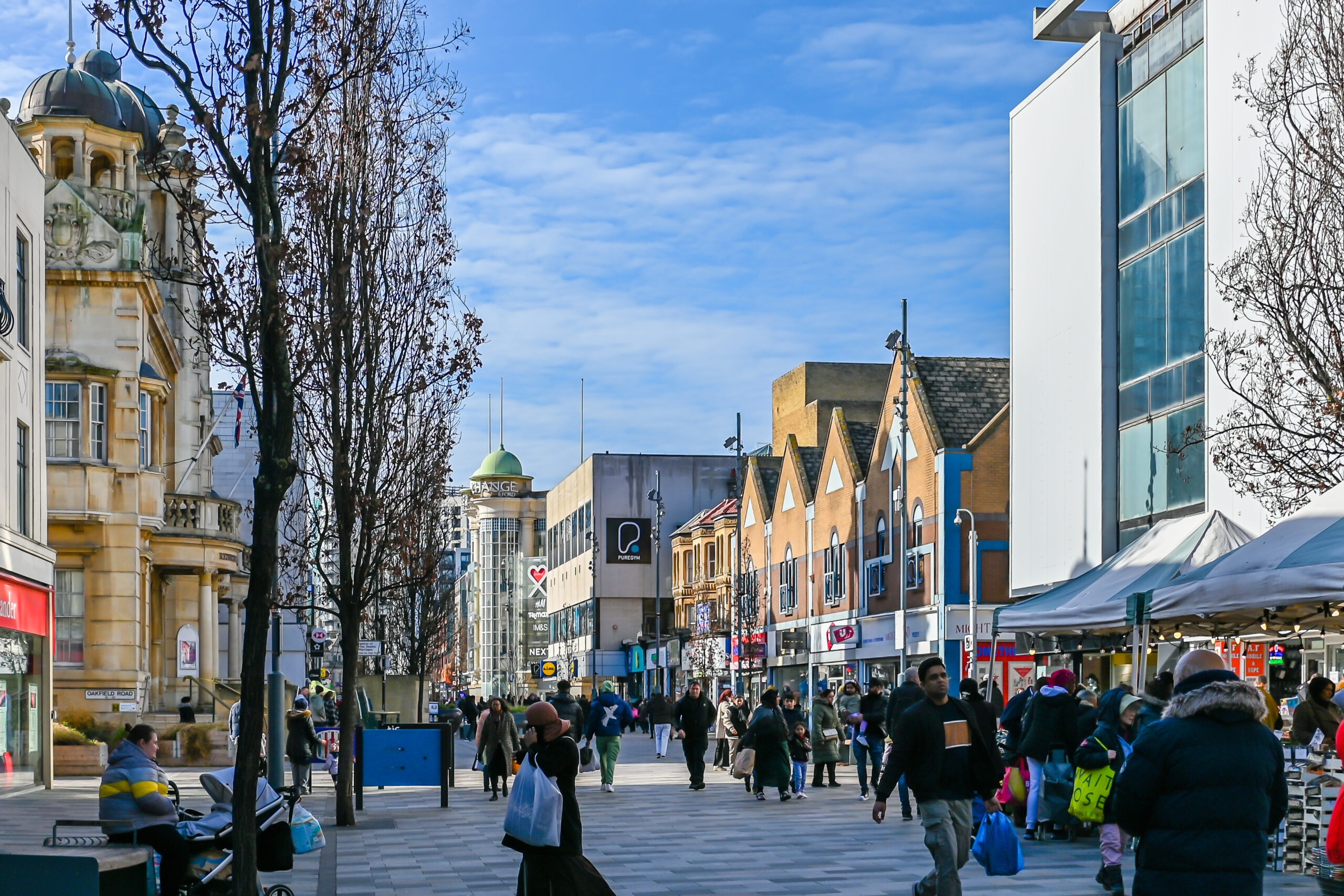
Step off the train at Ilford and the first impression is function, not charm — a wide, busy High Road of phone shops, halal grills, pound stores and the Exchange Ilford shopping centre, with the red-brick Town Hall anchoring one end. The crowd is one of London’s most mixed, and the soundtrack is traffic and a dozen languages.
Turn up Cranbrook Road and the Ilford Market traders are setting out fruit, fabric and street food six days a week; international supermarkets and dessert cafés fill the units the chain stores have vacated. It is a working high street doing a working high street’s job, cheaply and without pretension.
Ten minutes north, the mood changes completely. Valentines Park opens into 52 hectares of Victorian landscaping — a boating lake, a walled garden and the 1690s Valentines Mansion — and the Edwardian streets around it are a different, quieter Ilford. The gap between those two Ilfords is the whole character of the place.
After the Exchange Closes
Ilford’s evening is mostly about eating. The big halal buffet houses draw crowds after dark — Royal Nawaab on Clements Road lays out 120-plus dishes — and the restaurants along Ilford Lane and Cranbrook Road stay busy late, with dessert cafés serving milkshakes past midnight.
Beyond the food, the centre empties and hardens. Once the Exchange shuts, the High Road around the station is quiet and a little edgy, and Redbridge runs a police dispersal zone here to deter street drinking and antisocial behaviour. "People always seem so miserable in Ilford town centre," — as one resident put it on Mumsnet. The residential streets toward Valentines Park, by contrast, are simply dark and still.
Buffet, Boating Lake and Borrowed Books
Valentines Park Café, Valentines Park — the café by the boating lake has poured tea since the park opened in 1912 and doubles as the start line for the free Valentines parkrun every Saturday at 9am. Rowing boats go out on the lake in summer.
Royal Nawaab, Clements Road — the cavernous Pakistani-Indian buffet beside Exchange Ilford is a destination in its own right, packing in extended families around 120-plus dishes. Come hungry; it is built for it.
Ilford Market, High Road — the on-street market runs six days a week past the Town Hall, selling fresh produce, household goods and street food. It is the centre at its most genuinely local.
The Urban Chocolatier, Cranbrook Road — an independent dessert café open late, known for outsized portions and staff the regulars greet by name. It fills the evening gap the chains leave behind.
Redbridge Central Library & Museum, Clements Road — more than a library: the second-floor Redbridge Museum reopened in August 2024 with a new permanent local-history exhibition, free to visit. A quiet, useful corner of a noisy centre.
From Spring Daffodils to the Christmas Drone Show
Spring Daffodils and meadow planting come up across Valentines Park, and the walled kitchen garden by the Mansion is at its best through April and May.
Summer The park café hosts open-air music — Redbridge’s summer festival played outside it in June 2025 — and open-air Shakespeare is staged among the trees while rowing boats work the lake.
Autumn The avenues around the boating lake turn red and gold, with swans and ducks on the connected waters and the parkrun crowd in gloves by November.
Winter The Christmas lights switch-on draws thousands to the High Road by the Town Hall; the 2025 edition added Ilford’s first drone show and fireworks.
Source: Google Maps, OS Open Greenspace & editorial research, 2026

The Elizabeth line, four Outstanding schools and family houses with gardens under £530k — Ilford trades a tired High Road for space and value.
Ilford represents one of London’s most strategically positioned suburban regeneration stories, anchored by the Elizabeth line’s transformative arrival and 37 minutes to the City via Gants Hill Central line interchange.
Ilford scores 52/100 on the PAL Score — our weighted rating across six core criteria that define what makes a London neighbourhood work for buyers.
How We Score
Each criterion is normalised on a 0–100 scale across every London neighbourhood we cover, so a score describes how Ilford compares with the rest of the city, not an absolute mark.
The Breakdown
| Criterion | Score (/100) | What it means |
|---|---|---|
| Transport Connectivity | 59 | Direct Elizabeth line; Liverpool Street in 18 minutes, Central line a bus ride north. |
| Property Price Affordability | 56 | Houses with gardens under the inner-London bar; flats among the cheapest on the Elizabeth line. |
| Safety | 50 | Crime sits right around the London average; the residential streets are calmer, the town centre busier. |
| School Quality | 52 | Four Outstanding schools across both phases; every listed school Good or better. |
| Green Space Access | 47 | Valentines Park is a genuine asset, but parkland is unevenly spread across the dense centre. |
| Local Amenities | 43 | A large retail centre, but a thinning High Road and limited bars, dining and culture. |
Scores use the PAL 0–100 scale, z-score normalised across all London neighbourhoods and displayed as integers. See the PAL Score Architecture for methodology.
What This Means
Transport (59/100) and affordability (56) carry Ilford — the direct Elizabeth line and the value of its house stock are the whole case. Safety (50) and schools (52) sit respectably mid-table, the schools stronger than the bare number suggests once you weight the two Outstanding secondaries. The two marks holding the area back are green space (47) and amenities (43): the green-space score surprises people, because Valentines Park is excellent, but parkland is thin across the crowded centre, and the amenities score reflects a High Road that has lost its anchor stores. The resulting 52/100 is a Good score that rewards families and commuters who use the trains, the schools and the parks — and warns off anyone who wants a polished centre to walk to.
Buyers comparing safe, value-focused Zone 4 suburbs should also read our Arnos Grove guide.
✗ May Not Suit
💰 Value Assessment
The £500,000 average price sits well below equivalent inner-east-London locations with comparable schools and a direct Elizabeth line, making Ilford one of the better value-for-space options in Zone 4.
Our Recommendation
Who's Ilford for?
Ilford could be a strong fit if you:
- Want a whole house with a garden on a fast line. Three-bed terraces around Valentines Park sit near the £525k median — space inner east London no longer offers at the price.
- Have school-age children. Two Outstanding secondaries (Loxford, Ark Isaac Newton) and two Outstanding primaries in one area is rare, and Seven Kings School posts a +1.12 Progress 8.
- Commute to the City or West End. The Elizabeth line runs direct to Liverpool Street in 18 minutes and on to Farringdon and Bond Street without changing.
- Are an investor chasing yield. Gross yields of roughly 6–8% with deep, varied tenant demand are among the better returns on the Elizabeth line.
- Value space and value over polish. You accept a tired High Road in exchange for more house, lower prices and strong schools.
Think twice if you:
- Want a lively, walkable centre. Ilford’s High Road has lost Marks & Spencer, Wilko and Waterstones, and carries a visible run of empty units.
- Prioritise the lowest-crime postcode. Ilford sits right around the London average, and the streets around the station and Ilford Lane run busier still; quieter ground is further north.
- Need the Underground on your doorstep. The fast service is the Elizabeth line; the nearest Tube (Gants Hill, Central line) is a bus ride north.
- Dislike living near construction. Several town-centre tower schemes are approved or under way, so expect hoardings and cranes around the centre for years.
- Want established dining and culture. The restaurant scene is strong on South Asian and Turkish food but thin on the bars, theatres and galleries of inner London.
The Real Picture
Ilford is a practical family-and-investor area that does the important things well and the lifestyle things poorly. You buy here for the 18-minute train to the City, the Outstanding schools, and a three-bed with a garden you could not afford two zones in — and you accept, in return, a worn-out High Road, a town centre with real antisocial-behaviour problems, and years of nearby building work. For a family that spends its time in the parks, the schools and the house rather than the high street, that is a sound trade. For someone who wants a centre worth walking to, it is not yet there.
Moving to Ilford: The Practical Side
Council Tax
Ilford is in the London Borough of Redbridge.
The Band D charge is £2,295.
Parking
Central IG1 is covered by Controlled Parking Zones, so check the specific zone for any address on the Redbridge parking map before assuming you can park on-street. The borough’s resident permit costs around £40 a year for a first vehicle, rising steeply for second and third vehicles (London Borough of Redbridge, 2026). On-street parking is tight near the station and the High Road and easier on the residential streets further north.
GP Surgeries
Central Ilford is served by practices including York Road Surgery (IG1 3AF), Ilford Medical Centre on Cleveland Road (IG1 1EE) and The Drive Surgery (IG1 3HZ) — all rated Good by the Care Quality Commission. Across the IG1–IG6 area, about 87% of GP surgeries are rated Good or Outstanding by the CQC (June 2026). The nearest acute hospitals are King George Hospital in Goodmayes and Queen’s Hospital in Romford, both run by Barking, Havering and Redbridge University Hospitals NHS Trust; King George’s most recent CQC rating is Requires Improvement, so check current ratings if hospital quality matters to you.
Utilities and Broadband
Full-fibre broadband is widely available: about 94% of IG1 premises are gigabit-capable (Ofcom Connected Nations, 2026), with Openreach full-fibre (BT, Sky, TalkTalk), Virgin Media’s Gig1 and CityFibre all present in parts of the district. Energy costs track the Ofgem outer-London regional average; older terraces and ex-council flats will have weaker energy ratings than the new town-centre blocks, so check the EPC before you buy.
Childcare
Nursery provision is good. Valentines Nursery on Ingleby Road (IG1) is rated Outstanding by Ofsted (December 2022), with Oxford Day Nursery and Liberty Day Nursery among the other central options. A full nursery day in the Ilford area runs roughly £60–£90, or about £1,200–£1,800 a month full-time before any funded hours.
Removals and Access
The Edwardian and 1930s terraces north of the centre sit on residential streets within Controlled Parking Zones, so a removals van will usually need a permit or dispensation from Redbridge — arrange it in advance. Town-centre flats in the newer towers have lifts and loading bays, but you will need to book the service lift with the building manager. The A12 and North Circular give removals firms easy access to the area.
Frequently Asked Questions
Common questions about living in Ilford, answered with data from our research.
The median flat in Ilford sold for £260k over the past year (HM Land Registry, to April 2026) — a midpoint, not a floor: the cheaper older flats start from around £84,000, while larger two-beds in the new town-centre towers reach up towards £510,000. That makes Ilford one of the cheapest places to buy a flat on the Elizabeth line — roughly £95,000 below the typical Stratford flat — and prices are rising rather than falling, up 1.7% over the past year.
About 18 minutes to Liverpool Street on a direct Elizabeth line train, with Farringdon, Tottenham Court Road and Bond Street a few stops further on the same train. Canary Wharf is around 20 minutes with one change at Whitechapel, and Bank about 27. These are station-to-station times (TfL, 08:30 weekday); add your walk to the station.
Yes — schools are one of Ilford’s strongest points. There are 20 schools rated Good or Outstanding within reach, including 6 rated Outstanding by Ofsted. Loxford School (Outstanding, November 2023) and Ark Isaac Newton Academy (Outstanding, October 2018) anchor the secondary offer, with Cleveland Road and Highlands primaries Outstanding at primary level. Seven Kings School posts a +1.12 Progress 8 (Department for Education, 2023/24), well above average.
Ilford lands right around the London average on safety — a PAL Safety Score of 50/100, benchmarked against every London neighbourhood, with a residential crime rate of 125. That headline hides a sharp split: the streets around the station and Ilford Lane run busier, while the residential streets near Valentines Park are ordinary suburban. The recorded-crime trend is Stable (+0.4%) year-on-year, and a police dispersal zone covers the station to deter antisocial behaviour (data.police.uk, the latest 12-month period).
Council tax is set by the London Borough of Redbridge, with a Band D charge of £2,295. Most Ilford flats fall in Bands B–C and most terraced houses in Bands C–D, so the typical bill is moderate. Redbridge also collects garden waste free of an annual subscription — rare in London — which is a modest but real saving for households with a garden.
It depends what you want. Against Romford, Ilford is closer in (Zone 4 to Romford’s Zone 6) on the same Elizabeth line, for similar money. Against Stratford, Ilford’s flats are well cheaper and its houses a little less, but Stratford offers Westfield, the Olympic park and a far livelier centre. Ilford is the value-and-space option; Stratford is the finished, pricier article. See our Stratford guide.
For income, yes — gross rental yields of roughly 6–8% are among the better returns on the Elizabeth line, backed by deep tenant demand from commuters, families and sharers. Capital values are rising (up 10.5% over five years) but more slowly than Romford or Walthamstow. The risk to watch is the wave of new-build town-centre flats completing together, which caps growth and rents at the cheaper end. It suits income-focused, longer-hold investors.
Ilford is a designated Opportunity Area, with the council and the Greater London Authority targeting roughly 6,000 new homes around the centre by 2030 to build on the Elizabeth line’s arrival (Redbridge; GLA, 2024). Several residential towers are approved or built near the station. But be clear-eyed: the High Road has lost Marks & Spencer (June 2024), Wilko and Waterstones, so the regeneration is a work in progress, not a finished transformation.
The headline asset is excellent: Valentines Park (about 52 hectares, a Grade II registered park with a boating lake, ornamental water and the listed Valentines Mansion) is a 0.4-mile walk from the station. South Park, Seven Kings Park and Loxford Park add more nearby, with Fairlop Waters further north. Despite this, Ilford’s overall green-space score is only 47/100, because provision is unevenly spread across the dense centre — if green space matters, buy toward Valentines Park rather than the High Road.
The two halves feel different. Around the station and the High Road you get the Elizabeth line on your doorstep, the Exchange shopping centre, and the busier, rougher edge of a major transport hub. North and east toward Valentines Park, Cranbrook and Seven Kings, Ilford is quiet, leafy Edwardian and 1930s suburbia with gardens and the better schools. Most family buyers settle in the second Ilford and use the first for the trains and the shops.
Data from HM Land Registry, Ofsted, Metropolitan Police & TfL. Page last regenerated 31 August 2026.
Moving to Ilford?
Get our free moving checklist and local tips delivered to your inbox.
No spam. Unsubscribe anytime.