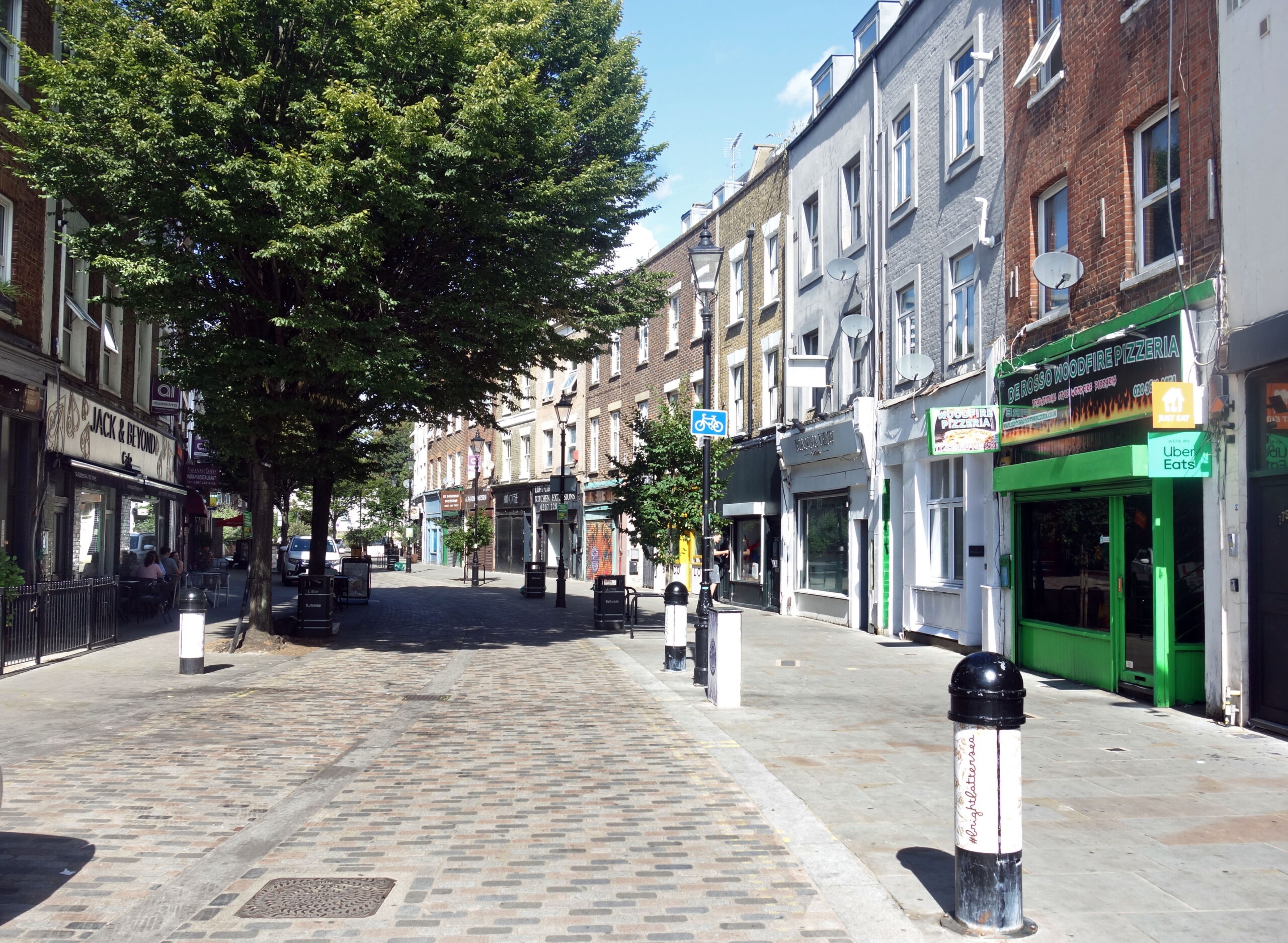
Property Prices in Battersea
Source: HM Land Registry Price Paid Data — median sold prices over a rolling 12-month window
What Your Budget Buys
Source: HM Land Registry.
For a more affordable South London market, compare prices in Brixton.
Market Position & Budget Bands
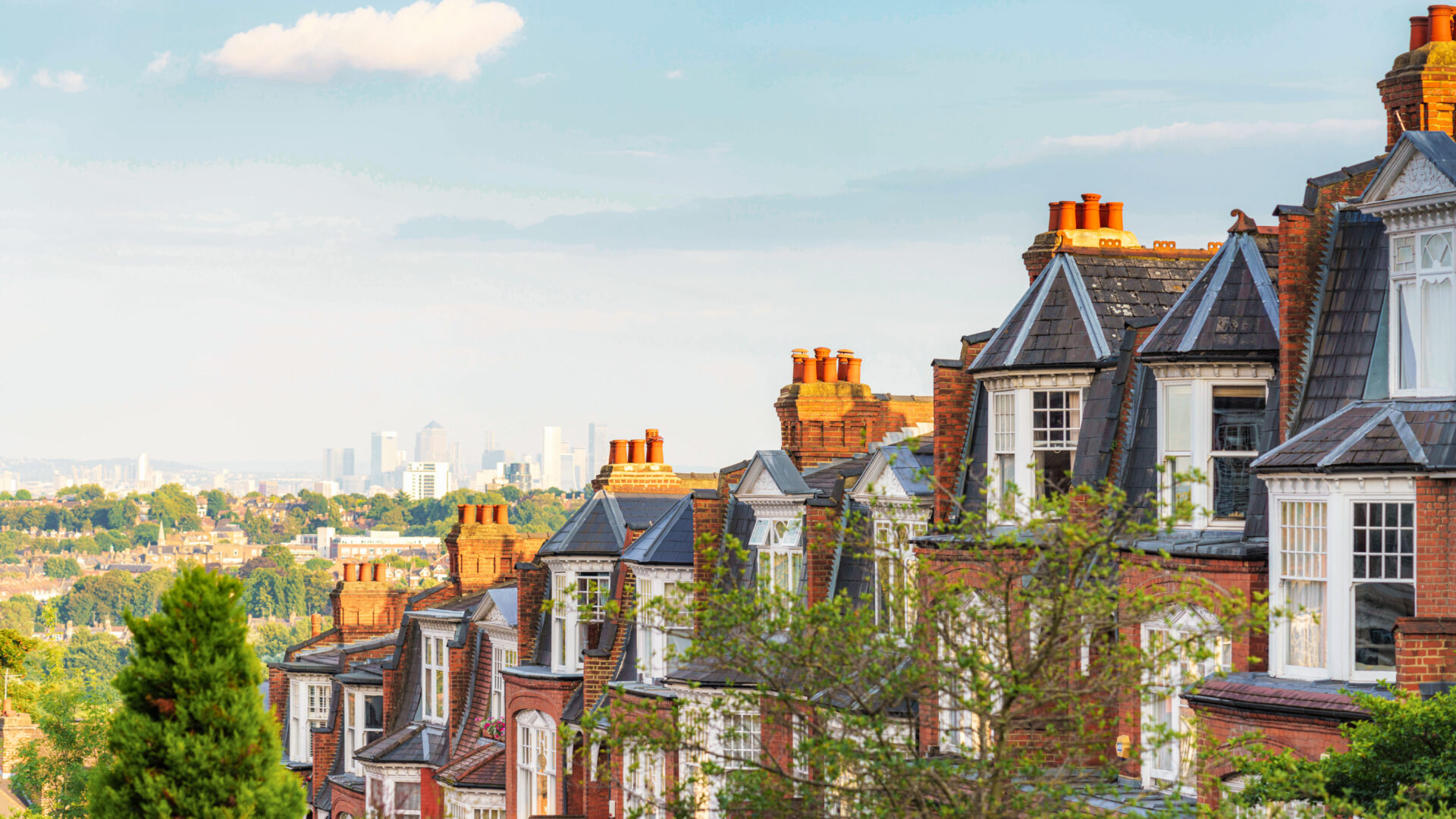
Battersea’s overall median sold price is £756k (HM Land Registry), and the single most important thing to understand about it is that there is no one Battersea market — there are three. At borough level Wandsworth is roughly two-thirds flats to one-third houses (Census 2021), but that average hides a sharp internal split. The riverside north — Nine Elms and the Battersea Power Station fringe — is almost entirely new-build flats. The “Between the Commons” grid west of Northcote Road is the mirror image: the only house-majority pocket in the whole of Battersea, and almost all of those houses are Victorian and Edwardian terraces. Around Battersea Park sits a third market again — late-Victorian mansion blocks and garden squares, purpose-built flats rather than towers. It is a premium South West London area on every measure, dearer than neighbouring Clapham, and who buys depends entirely on which of the three Batterseas they are after: families chasing the terraces and their schools, professionals and downsizers taking the riverside and park-side flats.
What Your Budget Buys
Flats are the bulk of the market, and they span an unusually wide range for one area — from around £110k at the entry level up to £3.60m at the top, against a £635k median. The cheapest are ex-local-authority flats, concentrated behind Clapham Junction on the Winstanley and York Road estate (itself under phased regeneration) and in Falconbrook, plus smaller period conversions. The middle is Victorian conversions across the Between-the-Commons streets and the 1870s artisans’ cottages of the Shaftesbury Park estate (a conservation area since 1974), many now converted into flats. The top is two very different things at similar money: the late-Victorian mansion flats of Prince of Wales Drive and the Albert Bridge Road garden squares — Overstrand Mansions dates from 1893 — and the new-build riverside apartments at the Power Station and Nine Elms, which come with lifts, concierge, gigabit broadband and service charges to match.
Houses are the scarce, premium end, and they mean terraces. The typical terrace sells at £1.33m, running to £3.55m for the largest, and they concentrate overwhelmingly in the Between-the-Commons grid west of Northcote Road — regular Victorian and Edwardian terraces thrown up during the area’s rapid growth from the 1850s and 1860s, when Northcote Road itself evolved into the local high street (Survey of London). Genuine semi-detached and detached houses barely exist in Battersea — across the borough they are a low single-digit share of stock — so a whole house here means competing for a period terrace, not shopping a range of house types, and the scarcity of family houses in a flat-dominated area is precisely what drives the Between-the-Commons premium.
What Drives Values
Battersea’s value rests on things that do not move month to month. What holds it up: the transport, above all Clapham Junction’s National Rail reach and the new Northern line extension; the Battersea Power Station regeneration, which turned a derelict landmark and its surrounds into a working district with Apple’s UK campus, shops, restaurants and a river-bus pier; the cluster of sought-after schools between the commons; Battersea Park itself; and Wandsworth’s unusually low council tax, which lowers the running cost of an expensive home. What tempers it: this is a high-value, rate-sensitive market, most exposed at the top of the house range, and the riverside is still delivering thousands of new flats into the late 2020s, which keeps that part of the market well supplied. The live median and by-type figures are in the cards above and on the price comparison page.
Leasehold vs Freehold
Battersea’s flats are predominantly leasehold — mansion-block conversions, period conversions and new-build towers alike — so lease length and service charges are the first things to check. They matter most at the two extremes: older mansion blocks around the park, where major-works bills can be significant, and the new riverside towers, where the service charges that fund concierge, lifts, gyms and landscaped grounds can be substantial and should be read carefully before you buy. The Between-the-Commons terraces, by contrast, are almost all freehold houses.
Rental Yields (Buy-to-Let Context)
Battersea has a deep rental market with two distinct tenant bases: professionals and couples in the riverside and Nine Elms new-builds, and families and sharers in the Between-the-Commons streets. Advertised rents run roughly £2,000–£2,800 a month for a one-bed and £2,800–£4,000-plus for a two-bed (Rightmove and Zoopla SW11/SW8 listings, 2026), with the wide spread driven by the premium new-build stock sitting well above period conversions. Because capital values are high, gross yields are modest — broadly 3.5–4.5% — so Battersea is a capital-and-covenant play more than a high-yield one. Void risk is low near Clapham Junction and the Tube, where tenant demand is deepest.
How Battersea compares nearby
Median sold price, all property types, against the nearest comparable areas we cover.
HM Land Registry · prices last updated 5 August 2026
Schools in Battersea
🏫 Primary
🏛 Secondary
Belleville Primary School
Chesterton Primary School
Belleville Wix Academy
Falconbrook Primary School
Honeywell Infant School
Honeywell Junior School
John Burns Primary School
Sacred Heart Catholic Primary School, Battersea
Shaftesbury Park Primary School
St George's CofE Primary School
St Mary's RC Voluntary Aided Primary School
Westbridge Academy
Harris Academy Battersea
Ark Bolingbroke Academy
Saint John Bosco College
Data: Ofsted, 2026
School Overview
Schools are a genuine draw in Battersea, and the strength is concentrated in the primary phase. There are 15 state schools within reach rated Good or Outstanding, including 3 rated Outstanding by Ofsted. The pull is strongest in the “Between the Commons” streets of SW11 6, where a cluster of sought-after primaries drives family demand and, with it, a measurable house-price premium. The state-secondary picture is narrower than the primary one but has a real standout, and a set of well-regarded independents fills in around the edges.
Primary Schools
The two Outstanding state primaries anchor the area. Belleville Primary School (Webb’s Road, SW11 6PR) is Outstanding (Ofsted, March 2022) — one of the largest and most oversubscribed primaries in the borough, with over 1,000 pupils across its two sites and the school most often named by families buying into the Northcote Road grid. Chesterton Primary School (Dagnall Street, SW11 5DT) is also Outstanding (Ofsted, December 2022). Behind them sits a deep bench of Good primaries: the Honeywell infant and junior schools (Honeywell Road, SW11 6EF; both Good, Ofsted 2022–23) are the other famous Between-the-Commons name, Belleville Wix Academy (SW4 0AJ; Good, 2019) runs a bilingual English–French stream, and Sacred Heart Catholic Primary (SW11 2TD; Good, June 2023), St Mary’s RC (SW8 4EN; Good, May 2023), Shaftesbury Park Primary (SW11 5UW), John Burns, Falconbrook, St George’s CofE and Westbridge Academy spread choice across the rest of Battersea. Since September 2024 Ofsted has stopped issuing single-word overall grades, so for any school inspected after that date, check the current report at reports.ofsted.gov.uk before relying on a rating.
Secondary Schools
The standout state secondary is Harris Academy Battersea (Battersea Park Road, SW11 5AP), rated Outstanding (Ofsted, January 2018), a heavily oversubscribed non-selective academy with a Progress 8 of +0.32 and Attainment 8 of 51.4 (Department for Education, 2023/24). The best raw results, though, belong to Ark Bolingbroke Academy (Bolingbroke Grove, SW11 6BF): rated Good at its last inspection but posting a Progress 8 of +1.04 and Attainment 8 of 61.3 (Department for Education, 2023/24) — among the strongest progress scores in Wandsworth, and a school families actively target from the Between-the-Commons streets. Saint John Bosco College (SW11 3DQ; Good, Progress 8 +0.17) is the Roman Catholic co-educational option, admitting on faith criteria. Two of the three secondary judgements pre-date 2019, so treat the grades as dated and read them alongside the current DfE results.
Catchment Reality
Battersea’s primary catchments are the tightest in the guide, and the Outstanding schools are the tightest of all. Belleville and the Honeywell schools sit in the SW11 6 grid between Wandsworth Common and Clapham Common — the “Between the Commons” premium is, in large part, a schools premium — and in a popular year the furthest-offered distance can shrink to a few hundred metres from the gate. If you are buying for a specific school, target streets inside its recent admissions radius and confirm the previous year’s cut-off with the school directly, because these radii tighten when demand rises. Ark Bolingbroke’s strong results make it similarly competitive. The faith schools (Sacred Heart, St Mary’s, Saint John Bosco) admit on Catholic priority first and distance second, so a nearby address gives no automatic place. Battersea sits wholly within Wandsworth, but the Between-the-Commons streets border Lambeth, and some families also weigh Clapham’s schools across that boundary — confirm which authority administers admissions before committing.
Independent Options
Independent provision is a real part of the Battersea picture. Thomas’s Battersea (28 Battersea High Street, SW11 3JB) is the best-known — a large, academically selective co-educational prep for ages 4–13, part of the Thomas’s group. Newton Prep (149 Battersea Park Road, SW8 4BX) is a co-educational prep and nursery for ages 3–13 near Battersea Park. Broomwood (single-sex prep schools, part of Dukes Education) draws from the Between-the-Commons streets, and Emanuel School (Battersea Rise, SW11 1HS) is a co-educational senior day school for ages 10–18 beside Wandsworth Common. Confirm current fees and admissions directly with each school.
For another family-oriented South London area, compare East Dulwich's schools.
Transport & Commute: Battersea
Commute Times
Source: TfL Journey Planner, 2026. All times are station-to-station (boarding to alighting); add 5–10 minutes for walking to your nearest station and waiting.
For another rail-hub area reshaped by regeneration, see Stratford's regeneration story.
Rail and Tube
Transport is Battersea’s real strength, and it comes in two distinct forms. To the south, Clapham Junction is the headline — Britain’s busiest railway interchange, with more than 2,000 trains a day and direct National Rail services to Victoria (7 minutes) and Waterloo (11 minutes), plus London Bridge, Gatwick Airport, Richmond, Wimbledon and the south coast (all National Rail, station-to-station, 08:30 weekday). Queenstown Road (Battersea) adds a second South Western Railway station running fast into Waterloo, and Battersea Park a Southern station into Victoria. To the north, the Northern line extension — opened in September 2021, the first major Tube extension since the Jubilee line in 1999 — gave the riverside two brand-new Zone 1 Underground stations at Battersea Power Station and Nine Elms, both step-free, on the Charing Cross branch into the West End. So Battersea straddles the zones: the new-build riverside sits in Zone 1 on the Tube, while the older residential heart is Zone 2 on National Rail. The one caveat is that the Northern line extension serves the Charing Cross (West End) branch, so a City-bound commuter changes at Kennington rather than riding straight through to Bank.
Bus Network
Battersea is densely served by buses along Battersea Park Road, Queenstown Road, Lavender Hill and St John’s Hill, linking the stations to Clapham, Wandsworth, Vauxhall, Chelsea and the West End — useful given that no single station covers the whole of a large, spread-out area. Night buses along Lavender Hill and through Clapham Junction keep Battersea connected after the trains stop.
Commute Times
| Destination | Route | Station-to-station |
|---|---|---|
| Victoria | National Rail from Battersea Park / Clapham Junction | 7 min |
| Waterloo | South Western Railway from Queenstown Road / Clapham Junction | 11 min |
| Bank | Rail + Underground (change) | 22 min |
| Canary Wharf | Rail + Underground (change) | 32 min |
Station-to-station, TfL Journey Planner and National Rail, 08:30 weekday. Add the time to reach and board your station. Victoria and Waterloo run direct from Battersea’s National Rail stations; the Northern line extension at Battersea Power Station and Nine Elms serves the Charing Cross (West End) branch.
Cycling and Walking
Battersea is flat and, along the river, genuinely pleasant to cycle — the Thames path, Battersea Park’s internal roads and the new Nine Elms cycle routes link the area to Vauxhall, Chelsea (over the bridges) and the wider network. Santander cycle docks sit around the Power Station and Nine Elms. There is also a river bus — Uber Boat by Thames Clippers calls at Battersea Power Station Pier, running east to Waterloo, Westminster, Tower and Greenwich, a scenic if slower commute. The whole area is within the Ultra Low Emission Zone (ULEZ), London-wide since August 2023, so a non-compliant vehicle is charged daily.
Driving and Parking
Battersea sits within the ULEZ but outside the Congestion Charge zone. The river crossings — Chelsea, Albert, Battersea and Wandsworth bridges — funnel traffic and none of them is fast at peak, and the Nine Elms and Power Station building works add congestion around the riverside. Controlled Parking Zones cover most of the residential streets, and Wandsworth prices resident permits at a flat annual rate rather than by emissions — covered in full in the moving section below. As across most of inner London, a car here is more liability than asset: the trains, Tube and buses cover most journeys, and on-street parking around Clapham Junction and Northcote Road is tight.
Transport Verdict
Battersea suits commuters to Victoria, Waterloo and the West End who want fast, frequent trains and a choice of stations. Clapham Junction is the single best reason to buy here — 7 minutes to Victoria, around 11 to Waterloo and a National Rail reach that few Zone 2 areas match — and the Northern line extension has, for the first time, given the riverside its own Underground and a genuinely quick Tube run into the City. The honest limitation is the City: a daily Bank or Canary Wharf commuter changes trains (22 and 32 minutes respectively), so Battersea is a better fit for a West End or Victoria worker than a City one.
Crime & Safety in Battersea
Top Concern
Source: Metropolitan Police via data.police.uk · Population: ONS Census 2021 · Updated monthly
The Numbers
Battersea’s PAL Safety Score is 61/100, benchmarked against every London neighbourhood we track — a middling position rather than a reassuring one, but the underlying rate is better than that score alone suggests. The residential crime rate runs at 114 per 1,000 residents (the latest 12-month period, data.police.uk), which sits 13% below the London average. Year on year the picture is broadly stable. The honest read: on the rate itself Battersea is a below-average area for crime, but it is not a sleepy one, because so much of what is recorded here is generated by people passing through rather than living here.
What the Data Tells You
The largest category is Anti-social behaviour, at around 24% of recorded offences, with theft and violence close behind. That profile is the tell: Battersea contains Clapham Junction — Britain’s busiest railway interchange by train movements — plus Battersea Park and the Power Station’s shops, restaurants and cinema, and all three pull large volumes of non-residents into the area every day. Theft and antisocial behaviour cluster where those crowds are, not on the residential streets. The result is a crime count lifted by footfall that the resident population never meets on its own doorstep.
Street-Level Context
The split between the busy hubs and the residential streets is the defining pattern. Theft and antisocial behaviour concentrate around Clapham Junction and St John’s Hill, along the Battersea Park Road and Queenstown Road corridors, and around the Power Station’s retail crowds after dark. Move into the residential pockets — the Between-the-Commons grid off Northcote Road, the garden squares and mansion blocks around Battersea Park, the quieter Shaftesbury Park streets — and the everyday picture is calmer and more settled. The closer you live to Clapham Junction or the nightlife of Battersea Rise, the more of the busy-hub texture you take on.
What Residents Say
Residents draw the same line the data does: Clapham Junction and the going-out strip around Battersea Rise and St John’s Hill are lively and see the bulk of the theft, while the terraced streets and garden squares are quiet. The practical takeaway is straightforward. Keep your phone out of sight around the station and the bars late at night — opportunistic theft is the real risk here, not crime aimed at residents at home. Use a solid lock for any bike left near Clapham Junction, and if a quiet street matters more to you than a short walk to the trains, buy in the Between-the-Commons grid or around Battersea Park rather than on the St John’s Hill approach.
Unlock the Complete Battersea Guide
You’ve seen the headline data. Get the full picture — detailed narratives, council costs, community character, and our editorial verdict.
- 🎓 In-depth school, transport & crime analysis
- 🏛 Council tax & parking costs
- 🏘 Community character & local vibe
- ⭐ Editorial verdict, value assessment & future outlook
- 📦 Moving practicalities
By unlocking, you’re happy for us to email you this guide plus the occasional helpful update from Property Around London. No spam — unsubscribe anytime.
Council Fees in Battersea
Council Tax (Annual)
| Band C | Band D | Band E |
|---|---|---|
| £914 | £1,028 | £1,257 |
Source: London Borough of Wandsworth, 2026
Council Tax Bands
Battersea sits within the London Borough of Wandsworth, which levies one of the very lowest council tax charges in the country — the Band D figure of £1,028 is a fraction of what most London boroughs charge, and only Westminster comes close. This is a real, recurring saving: a Battersea household typically pays hundreds of pounds a year less than an equivalent home a short distance away in Lambeth or Kensington. Most Battersea flats fall in Bands C–E and most period houses in Bands E–H, so even a large Between-the-Commons house carries a bill that would look modest in a higher-taxing borough.
Local Authority Services
Wandsworth runs the usual borough services, and two of them stand out for value. General rubbish and recycling are collected weekly — a service many boroughs have cut back — and, unusually, there is no separate garden-waste charge: households with a garden have up to five bags of garden waste collected each week as part of the normal round, where most London boroughs charge around £75–£100 a year for the same. It is a small but genuine point of difference for a Between-the-Commons house with a garden.
Waste and Recycling
Alongside the weekly kerbside collections, Wandsworth gives each household two free bulky-waste collections a year (up to four items or twelve sacks each), with additional collections at a modest per-visit charge (London Borough of Wandsworth, 2025). For a flat the bulky-waste allowance is rarely needed; for a family house clearing furniture, two free collections a year is a useful perk.
Libraries and Leisure
Battersea is served by Battersea Library on Lavender Hill, a handsome Grade II-listed Carnegie library, with Battersea Arts Centre — the restored former town hall — next door as the area’s main cultural venue. The green-space anchor is Battersea Park (around 200 acres between Albert and Chelsea bridges, with a boating lake, the Pump House Gallery, the Peace Pagoda, subtropical gardens and a children’s zoo), with Clapham Common and Wandsworth Common a short distance south for variety. These are covered in the community and verdict sections below.
Battersea Community Character
For a different side of South London, explore Peckham's character.
The Vibe — A Saturday Between the Commons
The clearest picture of everyday Battersea is a Saturday morning on Northcote Road. The street market — trading since the 1860s and fullest on Fridays and Saturdays — runs down the middle, fruit and flower stalls and street food flanked by independents: Hamish Johnston the cheesemonger, the Bayley & Sage grocer, cafés and the indoor Northcote Road Antiques Market. This is "Nappy Valley" at its most concentrated, one of London's most family-dense districts, and it looks it: buggies, weekend rugby kits, and Victorian terraces running off toward Clapham and Wandsworth Commons on either side.
Walk north and Battersea changes character entirely. Old Battersea keeps its village pocket around Battersea Square and the Grade II-listed Raven pub, while the riverside is a different city again — the restored turbine halls, shops and riverside walk of Battersea Power Station, busy with visitors as much as residents. As one local parent put it on a Mumsnet forum, the area "is changing rapidly with the redevelopment of the Nine Elms and Battersea Power Station areas" — a neighbourhood still absorbing its own transformation.
After Dark
Battersea's evenings are real but weighted differently from its neighbour's. The bar strip runs along Battersea Rise toward Clapham Junction — cocktail and party venues that fill on weekends — while Battersea Power Station has become the newer draw, with riverside restaurants, bars and a cinema running late. The cultural anchor is Battersea Arts Centre on Lavender Hill, the sympathetically restored former town hall, which runs a full year-round programme of theatre, dance and family shows; the Arches Lane Theatre under the railway arches at Circus West Village adds a smaller stage.
The honest comparison with Clapham next door: Battersea leans to dining, the river and a landmark arts centre rather than the concentrated late-night club scene of Clapham High Street. If your idea of a night out is a long dinner and a riverside walk, Battersea suits; if it is a 2am club, Clapham is a short bus ride away and does that heavier lifting.
Places Locals Actually Use
Beyond the market, the places that anchor daily life are consistent. Battersea Park — around 200 acres between Albert and Chelsea bridges — is the everyday green room, with the boating lake, athletics track, bandstand and riverside path in constant use. Northcote Road handles the grocery-and-coffee routine; The Bolingbroke at its north end is the reliable local for a family lunch. Battersea Square and the cafés of Old Battersea serve the quieter northern streets, and Clapham Junction's St John's Road is the workaday retail hub — Britain's busiest station doubling as the area's shopping centre.
The one honest caveat is that Battersea's good things are spread across a large area rather than clustered: the family life of the commons, the riverside of the Power Station and the village of Battersea Square are genuinely separate worlds, and which one is "your" Battersea depends heavily on which street you land on.
Through the Seasons
The park sets the calendar. Summer brings the boating lake, the subtropical gardens and the Children's Zoo into their own, with the Peace Pagoda (built 1985 and tended by a resident Buddhist monk) and the Pump House Gallery quietly open year-round. Autumn's fixture is the Battersea Park Fireworks, a long-running ticketed Bonfire Night display, and winter brings "Christmas at Battersea Power Station", with an ice rink and lights drawing crowds to the riverside.
There is local history in the mix, too: Battersea Park hosted London's Formula E motor race in 2015 and 2016 before a residents' campaign saw it moved on — a small reminder that this is an area with an organised, protective community as well as a photogenic one.
Source: Google Maps, OS Open Greenspace & editorial research, 2026

From Power Station towers to Nappy Valley terraces — Clapham Junction on the doorstep and one of London's lowest council tax bills.
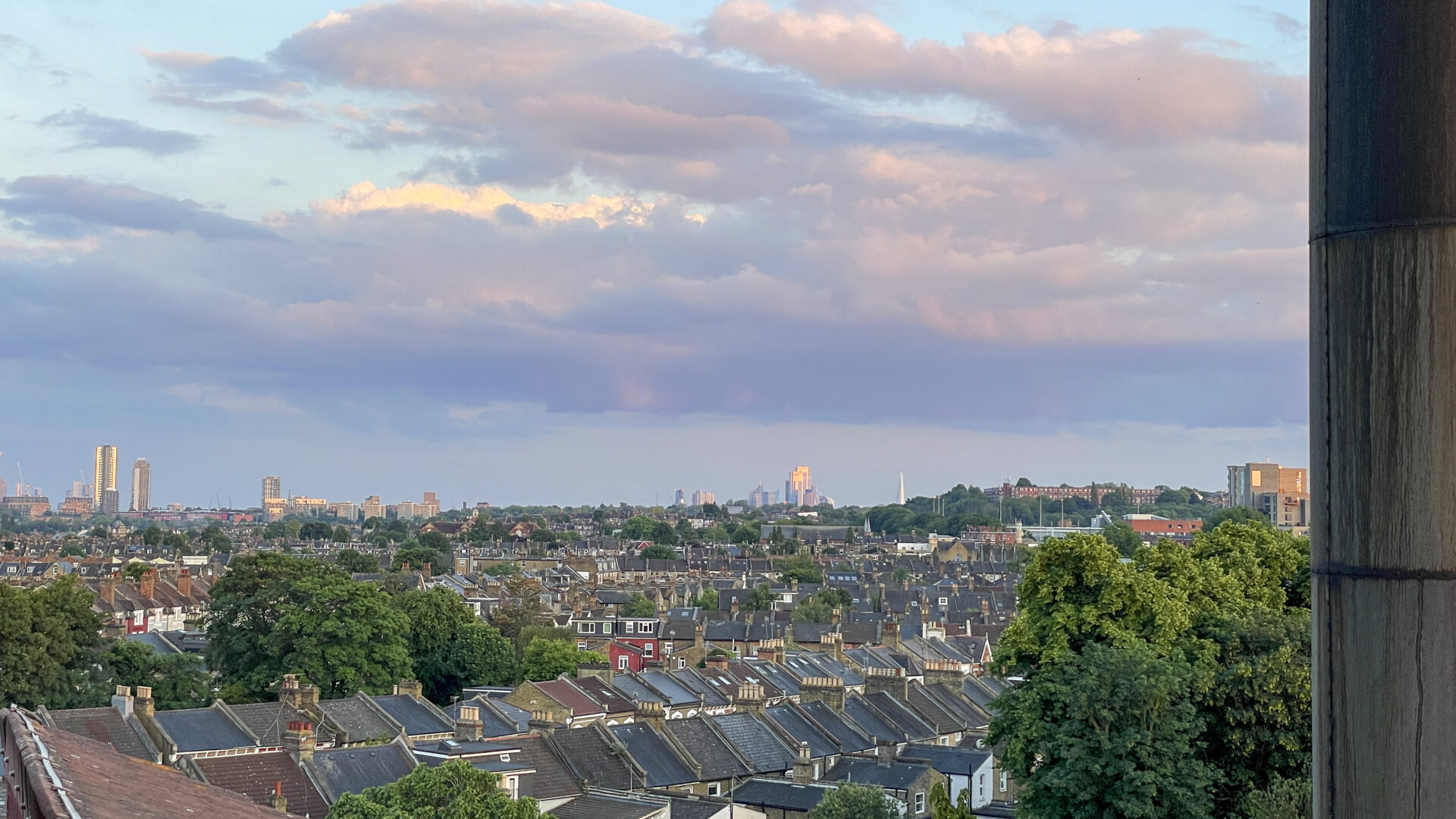
Battersea is really several places under one name. The riverside around Battersea Power Station is glassy new-build with its own Zone 1 Tube.
Battersea scores 50/100 on the PAL Score — our weighted rating across six core criteria that define what makes a London neighbourhood work for buyers.
How We Score
Each criterion is normalised on a 0–100 scale across every London neighbourhood we cover, so a score describes how Battersea compares with the rest of the city, not an absolute mark.
The Breakdown
| Criterion | Score (/100) | What it means |
|---|---|---|
| Crime / Safety | 61 | Below-average recorded crime rate, though Clapham Junction’s footfall and the Power Station’s crowds concentrate theft around the hubs, not the residential streets. |
| Transport Connectivity | 57 | Clapham Junction’s National Rail reach plus the new Northern line stations at Battersea Power Station and Nine Elms; fast runs to Victoria and Waterloo. |
| Local Amenities | 54 | Northcote Road’s independents, Battersea Square, Lavender Hill and the Power Station’s retail — a strong, if unevenly spread, amenity offer. |
| Property Price Affordability | 44 | An expensive, house-and-riverside-led market: affordability is the score that pulls Battersea down, not its strengths. |
| Green Space Access | 43 | Battersea Park anchors the area, with Clapham and Wandsworth Commons on the southern edge, but the green space is concentrated rather than spread. |
| School Quality | 42 | Two Outstanding primaries and an Outstanding secondary, with strong results at Ark Bolingbroke, but a narrow state-secondary field. |
Scores use the PAL 0–100 scale, z-score normalised across all London neighbourhoods and displayed as integers. See the PAL Score Architecture for methodology.
What This Means
Battersea’s score is a story of a strong area held back by one number. Transport, amenities and schools are the everyday strengths: Clapham Junction and the Northern line extension put central London within a short, frequent ride; Northcote Road and the Power Station give the area a retail and eating-out offer most of Zone 2 can’t match; and the primary schools are genuinely good. What pulls the overall down is affordability (44/100) — this is an expensive market where a whole house or a riverside flat costs real money, and the price score reflects that honestly rather than pretending otherwise. Safety (61/100) reads as middling, but the crime rate is below the London average once you understand that Clapham Junction and the Power Station generate footfall crime the resident streets never feel. Green space (43/100) sits mid-table despite Battersea Park, because the normalised score rewards the spread of green space and Battersea’s is concentrated in one large park plus the commons on its edge. The resulting 50/100 is a Good score that rewards a buyer who can afford the area and wants transport, schools and amenities in one place — and warns off anyone whose main test is value for money.
For another premium village-in-the-city, see how Hampstead weighs up.
✗ May Not Suit
💰 Value Assessment
Battersea is a premium Zone 2 market, and value for money is not its pitch. You pay for regeneration, transport and schools rather than a bargain. What softens the bill is Wandsworth’s council tax — among the lowest in the country — and weekly bins with free garden-waste collection, so the running costs of an expensive home are genuinely low. Entry points exist in ex-local-authority flats and smaller conversions; a whole house between the commons is firmly in premium territory.
Our Recommendation
Who's Battersea for?
Battersea could be a strong fit if you:
- Commute to Victoria, Waterloo or the West End. Clapham Junction reaches Victoria in 7 minutes and Waterloo in around 11, and the Northern line extension gives the riverside its own Zone 1 Tube.
- Want to be near genuinely good primary schools. Belleville and Chesterton are Outstanding, and Ark Bolingbroke posts a Progress 8 of +1.04 — the pull behind the Between-the-Commons premium.
- Value low running costs on an expensive home. Wandsworth’s council tax is among the lowest in the country, with weekly bins and free garden-waste collection.
- Want a real park and a real high street. Battersea Park’s 200 acres and Northcote Road’s independent shops and market sit within a large, walkable area.
- Are buying new-build with lifts and concierge. The Power Station and Nine Elms offer step-free riverside flats, gigabit broadband and a river-bus pier at the door.
Think twice if you:
- Are testing the area on value for money. Battersea is expensive across the board — a whole house means real money, and affordability is the weakest part of its PAL Score.
- Commute daily to the City or Canary Wharf. Both mean a change of train (22 and 32 minutes); Battersea is built for the West End, not the City.
- Want a quiet street next to the action. Around Clapham Junction, St John’s Hill and Battersea Rise the footfall, theft and evening noise are real — buy back from them for calm.
- Dislike living beside a building site. Nine Elms and the Power Station’s later phases mean cranes, hoardings and construction traffic on the riverside into 2029.
- Want an established, settled riverside community. The new towers are still filling out; the neighbourly texture that Northcote Road has, the riverside is still growing into.
The Real Picture
Battersea is really several places wearing one name: a glassy new riverside around the Power Station, a family-heavy grid of Victorian terraces between the commons, and the garden squares and mansion blocks around the park. What ties them together is strong transport, low council tax and a genuine sense of arrival after years of regeneration. You pay handsomely for all of it, and you accept the footfall around Clapham Junction and the building work along the river. For a buyer who can afford the area and wants schools, trains and a park in one place, it delivers; for anyone whose first test is price, it will feel dear.
Moving to Battersea: The Practical Side
Council Tax
Battersea is in the London Borough of Wandsworth — among the lowest-charging authorities in the country.
The Band D charge is £1,028.
Parking
Most of residential Battersea sits within Controlled Parking Zones, so check the specific zone for any address on the Wandsworth parking map before assuming you can park on-street. Wandsworth prices resident permits at a flat annual rate — around £205 a year for a first permit bought online, rising to about £308 for a second permit at the same address (London Borough of Wandsworth, 2025) — rather than the emissions-based tariff some neighbouring boroughs use. Permits are virtual, enforced by number plate. On-street parking around Clapham Junction, St John’s Hill and Northcote Road is tight and heavily contended; the garden-square streets around Battersea Park and the quieter Between-the-Commons grid are easier, but still permit-controlled. For most residents the trains and buses make a car optional.
GP Surgeries
Battersea is served by practices including Bridge Lane Group Practice (20 Bridge Lane, SW11 3AD) and The Falcon Road Medical Centre (47 Falcon Road, SW11 2PH) — both rated Good by the Care Quality Commission (CQC, ratings as displayed 2026). The nearest acute hospital with a full 24-hour A&E is St George’s Hospital in Tooting (Blackshaw Road, SW17 0QT), roughly three to four miles south and run by St George’s University Hospitals NHS Foundation Trust — one of the country’s largest teaching hospitals (CQC rating: Requires Improvement overall, Good for caring, most recent assessment early 2026). Chelsea & Westminster Hospital, across the river on Fulham Road, is a comparable alternative for parts of northern Battersea.
Utilities and Broadband
Broadband is strong across the borough: Wandsworth is about 93% gigabit-capable and 87% full-fibre across roughly 171,500 premises (thinkbroadband, July 2026), well above the UK average — driven by Openreach full fibre and Virgin Media cable, with Hyperoptic and Community Fibre also present. The new-build developments at Battersea Power Station and Nine Elms are typically wired for Hyperoptic symmetric gigabit from day one; older Victorian conversions rely on Openreach or Virgin, so check your exact address. Energy costs track the Ofgem outer-London regional average; the period terraces and mansion blocks tend to carry weaker energy ratings than the new riverside flats, so read the EPC before you buy.
Removals and Access
Battersea moves fall into two very different types. A move into a new-build riverside flat at the Power Station or Nine Elms usually means a booked service lift and a loading bay — straightforward, but arrange the slot with the building’s concierge in advance. A move into a Victorian terrace off Northcote Road or a mansion-block flat near Battersea Park is the harder case: narrow streets, Controlled Parking Zones that may need a suspended-bay dispensation from Wandsworth for the van, and often communal stairs with no lift. Measure carefully for larger furniture, arrange any parking suspension ahead of time, and avoid Friday and weekend afternoons, when traffic around Clapham Junction and the bridges is at its worst.
Frequently Asked Questions
Common questions about living in Battersea, answered with data from our research.
The median flat in Battersea sold for £635k over the past year (HM Land Registry) — the midpoint, not the floor. Entry-level flats, typically ex-local-authority or smaller conversions, start well below that, while new-build riverside apartments at the Power Station and Nine Elms run far above it. Battersea is a dearer market than neighbouring Clapham, and it is overwhelmingly a flat market, with houses concentrated in the pricey Between-the-Commons streets.
About 7 minutes to Victoria and 11 minutes to Waterloo on direct National Rail services from Battersea Park, Queenstown Road or Clapham Junction (station-to-station, 08:30 weekday; add your walk to the station). The Northern line extension at Battersea Power Station and Nine Elms adds Zone 1 Underground access into the West End. The City is slower — Bank is around 22 minutes with a change — so Battersea suits a West End or Victoria commuter better than a City one.
Yes, especially at primary level. There are 15 state schools within reach rated Good or Outstanding, including 3 rated Outstanding. Belleville Primary (Outstanding, Ofsted March 2022) and Chesterton Primary (Outstanding, December 2022) lead the primaries, and Harris Academy Battersea is an Outstanding secondary. Ark Bolingbroke Academy posts the strongest local results, with a Progress 8 of +1.04 (Department for Education, 2023/24). The catch is that the best primary catchments, in the Between-the-Commons grid, are tight and competitive.
Battersea’s residential crime rate of 114 per 1,000 residents runs 13% below the London average (the latest 12-month period, data.police.uk), so on the numbers it is a below-average area for crime. Its PAL Safety Score is 61/100. The important nuance: Clapham Junction — Britain’s busiest interchange — plus Battersea Park and the Power Station draw large crowds, so theft and antisocial behaviour concentrate around those hubs rather than on the residential streets, which are markedly quieter.
Council tax is set by the London Borough of Wandsworth, and it is among the lowest in the country — the Band D charge is £1,028, a fraction of what most London boroughs levy. Most flats fall in Bands C–E and most houses in Bands E–H. Wandsworth also collects rubbish and recycling weekly and, unusually, makes no separate charge for garden-waste collection, so the running costs of a Battersea home are genuinely low relative to the purchase price.
It depends what you want. Battersea is the pricier, more varied market — riverside new-builds, family terraces and park-side mansion blocks — with unbeatable National Rail access at Clapham Junction and far lower council tax in Wandsworth. Clapham is a more uniform Zone 2 flat market built around the Northern line, the Common and one of South London’s best-known going-out high streets. Battersea leans family-and-transport; Clapham leans young-professional-and-nightlife. Families often prefer Battersea’s schools and park; sharers often prefer Clapham’s scene.
The Power Station reopened to the public in 2022 and now holds more than 100 shops, bars and restaurants, a cinema, an events venue, the chimney-lift experience and Apple’s UK campus, with a river-bus pier and two Zone 1 Underground stations. For residents it means a genuine destination on the doorstep. The trade-off is that later phases are still under construction into 2029, so expect cranes, hoardings and building traffic along parts of the riverside for a while yet.
The Between-the-Commons area — the grid of Victorian terraces west of Northcote Road, nicknamed “Nappy Valley” — is one of South West London’s most family-oriented pockets, built around Outstanding primaries, Northcote Road’s shops and market, and easy access to Clapham and Wandsworth Commons plus Battersea Park. The trade-off is cost: family houses here are expensive and the best school catchments are tight. The riverside new-builds are more couple- and professional-oriented, though the park and schools are within reach.
Battersea Park is the headline — around 200 acres between Albert and Chelsea bridges, with a boating lake, subtropical gardens, the Peace Pagoda, a children’s zoo and the Pump House Gallery. Clapham Common and Wandsworth Common sit a short distance south, framing the Between-the-Commons streets. The honest caveat is that the green space is concentrated in these big set-pieces rather than spread evenly, which is why Battersea’s green-space score (43/100) sits mid-table despite the park’s size.
Data from HM Land Registry, Ofsted, Metropolitan Police & TfL. Page last regenerated 31 August 2026.
Moving to Battersea?
Get our free moving checklist and local tips delivered to your inbox.
No spam. Unsubscribe anytime.