Property Prices in Brixton
Source: HM Land Registry Price Paid Data — median sold prices over a rolling 12-month window
What Your Budget Buys
Source: HM Land Registry.
Brixton flats average £463k — readers weighing creative south-London alternatives at a slightly softer price should also compare Peckham, which pitches at a step down while keeping the same cultural depth.
Market Position & Budget Bands
The overall median across all property types in Brixton is £497k (HM Land Registry), though that single figure masks a wide spread — from ex-council flats to period terraces on the quieter residential streets south of Brixton Hill. This is a market defined by its flats: they trade in volume while houses are comparatively scarce, so the headline sits well below what a family house actually costs here.
The primary buyers here are young professionals and couples who want Zone 2 convenience without Clapham prices, plus a steady flow of buy-to-let investors targeting the rental market. First-time buyers can still enter on the flat market, but terraced houses sit firmly at the top of the local range.
What Your Budget Buys
Flats dominate Brixton’s housing stock — overwhelmingly so. Flat sales outnumber house sales several times over; this is first and foremost a flat market, and by a wide margin. Flat prices run from £126k at the bottom to £1.14m at the top, with a typical (median) sold price of £463k (HM Land Registry). Most are Victorian and Edwardian mansion-block conversions — high ceilings, original cornicing, narrow hallways — above the shops on Atlantic Road and Coldharbour Lane, or in purpose-built blocks on the Lambeth estates. At the lower end that buys a one-bed conversion in SW2; the middle of the range buys a two-bed in a decent block on Brixton Water Lane or Effra Road. Modern new-builds are scarce; most available stock is period conversion.
Houses, by contrast, barely trade. Where flats change hands in volume, the house market here is thin — buyers who want one often have to wait for scarcity rather than choose from a live shelf of stock. The terraced house is the workhorse of that thin market: prices span £460k to £1.97m, with a typical (median) sale at £900k (HM Land Registry). Two-storey Victorians south of Brixton Hill — Tunstall Road, Somerleyton Road, Poets Road — are the most sought-after, and three-bed terraces with gardens sit at the top of that range. Period features come standard (tiled hallways, fireplaces, sash windows), but so do survey surprises: subsidence on clay soil, flat-roof rear extensions, and damp in basements are recurring issues in this stock.
Semi-detached properties barely trade in Brixton — only a handful change hands in a typical year, too few to quote a reliable going rate. The ones that do appear are scattered across north Brixton towards Herne Hill, typically offering larger gardens and off-street parking, and tend to sit at the upper end of the local market. Treat any single example as indicative, not a market price: at this level of stock you are effectively waiting for the right house rather than shopping a range, and you’re competing with families already priced out of Dulwich and Clapham.
Detached houses are effectively absent from central Brixton — none traded in the period at all. This is dense Victorian terrace-and-conversion territory, not detached-house country; if a genuinely detached home ever comes up near Brockwell Park it is a rarity, and there is no recent local sale to anchor a price to. Buyers set on a detached house look south towards Dulwich and Herne Hill instead.
What Drives Values
Brixton’s gentrification-era double-digit annual rises — the pattern of 2015–2021 — have given way to a steadier market driven by fundamentals rather than momentum. What holds value: Zone 2 Victoria Line access, Brixton Village’s food and cultural scene, and continued rental demand. What tempers it: interest-rate sensitivity on the high-value terrace market, and a cooling of buy-to-let investor appetite as Lambeth’s licensing requirements tighten.
The absence of a speculative surge reflects buyer caution about over-densification near the station and ongoing safety concerns that weigh on terrace valuations. Institutional investors have trimmed their exposure to Lambeth’s build-to-rent sector, which has meant less speculative buying pressure. For owner-occupiers this makes for a more realistic market: prices reflect fundamentals — transport, schools, amenities — rather than momentum. The current median and by-type figures are shown live in the cards above and on the price comparison page.
Leasehold vs Freehold
The majority of Brixton’s flat stock is leasehold — roughly 80% of all flat transactions. Lease terms on older Victorian conversions average 125–145 years remaining; newer builds carry 999-year leases. Ground rent varies significantly: £50–£400 annually depending on original covenants, though the Leasehold Reform (Ground Rent) Act 2022 caps new leases at zero ground rent. Service charges on older mansion-block conversions run £1,500–£3,000 per year — sometimes more if the building needs a roof or window replacement. Check the service charge history before you commit. Terraced and semi-detached houses are predominantly freehold.
Rental Yields (Buy-to-Let Context)
One-bed flats rent for £1,400–£1,600/month; two-bed flats at £1,600–£1,900/month; two-bed houses at £1,800–£2,200/month (Rightmove, early 2026). Gross yields on flats sit at 3.5–4.5%, which is modest for south London but steady. Tenant demand is strong — young professionals commuting via the Victoria Line, couples priced out of Clapham, and sharers splitting terraced houses. Voids are short (typically 1–2 weeks between tenancies). The main risk factor for landlords is Lambeth’s selective licensing scheme, which adds compliance costs and administrative overhead.
How Brixton compares nearby
Median sold price, all property types, against the nearest comparable areas we cover.
HM Land Registry · prices last updated 5 August 2026
Schools in Brixton
🏫 Primary
🏛 Secondary
Corpus Christi Catholic Primary School
The Orchard School
Christ Church Primary SW9
Christ Church, Streatham Church of England Primary School
Jubilee Primary School
St Helen's Catholic Primary School
St John's Angell Town Church of England Primary School
Stockwell Primary School
Sudbourne Primary School
Van Gogh Primary
City Heights E-ACT Academy
Saint Gabriel's College
The Elmgreen School
Trinity Academy
Data: Ofsted, 28 September 2026
Headline Numbers
Brixton’s school landscape is adequate rather than exceptional. Within 0.5 miles of Brixton centre, you’ll find one Outstanding primary and three Good-rated primaries. Secondary provision is patchier — mostly Good with gaps in sixth-form options.
The headline schools:
- Jessop Primary School (Outstanding, Ofsted January 2024) — the standout. Outstanding across Quality of Education, Behaviour and Attitudes, Personal Development, and Leadership. Early Years rated Good. On Lowden Road, a 10-minute walk from the station.
- St Mary’s Church of England Primary School (Outstanding under the pre-2024 framework; re-inspected March 2025 under the new Ofsted framework, which no longer assigns overall grades to state schools) — 102 pupils, small and community-focused.
- St Helen’s Catholic Primary School (Good, Ofsted July 2024) — Catholic admissions criteria apply; oversubscribed.
- St John’s Angell Town Church of England Primary School (Good, Ofsted November 2024) — CofE admissions thread; strong community links.
Lambeth borough-wide, 63 primary schools serve 18,725 pupils (2024/25). The borough’s primary provision sits above the national average for Good or Outstanding ratings.
Catchment Reality
Catchment areas in Brixton are tight. Jessop and St Helen’s are both oversubscribed — reception places typically go to families within 400–500 metres. If you’re buying specifically for school catchment, target streets south of Brixton Hill within walking distance of Jessop (Lowden Road, Jebb Avenue, Hayter Road).
St Helen’s Catholic admissions prioritise baptised Catholic children, which effectively narrows the catchment further. Non-Catholic families should treat this as a faith school, not a geographic one.
Brixton straddles the Lambeth-Southwark boundary. Families on the east side (towards Loughborough Junction) may find Southwark schools closer, though cross-borough applications are accepted. In practice, most Brixton families apply within Lambeth.
Secondary Schools
- Trinity Academy (Good, Ofsted August 2022 — due for re-inspection under the new framework) — opened 2014, highest Progress 8 scores locally, strong GCSE 9–7 results. The top choice for Brixton families. On Brixton Hill, SW2.
- Ark Evelyn Grace Academy (Good, Ofsted) — Zaha Hadid-designed building (2011 Stirling Prize winner), mixed 11–16. Shakespeare Road location.
- Lilian Baylis Technology School (Good, Ofsted) — 11–18, sixth-form provision available. On Kennington Lane (Lambeth/Vauxhall border), about 1.5 miles north.
Most Lambeth secondaries cluster in the Good range. There are no Outstanding secondaries within walking distance of Brixton itself — a gap compared to boroughs like Merton or Wandsworth.
Faith & Independent Options
St Helen’s (Catholic, primary) is the main faith option locally. For secondary, Catholic families often look to La Retraite RC Girls’ School (Atkins Road, Clapham Park) or Bishop Thomas Grant Catholic Secondary (Belltrees Grove, Streatham), both accessible by bus.
Independent schools in Brixton itself are limited. The nearest independent options are Dulwich College and Alleyn’s School (both in Dulwich, 2–3 miles south), or Streatham & Clapham High School (GDST, 1.5 miles south). All require entrance exams.
Nurseries
Brixton has reasonable private nursery provision — approximately 15–20 providers across the SW2/SW9 postcodes. Full-time fees typically run £1,000–£1,500/month. Council-funded 15/30 hours available from age 2–4 via the Lambeth Family Information Service, though popular settings fill quickly. Catholic-linked nurseries (connected to St Helen’s) are consistently oversubscribed.
Schools Verdict
Schools are not Brixton’s selling point. The primary sector is solid — Jessop’s Outstanding rating is a genuine draw — but no secondary in walking distance holds an Outstanding rating. Families who prioritise secondary school quality often plan a move to Dulwich, Clapham, or across the river by the time children reach Year 5. If you’re buying with primary-age children, Brixton works well. If secondary planning drives your decision, look carefully at the catchment numbers.
Families drawn to Brixton's Zone 2 position should also look at Hackney, whose Outstanding-rated provision runs broader at both primary and secondary level.
Transport & Commute: Brixton
Commute Times
Source: TfL Journey Planner, 2026. All times are station-to-station (boarding to alighting); add 5–10 minutes for walking to your nearest station and waiting.
Brixton terminates the Victoria line in the south — Walthamstow does the same job up north, the two end-of-line anchors on one of the few lines that runs fully underground for its whole route.
Stations & Lines
Brixton’s transport story begins and ends with the Victoria Line. Brixton station (Zone 2) is the southern terminus, which means you’re guaranteed a seat for the morning commute — an advantage most Zone 2 stations cannot offer.
Services run every 2–4 minutes during peak hours and every 5 minutes off-peak. Night Tube operates all night Friday and Saturday. First train northbound: 05:18; last train southbound: 00:30 (approximately).
Bus routes 2, 3, 35, 45, 109, and 133 radiate from Brixton centre, covering Oval, Camberwell, Streatham, Clapham, and Crystal Palace. Useful for cross-town trips where the tube doesn’t reach.
Commute Times
| Destination | Route | Peak time | Off-peak time |
|---|---|---|---|
| Victoria (Zone 1) | Victoria Line from Brixton | 8 min | 8 min |
| Oxford Circus (West End) | Victoria Line from Brixton | [route-specific] | [route-specific] |
| City (Bank/Moorgate) | Victoria Line to Stockwell, Northern Line | [route-specific] | [route-specific] |
| Canary Wharf | Victoria Line to Green Park, Jubilee Line | 27 min | [route-specific] |
| Gatwick Airport | Victoria Line to Victoria, Southern/Gatwick Express | 45 min | 42 min |
| King’s Cross St Pancras | Victoria Line direct | 17 min | [route-specific] |
Source: TfL Journey Planner, April 2026. Peak times based on 08:30 departure; off-peak based on 11:00 departure.
Cycling & Walking
Brixton Hill is steep and busy — not a comfortable cycle route. Side streets (Brixton Water Lane, Poets Road) are quieter alternatives. Santander bike docking stations are available near the station and along Coldharbour Lane. Brockwell Park and Clapham Common are both within a 15-minute cycle.
Walking is practical for daily errands: the station, Brixton Village, and the main supermarkets all sit within a 10-minute walk of most residential streets. Brockwell Park is a 12-minute walk south from the station.
Driving & Parking
The A23 (Brixton Road/Brixton Hill) provides the main north-south route to central London and the M23 towards Gatwick. The South Circular (A205) is accessible via Herne Hill or Streatham. Brixton sits inside the Ultra Low Emission Zone (ULEZ) but outside the Congestion Charge Zone.
Most streets operate Controlled Parking Zones (CPZ), Monday–Saturday 08:30–18:30. Resident permits are emissions-based: £135.96/year for zero-emission vehicles, rising to £682.63/year for high-emission cars (Band M, 255+ g/km CO2). Diesel vehicles face an additional £275 annual surcharge (Lambeth Council, April 2025). On-street parking is competitive, particularly around the station and along Coldharbour Lane.
Transport Verdict
Brixton’s transport is its strongest asset. The Victoria Line is fast, frequent, and runs through the night at weekends — ideal for anyone commuting to central London or the West End. The guaranteed-seat advantage of a terminus station is underrated. The weakness is cross-London: getting to east or south-east London (Greenwich, Lewisham, Canary Wharf) requires changing lines, and bus routes are slow during rush hour.
Crime & Safety in Brixton
Top Concern
Source: Metropolitan Police via data.police.uk · Population: ONS Census 2021 · Updated monthly
The Numbers
Brixton’s recorded crime runs 25% above the London average on a severity-weighted basis (data.police.uk, the latest 12-month period). On a residential basis — visitor and footfall theft set aside — the rate is 157 per 1,000 residents, 22% above the London average. 12-month trend: Falling (-5.4%). The PAL Safety Score is 31/100. Crime concentrates in the Brixton Windrush ward area around the station and night-time economy; the outer residential wards are markedly quieter.
Crime Types Breakdown
The top three categories in Brixton:
- Violence and sexual offences — 38.1 per 1,000 residents around Brixton station (Metropolitan Police, 2024–25). This is concentrated in the night-time economy zone and inflated by weekend incidents outside bars and venues.
- Theft from the person — pickpocketing and phone snatching, concentrated near the station entrance and along Brixton Road during peak commuting hours.
- Anti-social behaviour — 960 reported cases in Brixton Windrush ward alone (27% of all ward crime), driven by noise complaints around Atlantic Road and Coldharbour Lane at weekends.
Spatial Pattern
The immediate area around Brixton station and the market (a 200-metre radius covering Electric Avenue, Atlantic Road, and the Brixton Road junction) accounts for roughly 22% of all reported crime in the neighbourhood. This is a night-time economy hotspot — incidents spike between 22:00 and 04:00 on Friday and Saturday nights.
Move 500 metres south into the residential streets — Poets Road, Tunstall Road, Acre Lane south of Brixton Road — and the picture changes markedly. These streets record rates closer to the London average. Rushcroft Road and Kellett Road are notably quieter after 21:00.
Coldharbour Lane between midnight and 05:00 is the one area that residents consistently flag — foot traffic thins out, visibility is reduced, and incidents (verbal harassment, opportunistic theft) are more likely.
Safety Verdict
Brixton is safe for daily life — particularly during the day and in the residential streets south of Brixton Hill. The elevated crime figures are driven by the station area and night-time economy, not by residential crime. If you’re out late on Coldharbour Lane or Electric Avenue on a Friday night, basic precautions apply: keep your phone out of sight, stick with groups, avoid solo walks after 01:00. Bike theft near the station is persistent — a D-lock is not optional.
Unlock the Complete Brixton Guide
You’ve seen the headline data. Get the full picture — detailed narratives, council costs, community character, and our editorial verdict.
- 🎓 In-depth school, transport & crime analysis
- 🏛 Council tax & parking costs
- 🏘 Community character & local vibe
- ⭐ Editorial verdict, value assessment & future outlook
- 📦 Moving practicalities
By unlocking, you’re happy for us to email you this guide plus the occasional helpful update from Property Around London. No spam — unsubscribe anytime.
Council Fees in Brixton
Council Tax (Annual)
| Band C | Band D | Band E |
|---|---|---|
| £1,820 | £2,047 | £2,502 |
Parking
Source: London Borough of Lambeth, 2026
Council Tax Rates
Lambeth Council Tax bands for 2025–26:
| Band | Annual charge (2025/26) |
|---|---|
| A | £1,302.63 |
| B | £1,519.74 |
| C | £1,736.84 |
| D | £1,953.95 |
| E | £2,388.16 |
Source: Lambeth Council, 2025–26. Full range extends to Band H at £3,907.90.
Most Brixton flats fall into Bands B–D; terraced houses typically sit in Band C–E. Band valuations are based on April 1991 values, which means a Victorian terrace now worth £950,000 might still be in Band D (£2,047/year).
What You Get
Waste collection is fortnightly: mixed recycling (comingled) alternate weeks with general waste. Garden waste collection is opt-in at £65/year. Terraced houses get individual bins; most blocks of flats use communal bins. Bulky waste collection can be booked for a fee.
Brixton Library (Brixton Oval) is solid — free membership, community events, study space, free Wi-Fi. The Tate Library on Brixton Oval also provides reference services.
Leisure provision is in transition. Brockwell Lido and several Lambeth sports centres were previously managed by Fusion Lifestyle, which entered administration in early 2026. Lambeth Council is taking over direct management from July 2026 — expect some service disruption during the handover.
Council Reputation
Lambeth is a mixed bag. Library and cultural services are good. Waste collection works. Street cleaning on the main roads (Coldharbour Lane, Brixton Road) is adequate but side streets get less attention. The council’s planning department is active — the International House development (288 homes, 40% affordable, at Coldharbour Lane/Brixton Road) is the largest current scheme. Resident satisfaction surveys show average ratings; the council is neither notably well-run nor conspicuously failing. If you’re buying a flat in a block, check whether Lambeth is the freeholder — council-owned blocks sometimes face slower repair timescales than private management companies, particularly for communal area maintenance.
Brixton Community Character
Brixton's music-and-market DNA — Electric Avenue, Brixton Village, the late-night bar scene — finds its closest east-London parallel in Hackney, where Dalston's after-dark culture echoes the same energy from a different postcode.
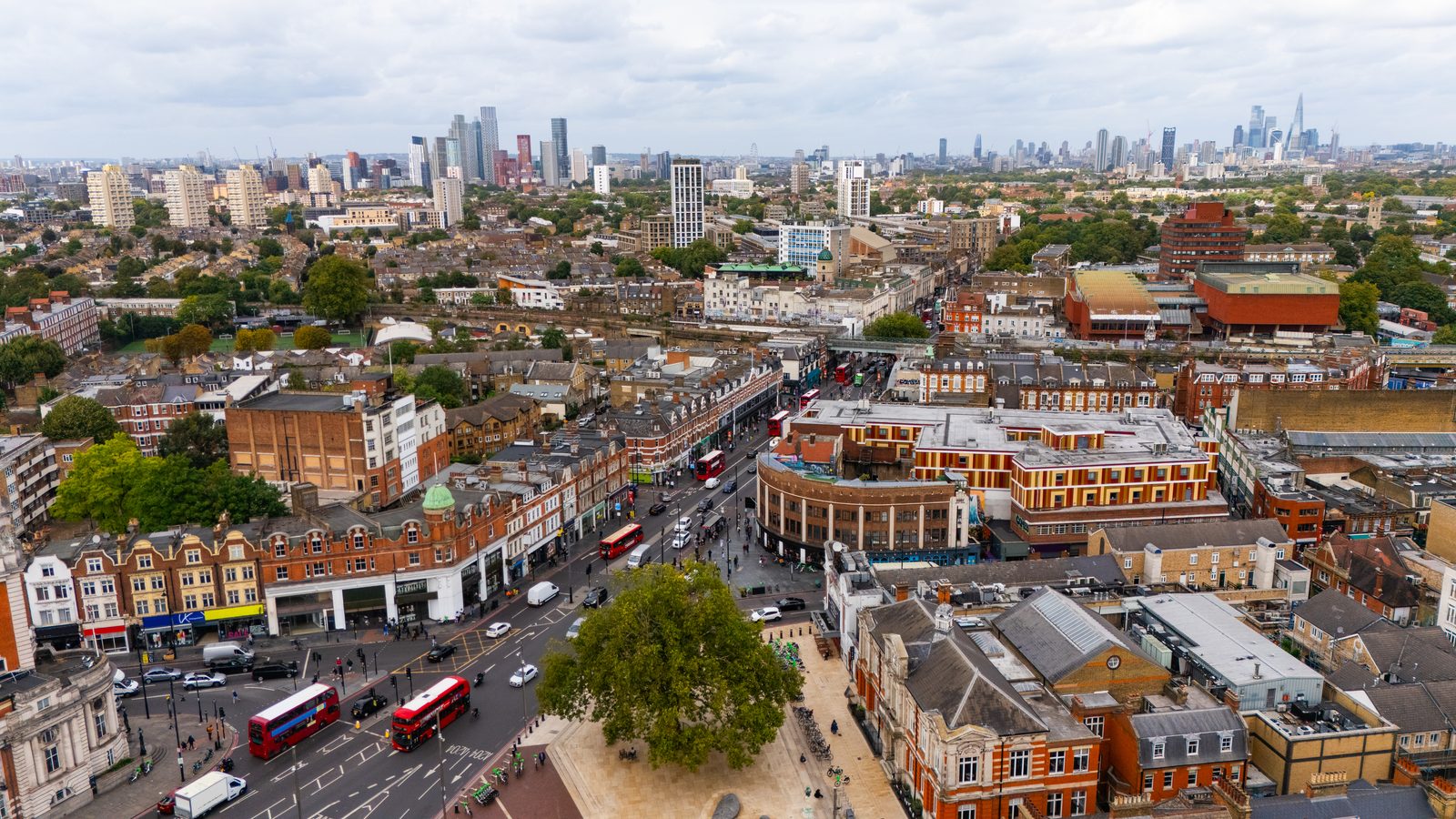
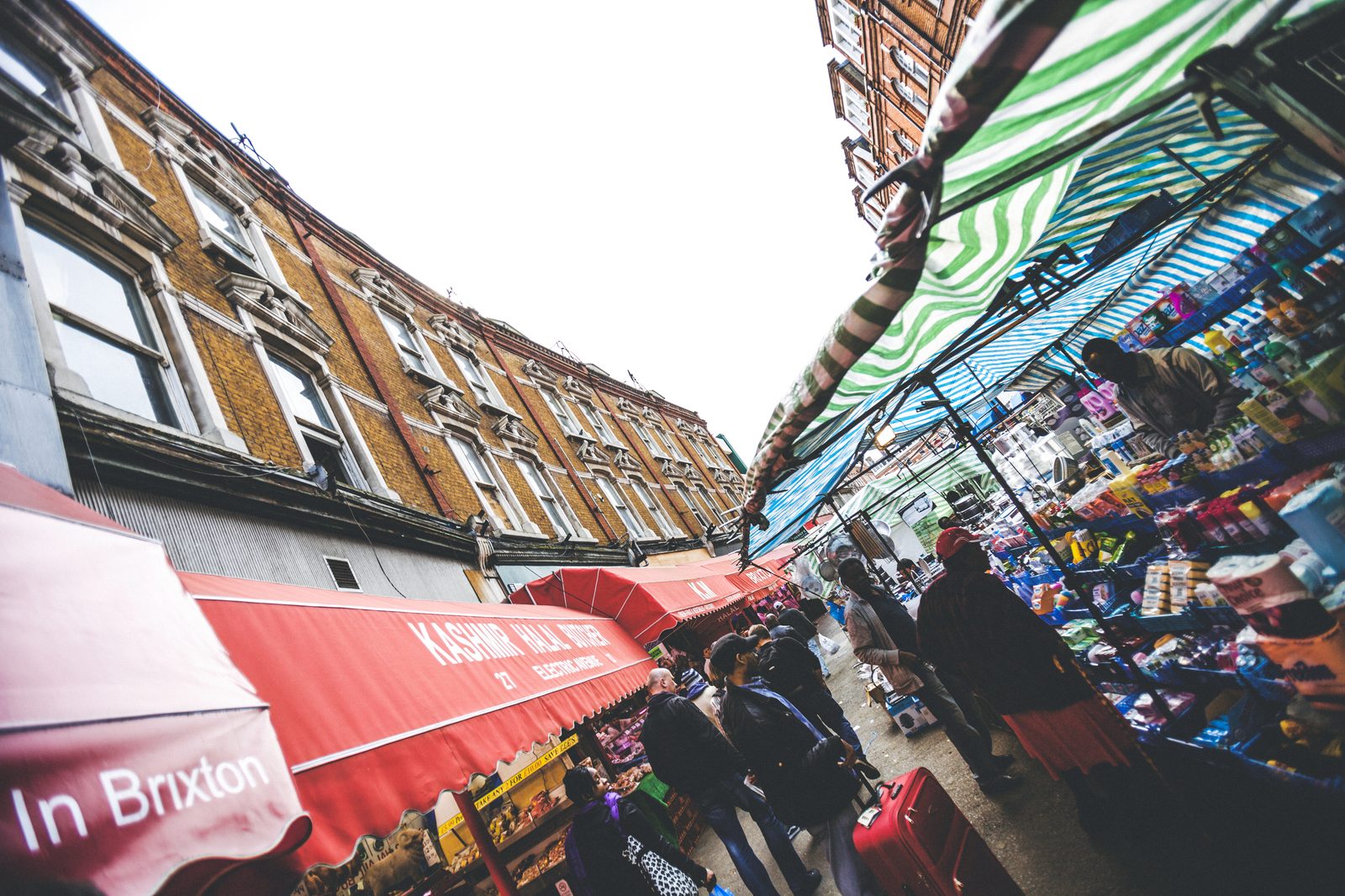
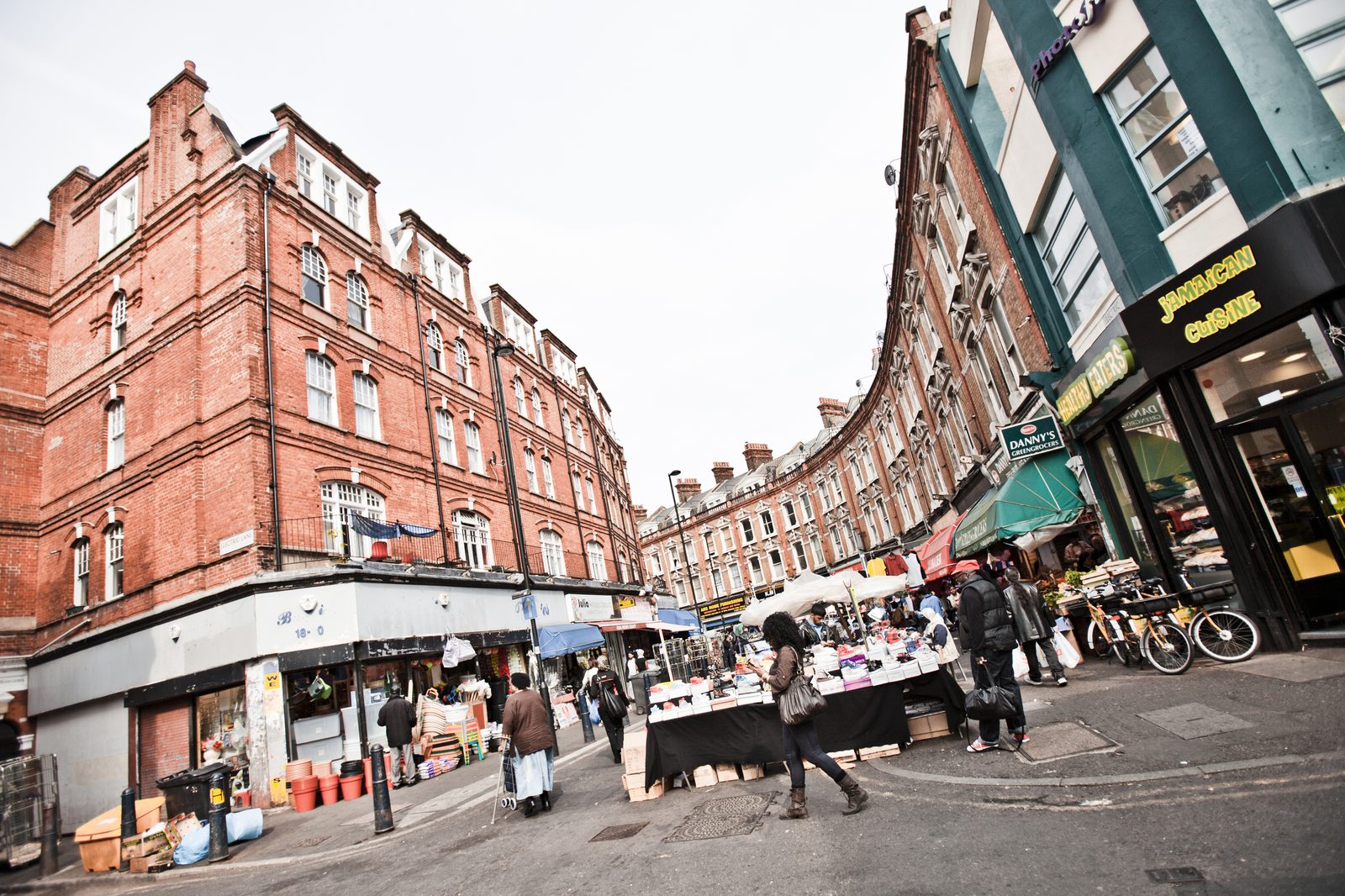
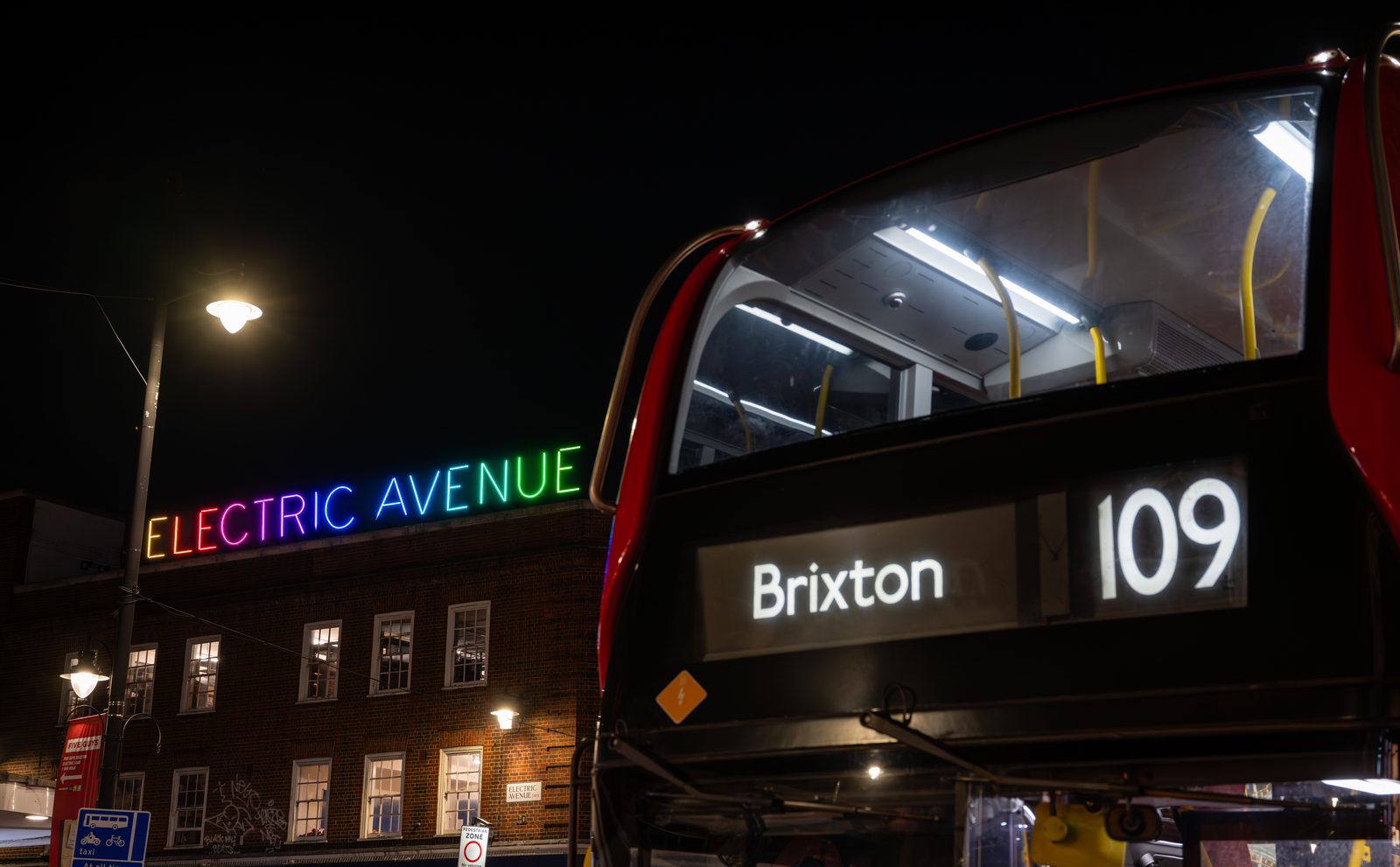
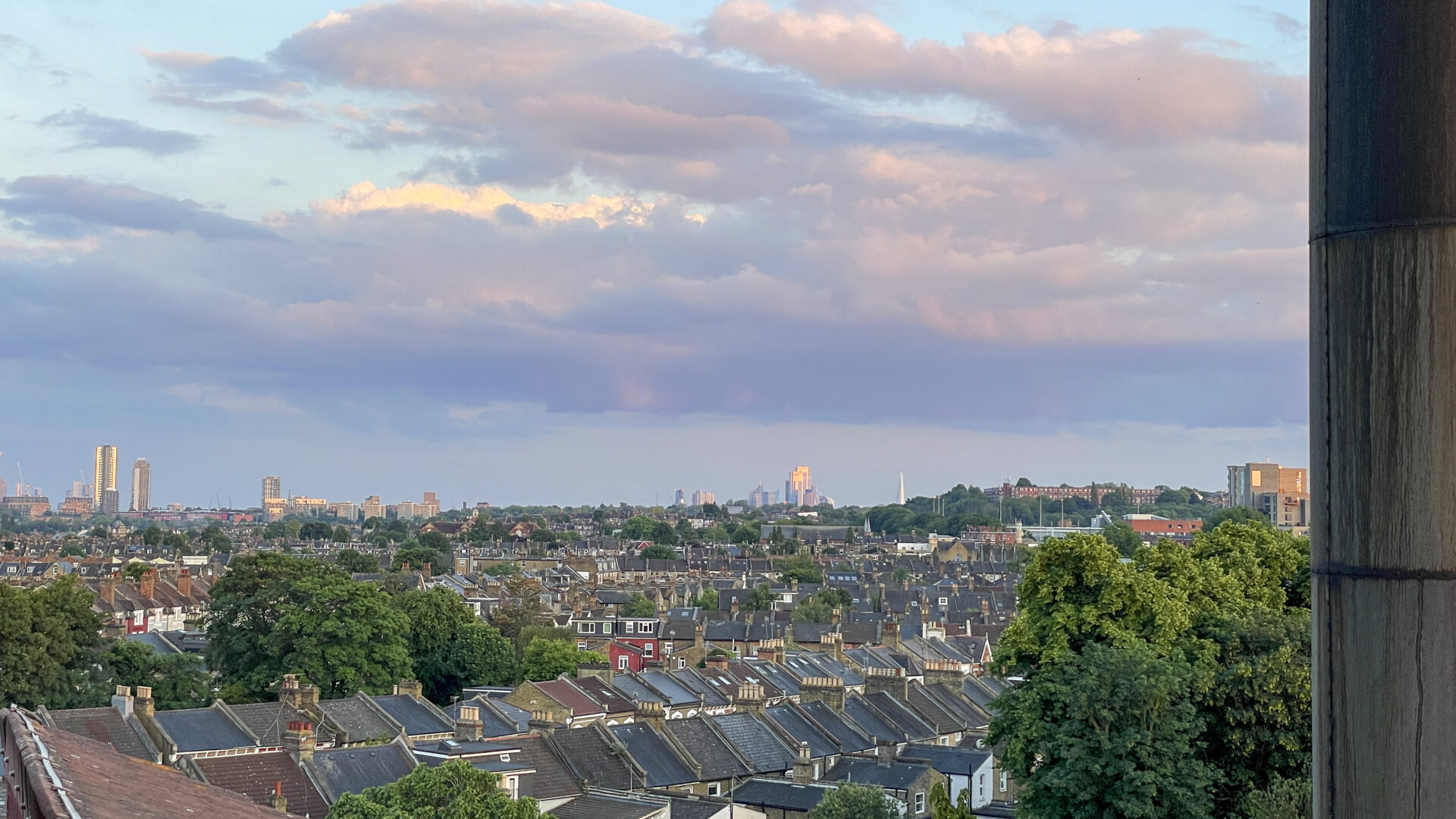
From Electric Avenue to Brockwell Gate
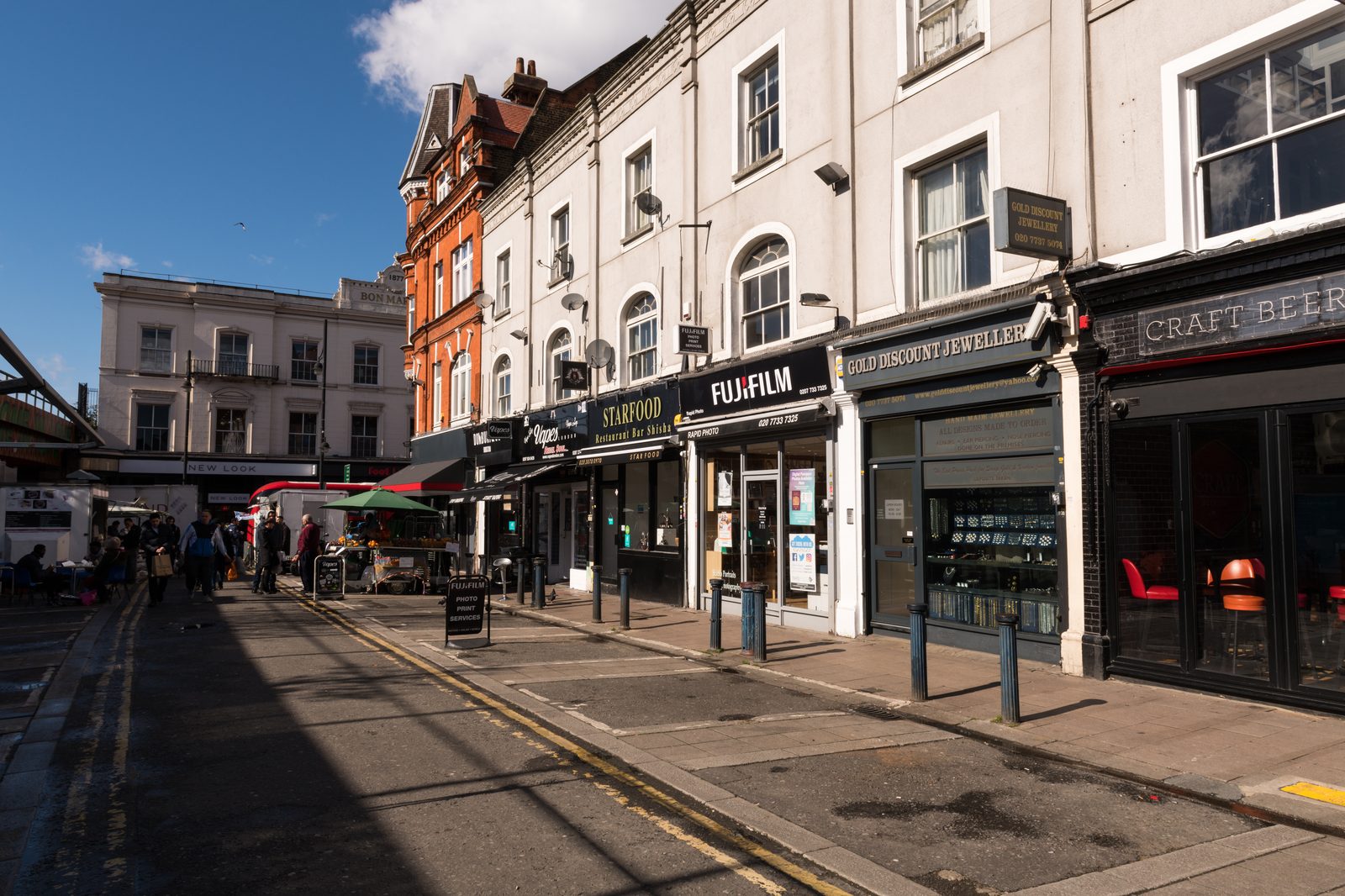
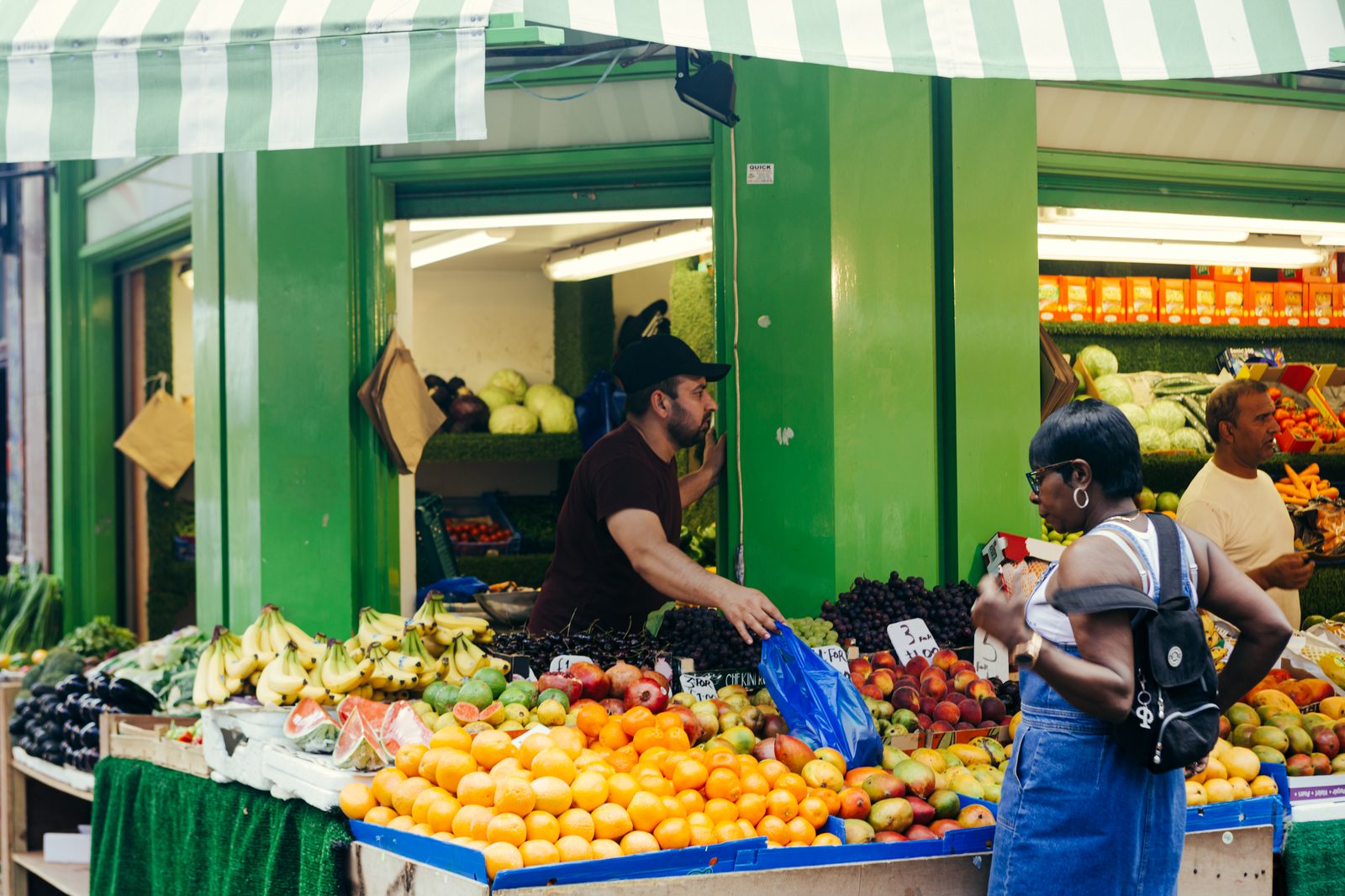
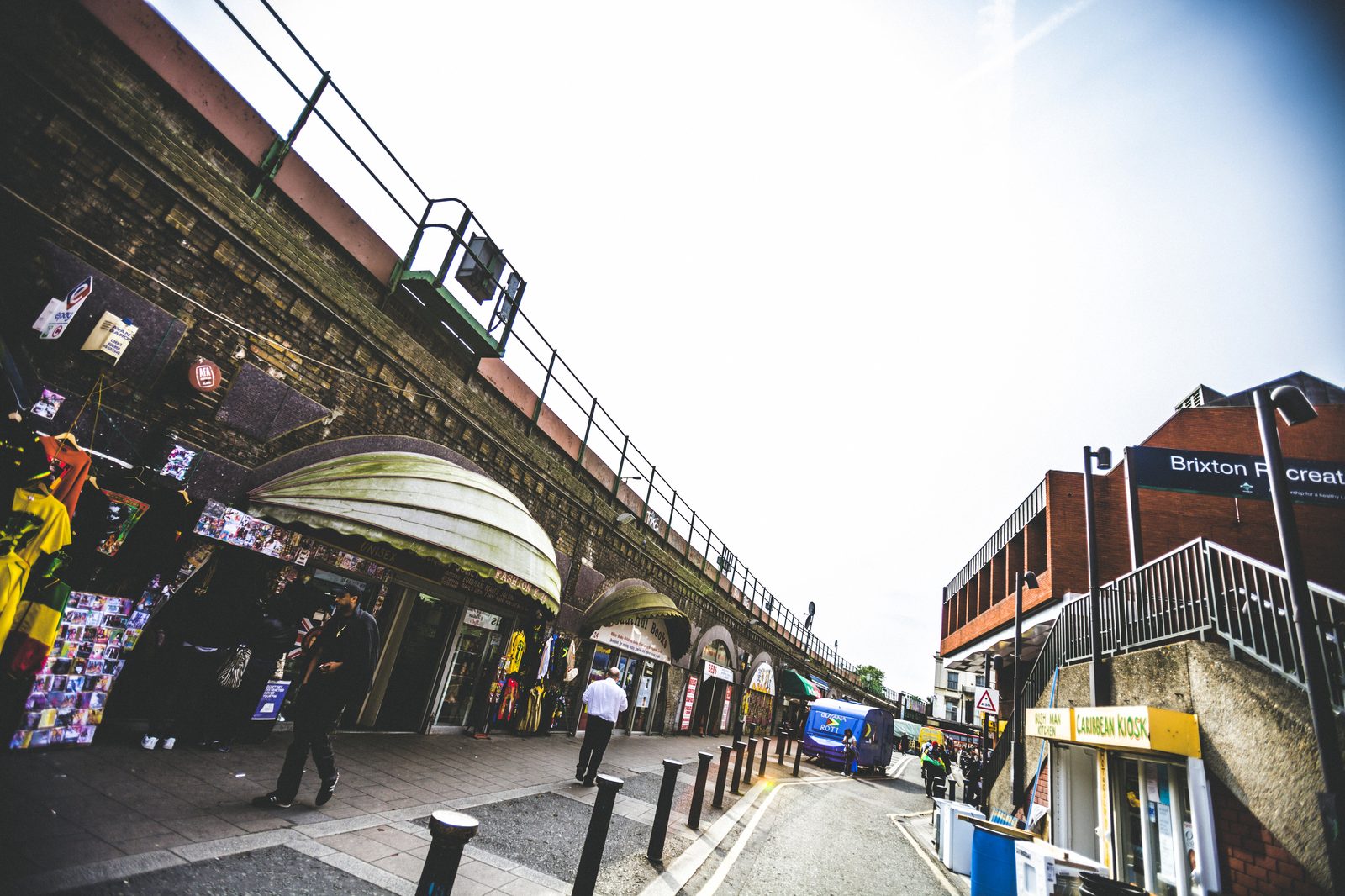
Step out of Brixton station and the market finds you. Electric Avenue runs downhill — tropical fruit piled in crates, African wax-print fabric stacked between rails of £10 dresses, a vendor calling out prices over the bass from three stalls down. The charred-sweet smell of jerk chicken catches you at the corner into Granville Arcade.
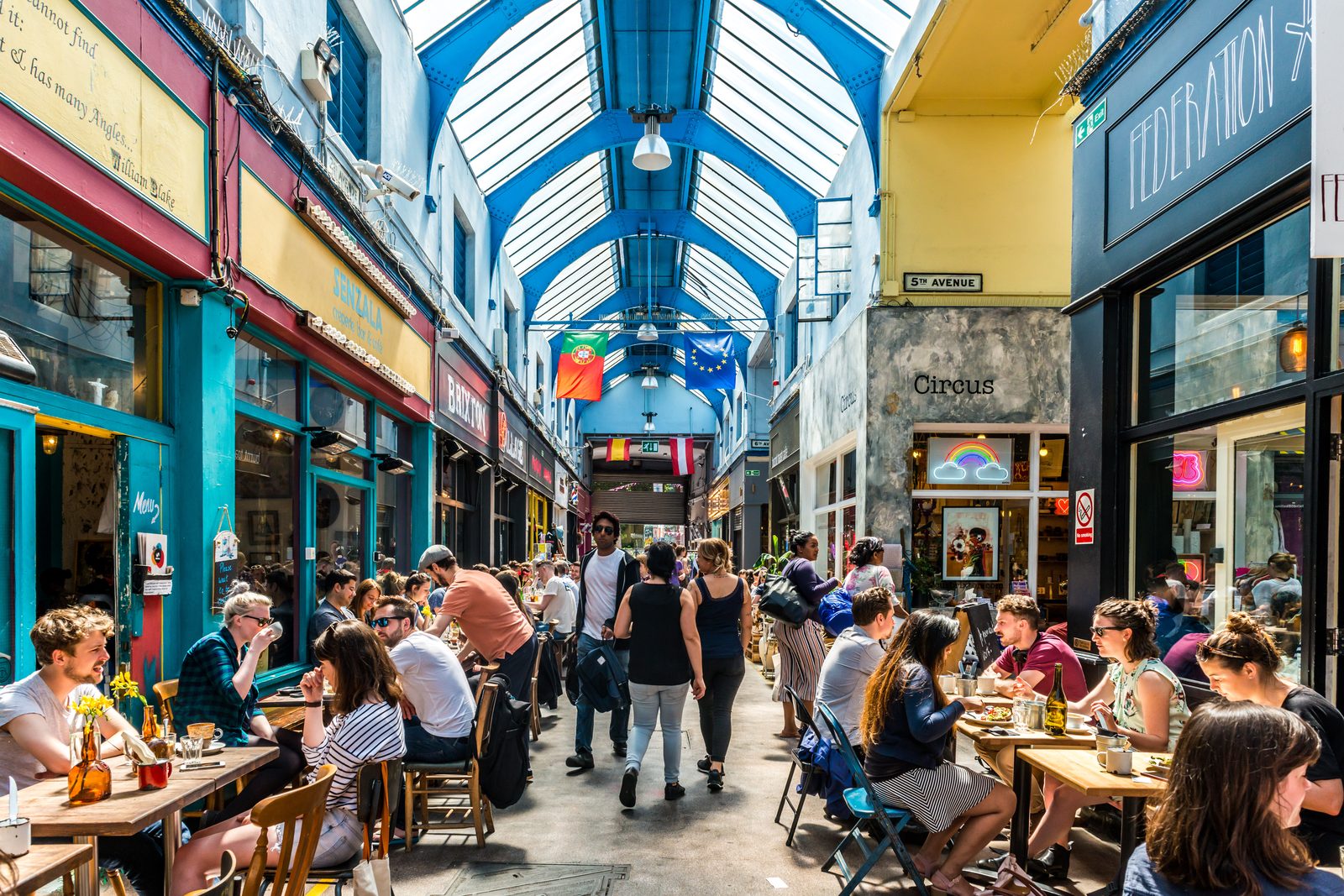
Inside, Brixton Village is Victorian iron and glass — Granville Arcade’s roof has been there since 1937, Market Row since 1928, passages narrow enough that the food is the reason people queue. Franco Manca moved to a 100-seat flagship on Atlantic Road in January 2024; KaoSarn still packs its twenty seats. Fairy lights hang year-round, but on Saturday morning the light through the glass roof does the work.
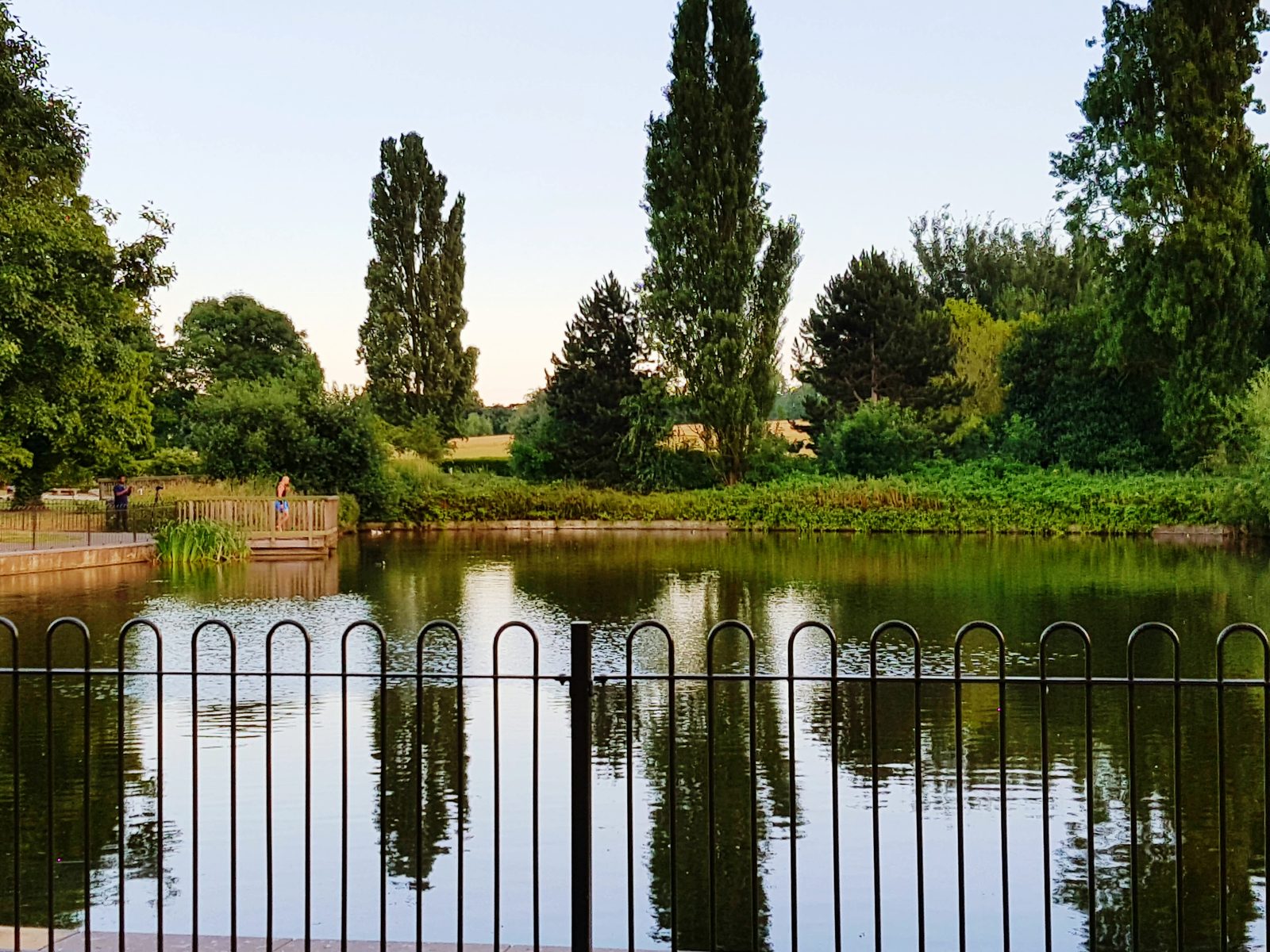
Walk twelve minutes south up Brixton Hill and the atmosphere switches off like a tap. Brockwell Park opens out — 84 acres, the walled garden, the Art Deco outline of the lido. The market’s noise feels a mile away, though it’s barely a kilometre.
Coldharbour Lane After Eight
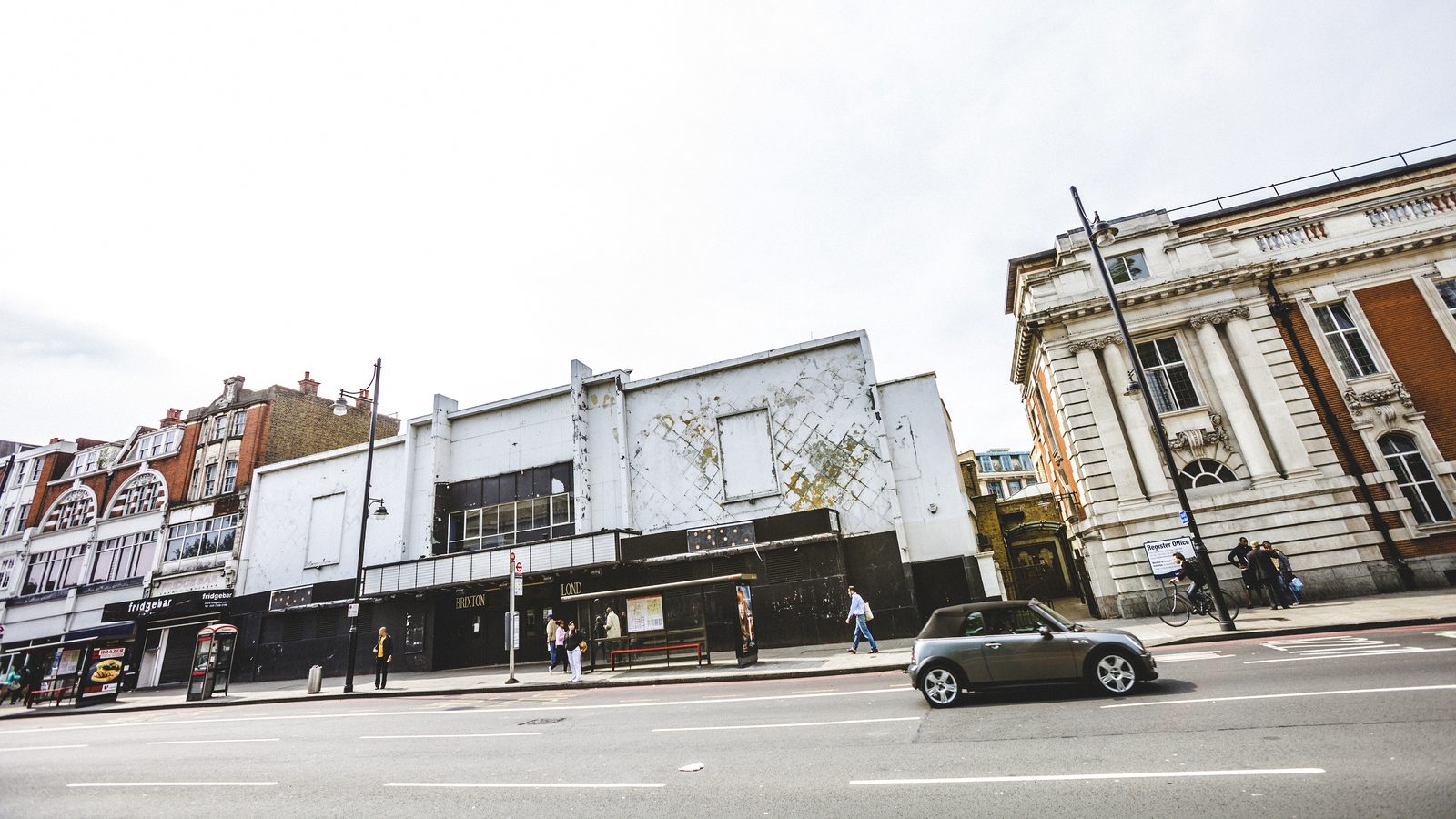
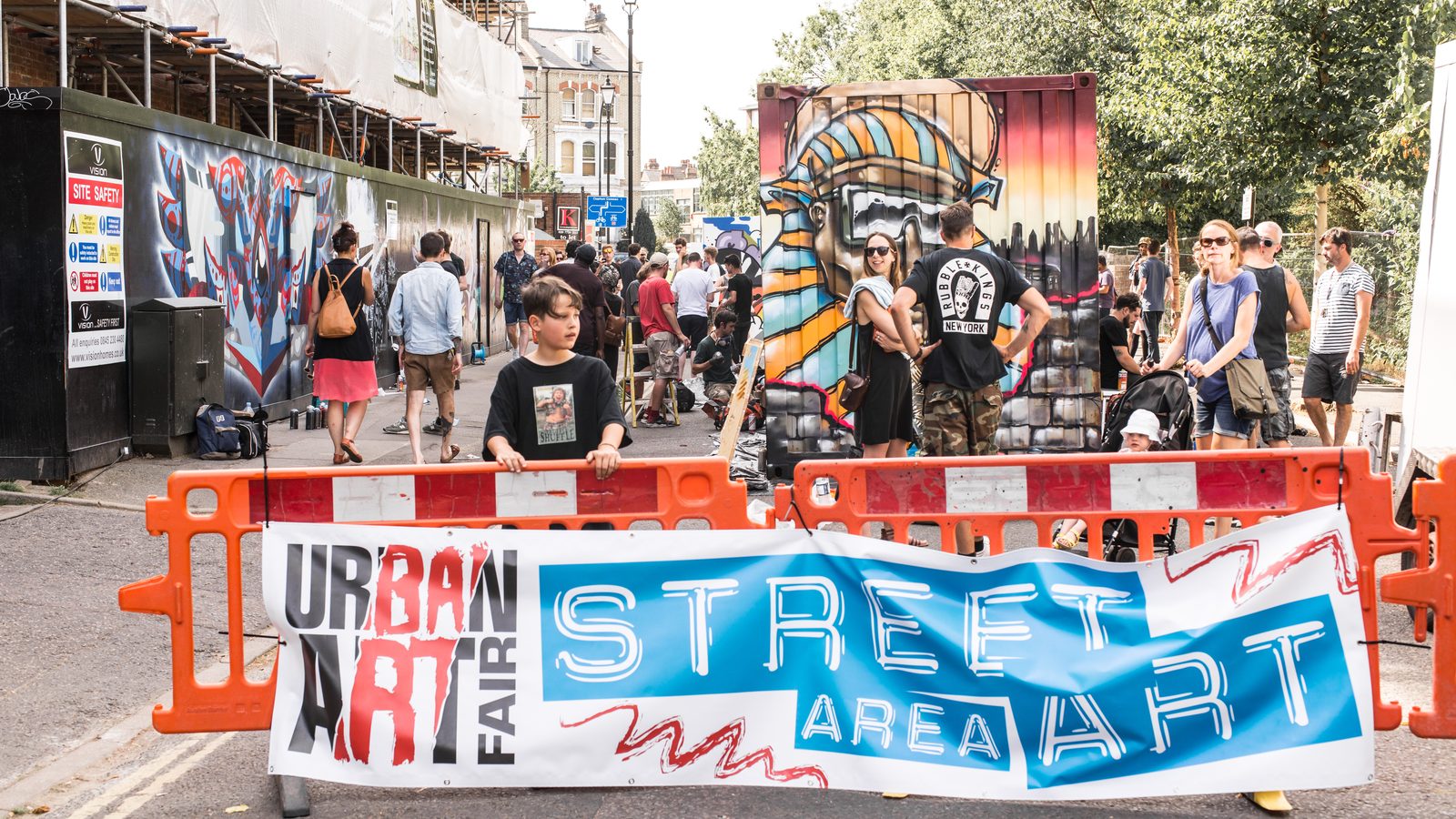
After eight, Brixton’s evening concentrates along Coldharbour Lane and the streets around the station. The O2 Academy empties 5,000 onto Stockwell Road at midnight; the smaller rooms carry the character. The Windmill on Blenheim Gardens runs roughly 300 gigs a year in a 150-capacity room (£5–£10 entry), and the Effra Hall Tavern on Kellett Road does free jazz on Thursday and Sunday with Red Stripe pitchers.
Move 500 metres off the main drag and the neighbourhood turns residential and quiet by 22:00. The nightlife is real and loud, but it stays in its lane. At 02:00 on a Saturday, the foot traffic thins and the atmosphere shifts — that’s not the time to be walking alone.
From the Sourdough Queue to the Lido
Franco Manca, 20 Atlantic Road — Brixton’s original sourdough pizza, founded 2008 with an 18th-century Neapolitan starter. Moved to a 100-seat flagship opposite the station in January 2024. “I have been going to Franco Manca in Brixton for years and it never disappoints,” as a TripAdvisor reviewer put it in February 2024.
Effra Hall Tavern, 38A Kellett Road — A Victorian corner pub that functions as Brixton’s living room. Free jazz Thursdays and Sundays, live music Saturdays, Red Stripe in pitchers. The Sunday jam has run for almost twelve years.
Brockwell Lido, Brockwell Park — A 1937 Art Deco outdoor pool, unheated, 50 metres. Winter 15–18°C, summer 20–24°C; the Brockwell Icicles swim through January. Lambeth Council takes over management from Fusion Lifestyle in July 2026 — expect some transition disruption.
Herne Hill Sunday Market, Railton Road — Every Sunday 10:00–16:00 on the pedestrianised stretch outside Herne Hill station. Local food stalls, the occasional vinyl seller; more neighbourhood than destination.
The Windmill, 22 Blenheim Gardens — Back-street pub off Brixton Hill, named after the 1816 windmill next door. Roughly 300 gigs a year in a 150-capacity room, entry £5–£10. Championing new music for more than two decades.
From Brockwell Icicles to Granville Fairy Lights
Spring The walled garden in Brockwell Park comes back to life; cherry blossom lines the paths; Herne Hill Market stalls start spreading outdoors onto Railton Road.
Summer Lido queue thirty minutes on hot Saturdays, sun cream mixing with chlorine; Brixton Village’s courtyard tables fill for outdoor dinner well past dark.
Autumn The lido quiets to just the 07:00 regulars; the covered markets feel cosier as evenings shorten and the fairy lights do more work.
Winter The Brockwell Park Christmas Market runs near the Herne Hill gate (mid-November to Christmas Eve); the Brockwell Icicles have been swimming through January since 2012.
Source: Google Maps, OS Open Greenspace & editorial research, 2026

Covered markets, Victoria line speed into Zone 1, and a cultural identity all its own — Brixton suits buyers who want character over polish.
Brixton is where south London’s cultural heart meets a fast Zone 2 commute. The Victoria line reaches Victoria in 8 minutes — among the best value inside the zone boundary.
Brixton scores 50/100 on the PAL Score — our weighted rating across six core criteria that define what makes a London neighbourhood work for buyers.
Score Breakdown
| Criterion | Score (/100) | What it means |
|---|---|---|
| Transport Connectivity | 69 | Victoria Line terminus with Night Tube; 8 minutes to Victoria, Zone 2. Guaranteed seat for the morning commute. |
| Green Space Access | 42 | Brockwell Park (84 acres, 12-minute walk) is one of south London’s best parks. Ruskin Park and Myatt’s Fields within a mile. |
| Local Amenities | 52 | Brixton Village, Electric Avenue, and a dense independent food and drink scene. Strong everyday retail variety. |
| Safety | 31 | Recorded crime 25% above the London average on a severity-weighted basis; on a residential basis the rate is 157 per 1,000 residents, 22% above the London average. Concentrated around the station and night-time economy; residential streets are closer to average. |
| School Quality | 32 | Jessop Primary holds an Outstanding rating, but no Outstanding secondary within walking distance. Tight catchments of 400–500 metres. |
| Property Price Affordability | 56 | Typical flat at £463k (range £126k–£1.14m) is competitive for Zone 2 vs Clapham (£870k avg), but scarce terraced houses at a typical £900k push the overall median up. |
Scores use the PAL 0–100 scale, z-score normalised across all London neighbourhoods. See PAL Score Architecture (April 2026) for methodology.
What This Means
Transport and green space are Brixton’s strongest dimensions, both scoring 69 and 42/100 respectively. A Zone 2 terminus station with Night Tube and a 8-minute run to Victoria is hard to beat in south London — Peckham has no tube at all, and Streatham’s rail connections are slower and less frequent. Brockwell Park’s 84 acres add genuine breathing room that most inner-London neighbourhoods lack.
The drag comes from schools (32/100) and property price affordability (56/100). The school score reflects adequate primary provision but a clear gap at secondary level — families who prioritise school choice often plan moves to Dulwich or Wandsworth by Year 5. Affordability scores low because while flats are reasonable for Zone 2, the terrace market has pushed firmly past £900k.
Brixton suits young professionals and couples who value fast transport, cultural depth, and independent food and nightlife, and who accept the trade-offs of noise, above-average crime near the station, and tight school catchments. If you need quiet residential streets, strong secondary schools, and lower prices, Streatham delivers more for less — but without the Victoria Line or the market.
Readers who love Brixton's Zone 2 creative hub sometimes look next at Stratford, the east-London regeneration counterpoint where the Olympic Park has reshaped what a south-London buyer might otherwise never have considered.
✗ May Not Suit
💰 Value Assessment
Brixton delivers genuine Zone 2 value. The median sold price is £497k (HM Land Registry), with flats averaging £463k — below most Zone 2 alternatives. Terraced houses at £900k average offer period character for less than neighbouring Clapham. Entry-level flats from £126k are exceptional for a Victoria line postcode.
Our Recommendation
Who's Brixton for?
This is your kind of place if:
- You want the fastest Zone 2 Victoria-line commute. Brixton reaches Victoria in 8 minutes from a terminus station — guaranteed seat in the morning, Night Tube home on Fridays and Saturdays. No other Zone 2 neighbourhood south of the river competes on this single metric.
- You want real cultural identity, not curated gentrification. Brixton’s market, music venues and independent food scene have evolved over decades rather than been engineered for new arrivals. The texture is unmistakable from the day you walk down Electric Avenue.
- You have school-age children and can plan around primary-only choice. 2 Outstanding primaries and several Good options give you a workable shortlist for ages 4–11. Many local families plan a secondary move to Dulwich or Streatham by Year 5.
- You want food, market and music on your doorstep. Brixton Village, Atlantic Road’s bars and restaurants, and venues like the O2 Academy and Hootananny mean weekends rarely require leaving the postcode.
- You cycle or live car-light. The CS7 cycle superhighway reaches central London in 20–30 minutes, Brockwell Park and Clapham Common are within easy ride, and the Victoria Line covers the rest. Selling the car is a realistic choice here.
- You don’t mind urban density and visible diversity. Brixton is one of London’s most socially and ethnically diverse neighbourhoods. The street life is constant — not curated, not quiet.
Brixton won’t work for you if:
- You want a quiet, suburban feel. Brixton is busy at all hours, with weekend noise from bars, the market and the station that residential streets cannot fully insulate against. If your priority is calm streets and an early bedtime, this is not the postcode.
- You prioritise low crime stats. Recorded crime runs 25% above the London average on a severity-weighted basis; on a residential basis the rate is 157 per 1,000 residents, 22% above the London average. The 12-month trend is Falling (-5.4%), but crime remains elevated and concentrated near the station and night-time economy. Acceptable for many; not for everyone.
- You need Outstanding secondary schools nearby. Brixton has 0 Outstanding secondaries in the immediate area. Trinity Academy is rated Good but most families who weight secondary heavily look across the borough.
- You drive daily. The CPZ is tight across Lambeth and on-street parking is scarce. Lambeth’s emission-based resident permits range from £136 (EV) to £682+ for large engines, with a £275 diesel surcharge on top.
- You’re priced out. Brixton’s typical flat sells for £463k, with most trading between £126k and £1.14m (Land Registry); two-beds typically run £475k–£575k. If your ceiling is firmly below that, Tooting, Streatham or Herne Hill stretch further.
The Real Picture
Brixton is for people who choose culture and connectivity over polish and quiet. It rewards anyone who wants the Victoria Line, an independent food and music scene, and a neighbourhood with genuine character — and it asks them to live with noise, urban density and a crime rate above the London average in return. Families with younger children can make it work if they accept a secondary-school plan around Year 5. Drivers, light sleepers, and anyone who needs a curated, predictable neighbourhood will be more comfortable in Clapham, Dulwich or Herne Hill, where the trade-offs flip the other way. If the trade-offs above sound like yours, Brixton delivers more than almost any other Zone 2 neighbourhood. If they don’t, Tooting, Dulwich or Herne Hill make sense instead.
Moving to Brixton: The Practical Side
Council Tax
Your council tax is set by the band your property falls into (based on 1991 valuations, not current prices). Here is what you will pay:
| Band | Annual charge (2025/26) | Monthly (approx.) |
|---|---|---|
| A | £1,302.63 | £109 |
| C | £1,736.84 | £145 |
| D | £1,953.95 | £163 |
| E | £2,388.16 | £199 |
Source: Lambeth Council, 2025–26.
Most Brixton flats sit in Bands B–D. A two-bed converted flat typically falls in Band C (£1,737/year); a three-bed Victorian terrace in Band D or E (£1,954–£2,388/year). You can check your property’s band at the Valuation Office Agency website before making an offer.
Parking
Brixton operates emission-based Controlled Parking Zones (CPZ), Monday–Saturday 08:30–18:30. Annual permit costs depend on your vehicle:
- Zero-emission (electric): £135.96/year
- Average petrol car (101–130 g/km): £263.88–£301.21/year
- Older diesel: £301.21+ plus a £275 diesel surcharge
Visitor permits are available from Lambeth’s e-permit system. On-street parking near the station and market is competitive during the day; residential streets south of Brixton Hill are easier. If you’re moving in with a removal van, you’ll need a temporary parking suspension from Lambeth — apply at least 5 working days in advance.
GP Surgeries
Three GP practices serve central Brixton:
- Brixton Hill Group Practice (22 Raleigh Gardens, SW2 1AE) — currently accepting new patients. Walk-in and bookable appointments available. Tel: 020 8674 6376.
- Brockwell Park Surgery (Brockwell Park Gardens, SE24) — accepts patients within catchment. Online registration available.
- Vassall Medical Centre (Vassall Road, SW9) — NHS GP surgery, Brixton side of Oval.
Register with a GP immediately on moving — high demand means waiting lists are common. NHS dental access in Brixton is limited; most NHS dentists are full, and private dentistry (£50–£80 per check-up) may be the realistic option.
Utilities & Services
Average energy costs for a two-bed Brixton flat run approximately £130–£170/month (gas and electric combined), varying with insulation quality and winter usage. Many Victorian conversions have poor energy ratings (EPC D–E), which pushes heating costs up. Upgrading insulation (wall cavity fill, loft insulation) can reduce annual bills by £300–£600 and may qualify for government grants under the Energy Company Obligation scheme.
Broadband: superfast fibre is available on most streets. BT, Plusnet, and Hyperoptic are the main providers; typical speeds 67–150 Mbps. Hyperoptic covers several of the newer blocks and offers 1 Gbps packages. Availability varies by street; check Openreach’s online checker using your postcode before committing. FTTP (full fibre to the premises) is increasingly available and worth seeking out for work-from-home stability.
Water is typically metered in flats (£100–£140/year) and unmetered in older terraces (billed by rateable value). Thames Water serves the area. Water quality is standard London supply; no specific issues unique to Brixton neighbourhoods.
Removals Access
Victorian terraces on narrow residential streets (Tunstall Road, Poets Road) can be tight for large removal vehicles. A 7.5-tonne van is the practical maximum on most side streets. Coldharbour Lane and Brixton Road see heavy weekday congestion between 17:00 and 19:00 — schedule your move for a midweek morning if possible.
Most removal firms quote £1,200–£2,000 for a two-bed flat move within London. The nearest self-storage facilities are on Milkwood Road (Big Yellow Storage, approximately 0.5 miles from Brixton centre) and Streatham.
Frequently Asked Questions
Common questions about living in Brixton, answered with data from our research.
The typical (median) sold price for a flat in Brixton is £463k, with prices ranging from £126k at the entry level to £1.14m at the top (Rightmove, February 2026). The median is a midpoint, not a starting price. In practice, a one-bed conversion starts around £320,000 and a two-bed in a decent location runs £450,000–£550,000. Most flats are Victorian or Edwardian mansion-block conversions — leasehold, with service charges of £1,500–£3,000/year. Ground rent varies from £50 to £400 annually on older leases. Factor in survey costs (£400–£700) and potential lease extension fees if the remaining term is under 80 years.
Eight minutes. The Victoria Line runs direct from Brixton to Victoria station, with trains every 2–4 minutes at peak times. Oxford Circus takes 15 minutes; King’s Cross 20 minutes. Night Tube runs all night Friday and Saturday, which means you can get home from central London at any hour on weekends without paying for a cab. Brixton is a terminus station, so you’ll get a seat for the morning commute — a practical advantage most Zone 2 stations cannot match.
Primary schools are solid. Jessop Primary School holds an Outstanding rating (Ofsted, January 2024) and is the strongest local option. St Helen’s Catholic Primary (Good, Ofsted July 2024) and St John’s Angell Town CoE Primary (Good, Ofsted November 2024) both perform well but have tight catchments — typically 400–500 metres. Secondary schools are the weaker link. Trinity Academy (Good, Ofsted August 2022) has the best Progress 8 scores locally, but there’s no Outstanding secondary within walking distance. Families often plan moves to Dulwich or Wandsworth for secondary years.
Safer than the headlines suggest, but not crime-free. Brixton’s recorded crime runs 25% above the London average on a severity-weighted basis (data.police.uk, the latest 12-month period). On a residential basis — visitor and footfall theft set aside — the rate is 157 per 1,000 residents, 22% above the London average. The station area and Coldharbour Lane account for the bulk of incidents — driven by the night-time economy, not residential crime. Practical advice: keep phones out of sight near the station, avoid solo walks on Coldharbour Lane after 01:00, and use a D-lock for bikes.
Lambeth Council Tax for 2025–26 ranges from £1,302.63 (Band A) to £3,907.90 (Band H). Most Brixton flats fall into Bands B–D, meaning you’ll pay £1,520–£1,954 per year. A three-bed Victorian terrace typically sits in Band D or E (£1,954–£2,388/year). Add around £136–£682 for a resident parking permit (emissions-based) and £65 if you opt into garden waste collection. You can check your property’s exact band at the Valuation Office Agency website before making an offer.
It depends on what matters to you. Brixton has the Victoria Line (8 minutes to Victoria, Night Tube) — Peckham has no tube at all, relying on Overground and bus routes. Brixton property prices are comparable (overall median £497k vs Peckham’s £525,000), though Peckham’s flat market is slightly cheaper. Peckham’s food scene on Rye Lane is edgier and more diverse; Brixton Village is more established and polished. Both areas carry above-average crime rates. The deciding factor is usually transport: if you commute to central London daily, Brixton’s Victoria Line wins decisively.
Brixton is loud on Friday and Saturday nights — there is no diplomatic way to frame this. Music from bars on Coldharbour Lane, Electric Avenue, and Brixton Village carries across the surrounding streets from 20:00 to 04:00. Lost in Brixton rooftop plays amplified reggae and dancehall until 23:30 Thursday–Saturday. If noise sensitivity is a factor, avoid properties fronting Coldharbour Lane, Atlantic Road, or Electric Avenue. Quieter options: Poets Road, Tunstall Road, and Acre Lane south of Brixton Road sit far enough from the nightlife strip to sleep through most of it.
For quiet residential living: Poets Road, Tunstall Road, and the streets off Acre Lane south of Brixton Road — lower noise, Victorian terraces with gardens, and still within a 10-minute walk of the station. For proximity to everything: streets near Brixton Water Lane or Effra Road put you close to Brockwell Park and the market without the worst of the Coldharbour Lane noise. Avoid properties directly on Coldharbour Lane, Atlantic Road, or Electric Avenue unless you actively want nightlife on your doorstep. Upper Brixton Hill is quieter but further from the station and shops.
Brixton works for families with primary-age children — Jessop Primary (Outstanding, Ofsted January 2024) and the two Good-rated faith schools provide solid options. The trade-offs are tight school catchments (400–500 metres), above-average crime near the station, and significant weekend noise if you live near the market. Brockwell Park and Ruskin Park provide good green space for children. Secondary provision is the gap: most Brixton families who prioritise school choice plan a move south to Dulwich or across the borough to Streatham by Year 5. Nursery fees run £1,000–£1,500/month for full-time.
The biggest scheme is International House (Coldharbour Lane at Brixton Road) — 288 new homes with 40% designated affordable, developed by Hondo Enterprises. A planning decision was expected by March 2026. This will increase density and shift the demographic further towards young professionals. Lambeth is also taking over direct management of Brockwell Lido and other leisure facilities from Fusion Lifestyle (which entered administration in early 2026), with the handover scheduled for July 2026. Expect some disruption to lido and gym services during the transition.
Data from HM Land Registry, Ofsted, Metropolitan Police & TfL. Page last regenerated 31 August 2026.
Moving to Brixton?
Get our free moving checklist and local tips delivered to your inbox.
No spam. Unsubscribe anytime.