Property Prices in Clapham
Source: HM Land Registry Price Paid Data — median sold prices over a rolling 12-month window
What Your Budget Buys
Source: HM Land Registry.
For another softened inner-South market, see our Peckham guide.
Market Position & Budget Bands
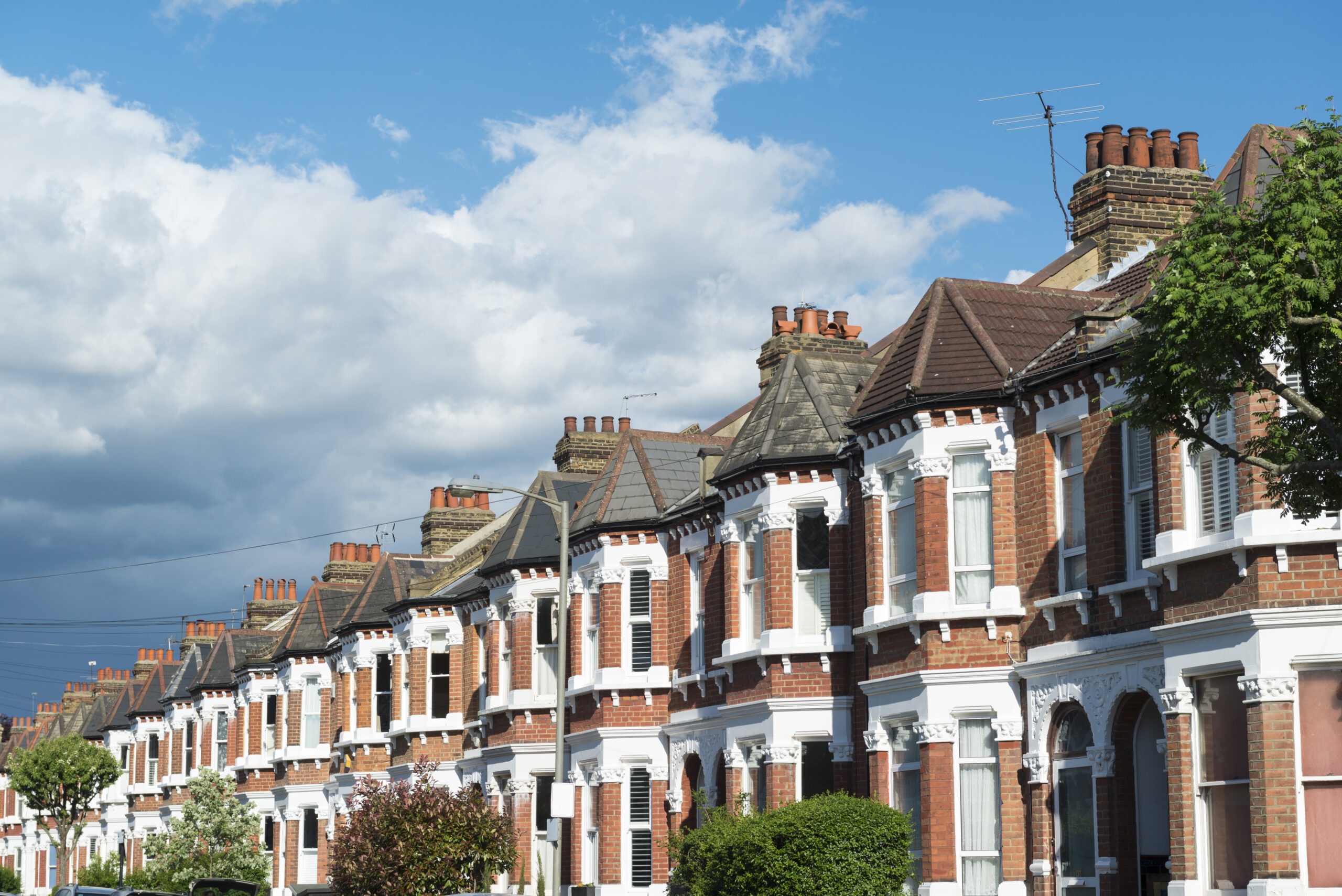
Clapham buys you a Zone 2 address wrapped around a 220-acre common, a fast Northern line and a genuine going-out high street. The overall median sold price is £625k (HM Land Registry), which puts Clapham mid-table among its neighbours — a clear premium over edgier Brixton one stop south, but below regenerating Battersea to the north. It is overwhelmingly a flat market: roughly four in five homes are flats, and the headline is held up by a thin layer of expensive Old Town and Abbeville houses rather than a broad family-house base. The three core wards tell the same story — Clapham Town (the Old Town and the High Street), Clapham East (the Common and the stations) and Clapham Park (the south-east) are all flat-dominated, with detached and semi-detached houses near-absent. The core buyers are young professionals and sharers drawn by the Northern line and the nightlife, plus families competing for the scarce period houses of the Old Town.
What Your Budget Buys
Flats are the market. They run from the entry level at around £149k — ex-local-authority stock and smaller conversions — through a £540k median (one- and two-bedroom Victorian and Georgian conversions and purpose-built blocks across all three wards) up to £1.94m for the largest and best-placed near the Common. Most are period conversions rather than new-build.
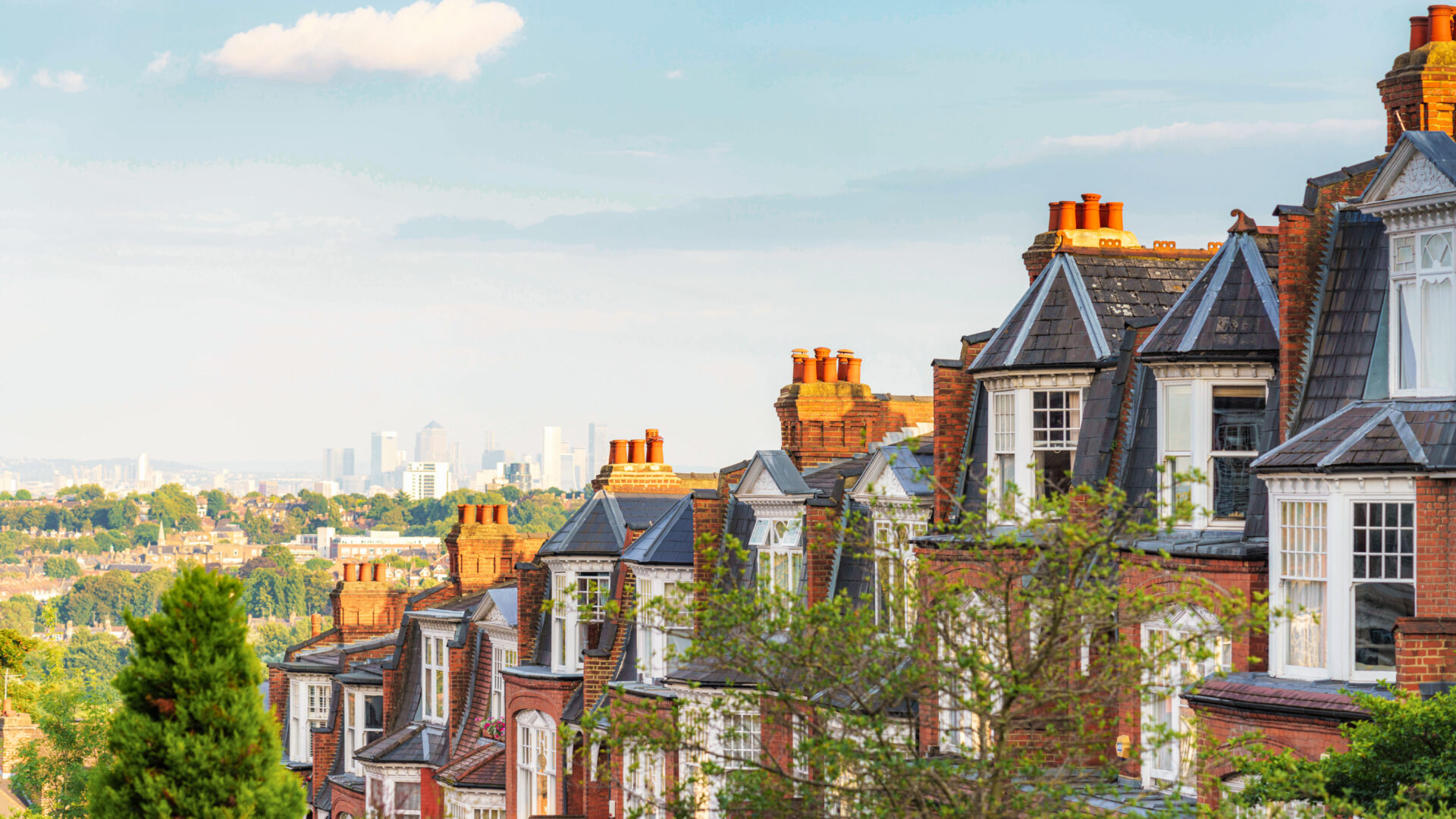
Houses are the scarce, premium end. The typical terrace sells at £1.28m, running up to £3.80m for the largest — Victorian and Georgian stock concentrated in the Old Town, around The Polygon and Clapham Common North Side, where 18th-century City merchants once built their villas (the Georgian heart of the Clapham Sect). Semi-detached and detached houses barely exist here: only a handful trade in a typical year, too few to quote a reliable figure, so a whole house in Clapham means competing for period terraces rather than shopping a range.
What Drives Values
Clapham’s value rests on things that don’t move month to month. What holds it up: Clapham Common itself — 220 acres of open space that defines the area — the Northern line’s fast run into the City and West End, one of South London’s best-known going-out high streets, and the period houses of the Old Town conservation area. It also has one of South London’s deepest rental markets, which underpins investor demand. What tempers it: this is a softened inner-South-West-London market, more flat-heavy than family-house, so the premium over Brixton buys you the Common, the transport and the period stock rather than faster growth, while Battersea’s Nine Elms and Power Station regeneration has pulled ahead on that front. The live median and by-type figures are in the cards above and on the price comparison page.
Leasehold vs Freehold
Clapham’s flats are predominantly leasehold — Victorian and Georgian conversions and purpose-built blocks alike — so lease length and service-charge history are the first things to check, particularly on older mansion-block conversions where charges can be significant. The scarce houses, the Victorian and Georgian terraces of the Old Town and Abbeville, are almost all freehold.
Rental Yields (Buy-to-Let Context)
Clapham is one of South London’s deepest flat-share rental markets, and tenant demand is the steadiest part of its property story. One-bed flats let for roughly £1,600–£2,000 a month and two-beds for £2,250–£2,900 (Rightmove, Zoopla and Foxtons SW4 listings), putting gross yields around 4.5–5.5%. The tenant base is young professionals — the Northern line, the High Street nightlife and a long tradition of three- and four-person sharers keep demand strong and voids short. A two-bed let by the room to sharers lifts the effective yield above a single-tenancy basis, which is how a large slice of Clapham’s rental stock actually trades.
How Clapham compares nearby
Median sold price, all property types, against the nearest comparable areas we cover.
HM Land Registry · prices last updated 5 August 2026
Schools in Clapham
🏫 Primary
🏛 Secondary
Bonneville Primary School
Iqra Primary School
St Mary's Roman Catholic Primary School
Clapham Manor Primary School
Glenbrook Primary School
Heathbrook Primary School
Kings Avenue School
Macaulay Church of England Primary School
Richard Atkins Primary School
St Bernadette Catholic Junior School
La Retraite Roman Catholic Girls' School
Harris Academy Clapham
The Elms Academy
Data: Ofsted, 2026
School Overview
Schools are Clapham’s joint-strongest dimension on the PAL Score, and the headcount backs it up. There are 13 schools within reach rated Good or Outstanding, including 4 rated Outstanding by Ofsted, and 100% of the local state schools sit at Good or above. The strength is concentrated in the primary phase, where Clapham has genuine choice; the state-secondary picture is decent but narrower, and a cluster of independents fills out the rest.
Primary Schools
The standout state primaries are Outstanding-rated. Bonneville Primary School (Bonneville Gardens, SW4 9LB) is Outstanding (Ofsted, May 2024 — a full graded inspection before the framework change). Iqra Primary School (Park Hill, SW4 9PA) retains its Outstanding grade: its June 2024 ungraded inspection confirmed it “continues to be an outstanding school”, carrying forward the Outstanding judgement from its 2017 graded inspection. St Mary’s RC Primary (Crescent Lane, SW4 9QJ) was long rated Outstanding, but its most recent inspection (Ofsted, November 2024) falls under the post-September-2024 framework, which issues no single overall grade — it now reads as Good across most areas with Personal Development rated Outstanding, so it is no longer “Outstanding overall”. The strong Good primaries are Clapham Manor Primary (Good, Ofsted October 2022), Macaulay CofE Primary in the Old Town (Victoria Rise, SW4 0NU; Good, Ofsted December 2023), Glenbrook Primary (last graded Good in 2021; re-inspected January 2026 under the no-overall-grade framework) and Kings Avenue School (Good, Ofsted March 2022). Since September 2024 Ofsted has stopped issuing single-word overall grades, so for any school inspected after that date, verify the current position at reports.ofsted.gov.uk before relying on a rating.
Secondary Schools
The Outstanding state secondary is La Retraite RC Girls’ School (Atkins Road, SW12, on the Balham border), Outstanding (Ofsted, December 2023) — a girls’ Roman Catholic school, so admission turns on sex and faith criteria. The two co-educational state secondaries are both Good: Harris Academy Clapham (Good, Ofsted February 2023, with Personal Development rated Outstanding) and The Elms Academy (Good, Ofsted May 2025). The Elms posts the best local results of the three, with a Progress 8 of +0.91 and an Attainment 8 of 53.7 (Department for Education, 2023/24) — among the strongest progress scores in Lambeth. So a family with daughters has an Outstanding faith option; a family wanting co-educational, non-faith state secondary realistically looks to Harris Academy Clapham or The Elms.
Catchment Reality
Clapham’s primary catchments are tight, and the Outstanding schools are the tightest. Bonneville and Iqra both sit in SW4 9 around Clapham Park and Abbeville, and an Outstanding rating in a flat-dense Zone 2 area concentrates demand — if you are buying for a specific Outstanding primary, target streets within a few hundred metres of the school gate and check the previous year’s furthest-offered distance with the school directly, as these radii tighten in a popular year. La Retraite’s admissions run on Catholic faith priority first and a distance tiebreaker second, not a simple residential catchment, so a nearby SW4 address gives no automatic place. The co-educational secondaries (Harris Academy Clapham, The Elms) admit on distance-based criteria and are the realistic default for most local families. Because Clapham sits near the Lambeth–Wandsworth border, some families also look across into Wandsworth schools — confirm which authority administers admissions for any school before you commit.
Independent Options
Independent provision is a genuine part of the Clapham picture, with around five schools in or beside SW4. Eaton House The Manor (58 Clapham Common Northside, SW4) is a Grade II-listed prep facing the Common — boys 2–13, girls 2–11, part of Dukes Education (ISI-inspected, May 2025, all standards met). Parkgate House School (Clapham, SW4) is a non-selective co-educational prep and nursery for ages 2.5–11 (ISI; last confirmed Outstanding judgement 2022 — verify the current inspection directly). Thomas’s Clapham (Broomwood Road, SW11, just over the SW4 border) is a large co-educational prep for ages 4–13. Broomwood (single-sex prep schools, Dukes Education) and Streatham & Clapham High School (GDST girls’ day school, 3–18, on Streatham Hill) round out the choice within a short trip. Confirm current fees and admissions directly with each school.
For another strong-schools South London area, see our Dulwich guide.
Transport & Commute: Clapham
Commute Times
Source: TfL Journey Planner, 2026. All times are station-to-station (boarding to alighting); add 5–10 minutes for walking to your nearest station and waiting.
For another Northern line area further out, see Morden.
Rail and Tube
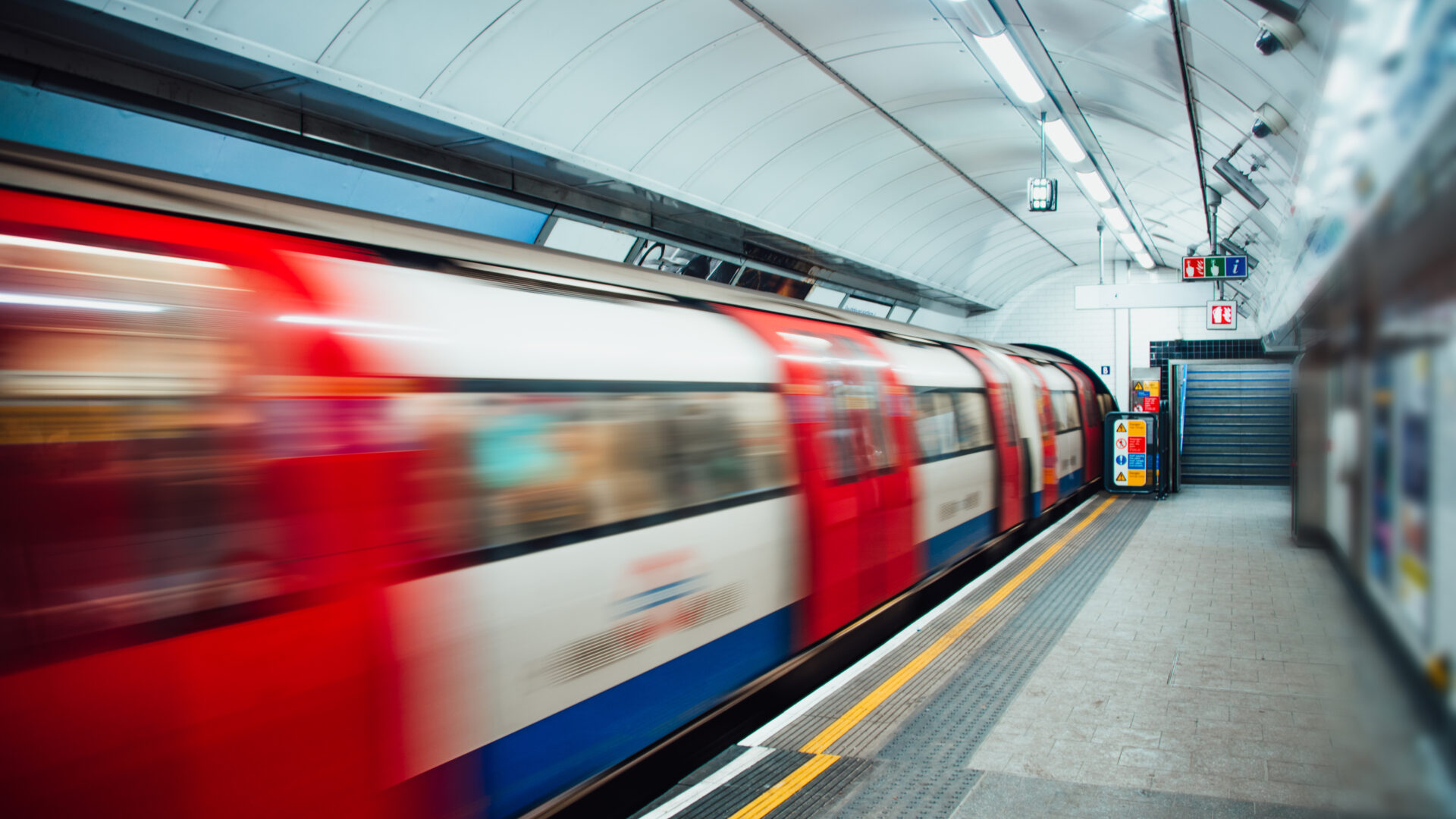
Transport is Clapham’s real strength, and the Northern line is the reason. Three Underground stations serve the SW4 core — Clapham North, Clapham Common and Clapham South — all on the Northern line (Zone 2), giving direct, fast runs into the West End, the City and the South Bank. From Clapham Common, Victoria is 11 minutes, Waterloo 10 minutes and Bank 17 minutes (TfL, station-to-station, 08:30 weekday), with London Bridge around 14 minutes. Clapham High Street adds an Overground station for orbital trips, and Clapham Junction — Britain’s busiest interchange by train movements — is a short hop away for National Rail services across the south. The one caveat every Northern line commuter knows: the line splits into two branches (Bank and Charing Cross), so check which platform your train serves, and expect peak crowding on a line that is one of the network’s busiest.
Bus Network
Clapham is well served by buses across the High Street, the Old Town and the Common, linking the three Tube stations to Brixton, Battersea, Vauxhall, Streatham and the West End. For local and orbital trips the buses do the work the radial Northern line does not, and night buses along the High Street keep the area connected after the Tube stops — useful given the going-out scene that defines Clapham’s evenings.
Commute Times
| Destination | Route | Station-to-station |
|---|---|---|
| Victoria | Northern line + change | 11 min |
| Waterloo | Northern line direct | 10 min |
| Bank | Northern line (Bank branch) | 17 min |
| Canary Wharf | Northern + change | 27 min |
| King’s Cross St Pancras | Northern line direct | 20 min |
Station-to-station, TfL Journey Planner, 08:30 weekday (refreshed June 2026), from Clapham Common. Add the time to reach and board your station. Waterloo, Bank and King’s Cross run direct on the Northern line; the line’s Bank/Charing Cross split means checking your branch matters.
Cycling and Walking
Clapham is flat, dense and walkable — the High Street, Old Town, Venn Street and all three Tube stations sit within a short walk of each other and of the Common, which doubles as a 220-acre open route for walkers and cyclists. Cycle Superhighway and quieter back-street runs link the area to the City and the South Bank, and Santander cycle docks sit around the Common and stations. The whole area is within the Ultra Low Emission Zone (ULEZ), London-wide since August 2023, so a non-compliant vehicle is charged daily.
Driving and Parking
Road access runs through the A3 and the South Circular corridors, none of it fast at peak. Clapham sits within the ULEZ but outside the Congestion Charge zone. Controlled Parking Zones cover the SW4 core, and Lambeth prices resident permits by vehicle emissions, so on-street parking is permit-controlled and the cost depends on what you drive — covered in full in the moving section below. The practical reality is that a car is a liability here more than an asset: the Tube and buses cover most journeys, and parking near the High Street and Common is tight.
Transport Verdict
Clapham suits commuters to the West End, the City and the South Bank who want a fast, frequent Tube and will use the buses and the Overground for everything orbital. The Northern line is the headline — sub-20-minute runs to Victoria, Waterloo and Bank — and it is the single best reason to buy here. The honest limitation is the line itself: it is busy and crowded at peak, and the Bank/Charing Cross branch split catches out the unwary, so a Canary Wharf commuter (27 minutes with a change) should weigh the daily grind before assuming Clapham is convenient for the Wharf.
Crime & Safety in Clapham
Top Concern
Source: Metropolitan Police via data.police.uk · Population: ONS Census 2021 · Updated monthly
The Numbers
Clapham’s PAL Safety Score is 41/100, benchmarked against every London neighbourhood we track — a moderately elevated position, not a reassuring one. The residential crime rate runs at 138 per 1,000 residents (the latest 12-month period, data.police.uk), which works out at 12% above the London average once offences are weighted by harm. The honest read is straightforward: this is a busier-than-average area for crime, not a low-crime one.
What the Data Tells You
The largest category is Theft, at around 35% of recorded offences — a high share driven by the nightlife High Street and the Common. Clapham has a well-documented reputation for phone-snatching and theft after dark around those two focal points, where the bars, the restaurants and the late-night footfall put valuables and people in the same place. That is the texture behind the score: a Theft-led profile concentrated where the crowds are, rather than crime aimed at residents on their own streets.
Street-Level Context
The split between the going-out core and the residential streets is the defining pattern. The theft that drives Clapham’s top category clusters on the High Street and around the Common — the bars, the restaurants, the late-night footfall and the open space put valuables and people in the same place after dark, and the Met’s local ward priorities for Clapham Town and Clapham East list theft, robbery and antisocial behaviour accordingly (Metropolitan Police ward pages, 2026). Move into the residential pockets — the Old Town’s quieter streets, the Abbeville Village terraces — and the everyday picture is calmer and more settled. The closer you live to the High Street and the Common, the more of the nightlife texture you take on.
What Residents Say
Residents draw the same line the data does: the High Street and the Common are lively and see the bulk of the theft, while the side streets are quiet. The practical takeaway is straightforward. Keep your phone out of sight and your wits about you walking the High Street or crossing the Common late at night — opportunistic snatching is the real risk here, not violence aimed at residents. Use a D-lock for any bike left near a station, and if a quiet street matters more to you than a five-minute walk to the bars, buy in Abbeville or the Old Town rather than directly on the High Street.
Unlock the Complete Clapham Guide
You’ve seen the headline data. Get the full picture — detailed narratives, council costs, community character, and our editorial verdict.
- 🎓 In-depth school, transport & crime analysis
- 🏛 Council tax & parking costs
- 🏘 Community character & local vibe
- ⭐ Editorial verdict, value assessment & future outlook
- 📦 Moving practicalities
By unlocking, you’re happy for us to email you this guide plus the occasional helpful update from Property Around London. No spam — unsubscribe anytime.
Council Fees in Clapham
Council Tax (Annual)
| Band C | Band D | Band E |
|---|---|---|
| £1,820 | £2,047 | £2,502 |
Source: London Borough of Lambeth, 2026
Council Tax Bands
Clapham sits within the London Borough of Lambeth, where the Band D charge is £2,047 for 2026/27 — mid-table for London, neither cheap nor punishing. Most Clapham flats fall in Bands C–E and most period houses in Bands E–H, so a typical flat bill is moderate while an Old Town or Abbeville house carries a meaningfully higher charge. Lambeth’s overall council tax level sits around the middle of the London pack.
Local Authority Services
Lambeth collects general rubbish and recycling and runs the usual borough services. Garden-waste collection is a paid subscription at £99 a year for weekly collection of two reusable bags (London Borough of Lambeth, 2026) — relevant mainly to the minority of Clapham addresses with a garden. Resident parking permits are priced by vehicle emissions across the borough’s Controlled Parking Zones, from about £136 a year for an electric or ultra-low-emission car up to roughly £683 for the highest-emission band, with a diesel surcharge on top (London Borough of Lambeth, 2026) — a model that rewards a cleaner car and penalises an older, dirtier one.
Waste and Recycling
Lambeth provides kerbside recycling alongside general waste collection, with the £99-a-year garden-waste subscription as the main chargeable extra. For a Clapham flat the garden-waste charge is rarely relevant; for an Old Town or Abbeville house with a garden, it is a small but real annual cost to factor in.
Libraries and Leisure
Clapham is served by Clapham Library on Clapham Common North Side, with the 220-acre Common itself as the area’s main leisure and green-space asset — bandstand, ponds and open playing fields a short walk from the stations. Wandsworth Common and Battersea Park sit close by to the west and north for variety; these are covered in the verdict and FAQs below.
Clapham Community Character
For a comparable young, social community, see Walthamstow.
Where the Common Does the Heavy Lifting
Step out of Clapham Common station on a Saturday and the green opens up almost at once — 220 acres of it, more flat grass than anywhere else in this part of south London. By mid-morning it carries the area's whole spread at once: buggies and flat whites near the playgrounds, five-a-side on the worn pitches, model boats circling the Long Pond, and dogs everywhere.
Cut north into Clapham Old Town and the register changes. The traffic island around The Pavement and The Polygon is Georgian and low-rise, ringed by brunch tables, with Trinity — a one-Michelin-star kitchen since 2016 — sitting quietly among the pubs.
Then there's Venn Street, where the Saturday market runs 10am to 3pm beside the Picturehouse cinema: bread, cheese, flowers and street food on a pedestrianised strip. It's the most village-like Clapham gets — and it's a short walk from a high street that behaves very differently after dark.
The Loudest Stretch in SW4
Clapham High Street is a genuine going-out strip, and it doesn't pretend otherwise. The Clapham Grand, a Victorian music hall since 1900, Infernos with its cult disco nights, and the late-night bars keep the crowd moving, while the Two Brewers has anchored south London's LGBTQIA+ cabaret scene since 1981 with shows seven nights a week. Weekends here are loud, and the area knows it — “everyone continues to pretend they are at university,” as one parent relayed on Mumsnet.
That energy has a cost. Theft is the top recorded-crime category locally, and phone-snatching off bikes is a real after-dark risk on the High Street and the Common's paths — keep your phone in your pocket walking home.
Step into the Old Town or out to Abbeville Road, though, and the noise drops fast. The pubs there call last orders at a civilised hour.
Five Addresses Off the High Street
Venn Street Market (Venn Street) — the Saturday food market (10am–3pm) that gives Clapham its closest thing to a village square, wrapped around the entrance to the Picturehouse.
The Bobbin (Lillieshall Road) — a gastropub on a quiet residential street off the Common, doing a proper British roast on Sundays and a Mediterranean-leaning menu the rest of the week. The Old Town without the crowds.
Studio Voltaire (Nelson's Row) — a not-for-profit contemporary gallery in a former chapel, free to enter, with Crispin's café and a public garden tucked behind the High Street.
Trinity (The Polygon) — Adam Byatt's one-Michelin-star restaurant in the Old Town, the address for an occasion rather than a Tuesday.
The Sun (Clapham Old Town) — a big traditional pub with wood panelling, a beer garden, and screens for the football when the High Street feels like too much.
Eight Weeks of Sundays on the Bandstand
Spring. The Common shakes off winter as the paddling pool and water-play area reopen in late May, and the model-boat sailors return to the Long Pond on Sundays.
Summer. Free bandstand concerts run every Sunday 2–4pm from June to the end of August, big bands and brass over a street-food market, while the grass fills with picnics — and empties of its wealthier weekday regulars on holiday.
Autumn. The November fireworks display is one of south London's biggest, drawing thousands across the grass for the funfair and the bang over the trees.
Winter. The going-out crowd keeps the High Street lit when the Common goes dark and quiet by four, and the funfair returns to its pitch over the festive weeks.
Source: Google Maps, OS Open Greenspace & editorial research, 2026

Young-professional SW London at its most connected — Victoria in 11 minutes and the 220-acre Common — but pricey, theft-busy and cooling on price.
Clapham is young-professional London with superb transport and a 220-acre common — and a going-out high street to match. The average home sells for £625,000.
Clapham scores 50/100 on the PAL Score — our weighted rating across six core criteria that define what makes a London neighbourhood work for buyers.
How We Score
Each criterion is normalised on a 0–100 scale across every London neighbourhood we cover, so a score describes how Clapham compares with the rest of the city, not an absolute mark.
The Breakdown
| Criterion | Score (/100) | What it means |
|---|---|---|
| School Quality | 56 | Two Outstanding primaries and an Outstanding girls’ secondary, with 100% of local state schools at Good or above. |
| Transport Connectivity | 54 | Three Northern line stations plus the Overground; sub-20-minute runs to Victoria, Waterloo and Bank. |
| Safety | 41 | Moderately elevated: 12% above the London average on a harm-weighted basis, with a Theft-led profile around the High Street and Common after dark. |
| Property Price Affordability | 50 | A Zone 2 flat market that has softened over five years, giving more negotiating room than a hot area. |
| Local Amenities | 45 | The score understates a major bar, restaurant and retail scene — the High Street, Venn Street, Abbeville and nearby Northcote Road. |
| Green Space Access | 42 | Clapham Common is huge at 220 acres, but it is the main green space, which holds the normalised score mid-table. |
Scores use the PAL 0–100 scale, z-score normalised across all London neighbourhoods and displayed as integers. See the PAL Score Architecture for methodology.
What This Means
Schools (56/100) and transport (54/100) carry Clapham, and they are the two reasons most buyers look here. The schools score reflects genuine primary choice — Bonneville and Iqra are Outstanding — and an Outstanding girls’ secondary in La Retraite, with every local state school at Good or above. Transport is the everyday strength: three Northern line stations and the Overground put Victoria, Waterloo and Bank within sub-20-minute reach. Safety (41/100) is moderately elevated and affordability (50) sits mid-table — both middling rather than reassuring. Safety runs 12% above the London average on a harm-weighted basis, a Theft-led profile concentrated around the nightlife core; affordability reflects a high but softened Zone 2 market with negotiating room. Green space (42/100) is the lowest, which surprises people given the Common’s 220 acres — but the normalised score weights the spread of green space, and Clapham essentially has one (very large) common rather than many. The Local Amenities score (45) deserves a caveat: it understates the sheer scale of Clapham’s bar, restaurant and retail offer across the High Street, Venn Street, Abbeville and nearby Northcote Road. The resulting 50/100 is a Good score that rewards a professional or sharer using the Tube and the going-out, and warns off anyone wanting a quiet family house or fast capital growth.
For a quieter, greener alternative further out, see our Beckenham guide.
💰 Value Assessment
At an average of £625,000, Clapham sits between cheaper Brixton and pricier Battersea. Flats run around £540,000, but a terraced house runs to £1.28m (HM Land Registry) — the small period-house market behind the flats. The market has softened in recent years, in line with cooled inner SW London, while regen-led Battersea grew. You pay for the transport, the Common and the scene — not for momentum.
Our Recommendation
Who's Clapham for?
Clapham could be a strong fit if you:
- Commute to the West End, the City or the South Bank. The Northern line runs Clapham Common to Victoria in 11 minutes, Waterloo in 10 and Bank in 17 — fast, frequent Zone 2 access.
- Want a genuine going-out scene on your doorstep. The High Street, Venn Street and Abbeville Village give Clapham a bar, restaurant and cinema offer most Zone 2 areas can’t match.
- Are renting out a flat to sharers. Clapham’s deep young-professional rental market keeps demand strong and voids short, with gross yields around 4.5–5.5%.
- Want a Common, not just a park. Clapham Common’s 220 acres — bandstand, ponds, open fields — sit minutes from all three Tube stations.
- Have primary-age children and value choice. Bonneville and Iqra are Outstanding-rated, with several strong Good primaries and good independent options within reach.
Think twice if you:
- Are banking on capital growth. Clapham is down 2.6% over five years (HM Land Registry), in line with Brixton and well behind regenerating Battersea — a soft market, not a rising one.
- Want a quiet, low-crime area. Clapham’s Safety Score is 41/100, running 12% above the London average, with Theft concentrated around the High Street and Common after dark.
- Need a family house on a normal budget. Houses are scarce — about 20% of stock — and concentrated in pricey Old Town and Abbeville terraces.
- Live on the High Street and value silence. The nightlife that makes Clapham fun also makes the central streets noisy and busy late into the evening.
- Commute daily to Canary Wharf. That run is 27 minutes with a change, and the Northern line is crowded at peak.
The Real Picture
Clapham is a young, social, flat-dominated corner of Zone 2 built around one very big common and one very busy high street. You buy here for the Northern line, the going-out, the Common and the calmer period pockets of the Old Town and Abbeville — and you accept, in return, high prices, a market that has drifted sideways-to-down, a theft-led crime profile and the noise that comes with the nightlife. For a professional couple or a sharer who wants to be in the thick of it with a fast Tube and green space on the doorstep, it fits beautifully. For someone chasing a quiet family house or quick appreciation, it is the wrong place.
Moving to Clapham: The Practical Side
Council Tax
Clapham is in the London Borough of Lambeth. Current charges:
| Band | Annual charge (2026/27) |
|---|---|
| Band C | £1,820 |
| Band D | £2,047 |
| Band E | £2,502 |
Source: London Borough of Lambeth, 2026/27. Bands below D are set by statute as fixed proportions of the Band D charge. Confirm the current financial year’s figure on the Lambeth website before relying on it.
Parking
The SW4 core sits within Controlled Parking Zones, so check the specific zone for any address on the Lambeth parking map before assuming you can park on-street. Lambeth prices resident permits by vehicle emissions: roughly £136 a year for a Band A electric or ultra-low-emission car, rising to about £683 for the highest-emission Band M (over 255 g/km CO2), with a diesel surcharge and a higher charge for a second household permit (London Borough of Lambeth, 2026). On-street parking near the High Street and the Common is tight; the quieter Old Town and Abbeville streets are easier, but still permit-controlled. For most residents the Tube and buses make a car optional rather than essential.
GP Surgeries
Central Clapham is served by practices including The Clapham Family Practice (89 Clapham High Street, SW4 7DB), Grafton Square Surgery (8b Grafton Square, Old Town, SW4 0DE) and Clapham Park Group Practice (72 Clarence Avenue, SW4 8JP) — all rated Good by the Care Quality Commission (CQC ratings carried forward from inspections to 2023, as displayed June 2026; none currently holds an Outstanding rating). The nearest acute hospital with a full 24-hour A&E is St Thomas’ Hospital (Westminster Bridge Road, SE1 7EH), about two to three miles north on the South Bank, run by Guy’s and St Thomas’ NHS Foundation Trust (CQC: Good). King’s College Hospital at Denmark Hill (SE5) and St George’s at Tooting (SW17) are comparable alternatives a similar distance away.
Utilities and Broadband
Broadband is strong. The Clapham and Brixton Hill area is about 95% gigabit-capable and 86% full-fibre across roughly 52,000 premises (thinkbroadband, June 2026), well above the UK gigabit average of around 87% (Ofcom Connected Nations 2025) — driven by Virgin Media cable alongside Openreach full fibre. Coverage dips in some individual SW4 9 postcodes, so check your exact address. Energy costs track the Ofgem outer-London regional average; the period conversions and Victorian terraces around the Common tend to carry weaker energy ratings than the newer Clapham Park flats, so check the EPC before you buy.
Removals and Access
Most Clapham moves are into flats within Controlled Parking Zones, so a removals van may need a permit or suspended-bay dispensation from Lambeth — arrange it in advance. The Victorian conversions around the Common often mean narrow communal stairs and no lift, which slows a move and can rule out larger furniture, so measure carefully. The Old Town and Abbeville terraces sit on quieter residential streets with easier van access than the High Street, where loading is restricted and traffic is heavy. Book any move away from Friday and weekend evenings, when the going-out crowds clog the central streets.
Frequently Asked Questions
Common questions about living in Clapham, answered with data from our research.
The median flat in Clapham sold for £540k over the past year (HM Land Registry, to June 2026) — that is the midpoint, not the floor. Entry-level flats start from around £149k, with one-beds typically below the median and larger or better-positioned flats ranging up to £1.94m. That puts Clapham above neighbouring Brixton, where the median flat is about £497,000, but below Battersea at roughly £715,000. Clapham’s flat market has softened — values are down 2.6% over five years — so there is more negotiating room than in a rising area like Battersea. Most stock is Victorian conversion or purpose-built flats around the Common and the stations.
About 11 minutes to Victoria and 10 minutes to Waterloo on the Northern line from Clapham Common, with Bank around 17 minutes and King’s Cross 20 (TfL, station-to-station, 08:30 weekday; add your walk to the station). Three Northern line stations — Clapham North, Common and South — serve the SW4 core, plus the Overground at Clapham High Street. The line splits into Bank and Charing Cross branches, so check your branch, and expect peak crowding. Canary Wharf is slower at 27 minutes with a change.
Yes, especially at primary level. There are 13 schools within reach rated Good or Outstanding, including 4 rated Outstanding, with 100% of local state schools at Good or above. Bonneville Primary (Outstanding, Ofsted May 2024) and Iqra Primary (Outstanding) lead the primaries; La Retraite RC Girls’ (Outstanding, Ofsted December 2023) is the standout state secondary. The Elms Academy posts the best local secondary results (Progress 8 +0.91, Department for Education 2023/24). State-secondary choice is narrower than primary, and around five independents add options.
Clapham is busier than average for crime rather than low-crime. Its PAL Safety Score is 41/100, benchmarked against every London neighbourhood we track, and the residential crime rate of 138 per 1,000 residents (the latest 12-month period, data.police.uk) runs 12% above the London average on a harm-weighted basis. The largest category is Theft, around 35%, concentrated on the nightlife High Street and the Common after dark. The residential streets in the Old Town and Abbeville are notably quieter.
Council tax is set by the London Borough of Lambeth, with a Band D charge of £2,047 for 2026/27 — mid-table for London. Most Clapham flats fall in Bands C–E and most period houses in Bands E–H, so a flat bill is moderate while an Old Town or Abbeville house costs more. Lambeth charges £99 a year for garden-waste collection and prices resident parking permits by vehicle emissions, from about £136 to £683 a year — worth factoring in if you drive an older car.
It depends what you want. Against Brixton, Clapham is dearer (median flat £540k versus about £497,000) but greener and quieter on the residential streets, with the Common and the Old Town; Brixton is cheaper and edgier with a stronger music and market scene. Against Battersea, Clapham is more affordable but Battersea has grown faster (+6.9% versus −2.6% over five years, HM Land Registry) on the Nine Elms and Power Station regeneration. Clapham is the going-out-and-transport middle; Brixton the value play, Battersea the growth one.
It is one of South London’s core young-professional areas, built around flat-shares, the Northern line and a going-out high street. One- and two-bed flats let for roughly £1,600–£2,900 a month (Rightmove and Zoopla, June 2026), and the area’s bars, restaurants and cinema on Venn Street and the High Street drive its evening scene. The trade-off is cost — the median flat sells for £540k (HM Land Registry) — and the theft-led crime texture around the nightlife core. For sharers and couples who want energy and a fast Tube, it is a natural fit.
Clapham Common is the headline — about 220 acres of open grass, ponds, a bandstand and playing fields, a short walk from all three Tube stations. Wandsworth Common and Battersea Park sit nearby for variety. The honest caveat is that the Common is essentially the area’s single large green space rather than one of many, which is why Clapham’s green-space score sits mid-table (42/100) despite the Common’s size. If you want a big open space on the doorstep, Clapham delivers; if you want lots of smaller pocket parks too, it is thinner.
Clapham is about 80% flats to 20% houses across its three core wards (Census 2021), with houses almost entirely Victorian and Georgian terraces — detached and semi-detached stock is near-absent. Flats range from Victorian conversions around the Common to purpose-built blocks and the Clapham Park estate to the south-east. The period terraces concentrate in two pockets: Abbeville Village (SW4 9) and the Old Town (SW4 0). Because houses are scarce and pricey — just 18 semi-detached and one detached house sold in the year to June 2026 (HM Land Registry) — the £2.20m semi-detached figure is a tiny-sample median, not a real market, and the single detached sale is too thin to price at all.
The High Street and Venn Street are genuinely busy at night — bars, restaurants and a cinema draw crowds, and night buses keep the central streets active after the Tube stops. That energy is a draw for some and a drawback for others. If quiet matters, the Old Town’s side streets and the Abbeville Village terraces south of the Common are markedly calmer than anywhere on or near the High Street. The rule of thumb: the closer you buy to the going-out core, the more evening noise you take on.
Data from HM Land Registry, Ofsted, Metropolitan Police & TfL. Page last regenerated 31 August 2026.
Moving to Clapham?
Get our free moving checklist and local tips delivered to your inbox.
No spam. Unsubscribe anytime.