Property Prices in Hackney Central
Source: HM Land Registry Price Paid Data — median sold prices over a rolling 12-month window
Source: HM Land Registry.
Hackney flats average £550k — readers priced out at this level should also look at Brixton, the south-London creative peer that pitches a step below while keeping the same Zone 2 positioning.
Market Position & Budget Bands
Hackney property prices are among the most closely watched in east London, reflecting the area’s cultural appeal and transport credentials. The overall median across all Hackney homes is £600k (HM Land Registry) — Zone 2 pricing, but with considerably more character than most Zone 2 alternatives. This is overwhelmingly a flat-buyer’s borough: flats outnumber house sales several times over, so a flat buyer has real choice and comparable evidence to negotiate against, while houses are scarce enough that buyers often wait for the right one rather than picking from a live shelf. The core buyers are young professionals and creatives who want City and West End access without City and West End prices, alongside buy-to-let investors targeting a consistently deep rental market.
What Your Budget Buys
The typical flat sells for £550k — that’s the median, the midpoint of the market rather than a starting point. In practice flats span a wide band, from around £121,500 at the bottom (a studio or ex-council one-bed on an upper floor) up to £1.30m for the largest and best-located. Most are Victorian and Edwardian conversions above the shops on Kingsland High Street and Mare Street, or purpose-built flats on Hackney’s estates; the premium end runs to warehouse and loft conversions around London Fields and De Beauvoir, with newer build concentrated along the Regent’s Canal and the Dalston corridor.
Victorian terraces are where the market heats up. The median terraced house sells for £1.15m (HM Land Registry), but the spread is unusually wide — from around £314,000 for a smaller or unmodernised terrace up to £3.40m at the top, depending on whether you’re on a Conservation Area street near London Fields or a busier road off Kingsland High Street. Period features come as standard — sash windows, cornicing, tiled hallways — and so do the survey checks that go with 19th-century stock. Semi-detached and detached houses barely register as a market here: only a handful change hands in a typical year, too few to read a reliable price from. When one does come up it is a genuine scarcity buy, not a bracket you can shop within — expect to pay well into seven figures and to wait for the right one to appear.
What Drives Values
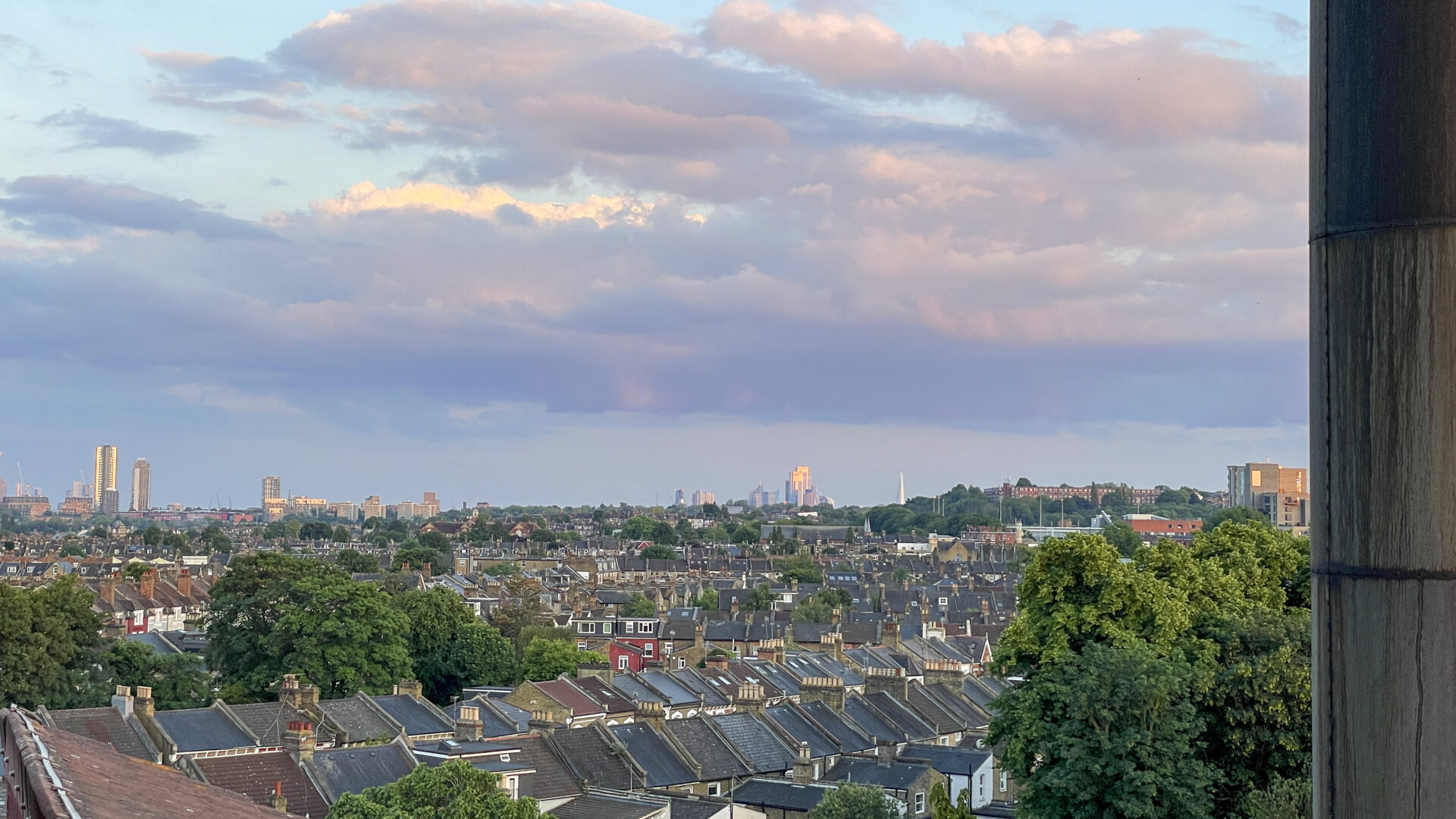
Hackney’s value rests on things that don’t move month to month. What holds it up: the Overground’s orbital reach and quick City access, one of London’s densest concentrations of independent food, music and culture (Broadway Market, London Fields, Dalston), and genuine green space in Victoria Park, London Fields and the Hackney Marshes — a combination that keeps demand from young professionals and the creative industries consistently ahead of supply. What tempers it: this is now a mature, high-entry market rather than a discount play, so most of the obvious gentrification gains are already in the price; the high-value terrace market is sensitive to interest rates, and the flat-heavy stock carries the service-charge and leasehold drag covered below. The live median and by-type figures sit in the cards above and on the price comparison page.
Leasehold vs freehold split and service charges
With flats making up the large majority of sales (238 of roughly 287 in the year, HM Land Registry, 2025) and most of those leasehold, service charges matter here. Typical annual service charges on a two-bed conversion flat run £1,500–£2,500, rising to £3,000–£4,500 on newer-build developments with lifts and concierge services. Ground rent on older leases can still be £250–£400 per year, though leasehold reform is gradually eliminating this for new builds. If you’re buying an ex-council flat, check the major works history — Hackney Council’s capital works programme has generated some eye-watering bills in recent years.
Rental yields and buy-to-let outlook
Average monthly rents sit at approximately £1,800–£2,200 for a two-bed flat, depending on condition and proximity to transport (Broadway Market, Dalston, and London Fields commands premiums; Mare Street periphery is cheaper). That puts gross yields in the 3.8–4.5% range — respectable for Zone 2, though below what you’d achieve further east (Stratford, Walthamstow hit 5–6%). The rental market is tight: vacancy rates are low and tenant demand consistently exceeds supply, particularly for well-maintained period conversions. A renovated two-bed conversion flat near London Fields will let within days; a studio on an upper floor near Mare Street may take 2–3 weeks.
Buy-to-let reality: Hackney’s investment case rests on location and lifestyle demand (food/culture scene), not capital appreciation. Year-on-year price growth is modest (3–5% annually). Yields of 4% are solid for Zone 2 but require careful underwriting (tenant mix, void history, maintenance costs, management fees). Professional investors often cite Hackney as “mature” — most obvious capital gains have occurred (2010–2022); current buyers pay for location, not discount value. New landlords should model conservatively on yield, not anticipate rapid price rises.
How Hackney compares nearby
Median sold price, all property types, against the nearest comparable areas we cover.
HM Land Registry · prices last updated 5 August 2026
Schools in Hackney Central
🏫 Primary
🏛 Secondary
Gayhurst Community School
Kingsmead Primary School
London Fields Primary School
Mandeville Primary School
Morningside Primary School
Mossbourne Riverside Academy
Queensbridge Primary School
Sebright School
St John and St James CofE Primary School
St. Paul's With St. Michael's CofE Primary School
The Olive School, Hackney
Benthal Primary School
Berger Primary School
Daubeney Primary School
Gainsborough Primary School
Holy Trinity Church of England Primary School
Lauriston School
Mossbourne Parkside Academy
Nightingale Primary School
Northwold Primary School
Orchard Primary School
St John of Jerusalem Church of England Primary School
St Scholastica's Catholic Primary School
St. Dominic's Catholic Primary School
Mossbourne Community Academy
Mossbourne Victoria Park Academy
Haggerston School
The Bridge Academy
The City Academy, Hackney
The Urswick School - A Church of England Secondary School
Waterside Academy
Data: Ofsted, 1 March 2026
The headline numbers
Hackney schools rank among the strongest in east London, with 31 state schools within reach across primary and secondary. The borough’s Ofsted profile is strong, with a notably high proportion of Outstanding and Good ratings across the board. For families considering the area, Hackney schools offer genuine quality: standout primaries include Gayhurst Community School (0.4 miles from the centre), Shacklewell Primary (0.5 miles), and Queensbridge Primary (0.7 miles), all rated Outstanding. The strength of Hackney schools provision is a major draw for young families moving to the borough, and schools consistently outperform London averages on attainment and progress measures.
Standout primaries with recent Ofsted grades (2023–2025): - Gayhurst Community School — Outstanding (Ofsted March 2025). Mixed community school; consistent top performer; strong leadership. - Shacklewell Primary — Outstanding (Ofsted February 2024). Community school; strong phonics/early reading; good pastoral care. - Queensbridge Primary — Outstanding (Ofsted January 2025). Community school; diverse pupil population; good value-added progress. - Fernbank Children’s Centre — Outstanding for early years (Ofsted March 2024).
Strong secondary options: - Hackney Learning Trust schools (mix of Good/Outstanding): managed secondary provision with broad curriculum. - Several Good-rated comprehensive secondaries serve the borough with standard GCSE/A-Level pathways.
Catchment reality: how far the Outstanding schools actually reach
Competition for places at the top-rated primaries is fierce. Hackney operates a distance-based admissions system (measured in a straight line from home to school). Gayhurst Community typically admits from within a 400–500 metre radius in oversubscribed years — roughly the streets between Mare Street and Queensbridge Road. Shacklewell’s catchment is similarly tight, drawing mainly from the streets between Shacklewell Lane and Rectory Road. Last-distance-offered data (published annually by Hackney Council) shows whether your postcode is within realistic reach.
The practical reality: if you’re buying specifically for a primary school place, contact Hackney School Admissions before committing to a property. Last-offer distances change annually based on application volume. Popular schools (Gayhurst, Shacklewell, Queensbridge) frequently exceed their capacity, and out-of-catchment families are routinely rejected. Secondary admissions are less distance-sensitive and more diverse in criteria — check individual school admissions policies.
Independent, faith and SEND provision
Beyond the state sector, Hackney is within reach of several independent options. The Lycée International de Londres (Wembley) and Yesodey Hatorah Senior Girls’ School reflect the borough’s diverse faith-based communities. For families with children who need specialist support, Ickburgh School on Kenninghall Road provides SEND (Special Educational Needs and Disabilities) specialist places, and the borough’s Educational Psychology Service is regarded as responsive by parent forums. Mainstream schools also have inclusive provision for children with identified SEN.
Nurseries and early years
Hackney has a strong network of maintained nursery schools, including Fernbank Children’s Centre (Outstanding, Ofsted March 2024) and Woodberry Down Children’s Centre. The borough also has a higher-than-average number of childminder places per capita (Hackney Council, 2025). For Stay & Play sessions, Hackney Ark on Morning Lane runs drop-ins on weekdays. Universal Free Childcare entitlements (15 and 30 hours) are available through private and maintained providers; childcare costs are moderate by Inner London standards (approximately £800–£1,100/month for full-time care).
Hackney's Outstanding-rated provision runs deeper than most London boroughs' — families also comparing strong east-side options should look at Walthamstow, whose school landscape matches on pool size and the Ofsted-Good spread.
Transport & Commute: Hackney Central
Commute Times
Source: TfL Journey Planner, 2026. All times are station-to-station (boarding to alighting); add 5–10 minutes for walking to your nearest station and waiting.
Hackney's Central line and Overground connections run directly into Stratford, making the east-London commute corridor one of the most flexible in the city — a single hop between two of its biggest neighbourhoods.
Commute times to 8 key destinations
| Destination | Route | Journey time |
|---|---|---|
| Bank / City | Overground → Liverpool St, then Central Line | 29 min |
| Canary Wharf | Overground to Shadwell, then DLR | 33 min |
| King’s Cross | Overground to Highbury & Islington, then Victoria Line | 29 min |
| Victoria | Overground to Highbury & Islington, then Victoria Line | 38 min |
| Liverpool Street | Overground direct from Hackney Central | 17 min |
| London Bridge | Overground to Whitechapel, then Northern Line | 28 min |
| Paddington | Overground to Stratford, then Elizabeth Line | 35 min |
| Stratford | Overground direct from Hackney Central | 10 min |
(TfL Journey Planner, April 2026. Peak times, door-to-platform.)
Hackney transport is built on the Overground network, with the standout being Liverpool Street in just 17 minutes on the Overground from Hackney Central. If you work in the City, this is one of the shortest Zone 2 commutes in London. For most residents, Hackney transport connectivity to central London is among the key advantages of living in the area.
The station setup
Hackney has no Underground station — a fact that surprises most people. Your primary stations are Hackney Central and Hackney Downs, both on the London Overground. Hackney Downs also has National Rail services. The nearest Tube is Bethnal Green on the Central Line, 1.1 miles south — a 20-minute walk or a quick bus ride on the 106 or 254.
This lack of Tube access is the single biggest transport caveat. It means you’re reliant on the Overground network, which runs less frequently than the Tube (every 5–10 minutes at peak, 10–15 off-peak) and doesn’t run 24 hours. If you work shifts or regularly travel late, factor this in.
Weekend, night and off-peak service
No Night Tube — the Overground doesn’t run a night service. The last train from Liverpool Street to Hackney Central departs around 23:30 on weekdays, 00:30 on Saturdays. Night buses N38, N55, N242, N253 and N277 cover the area, but expect 20–30 minute waits after midnight. Uber and Bolt are the practical late-night fallback.
Weekend Overground services run every 10–15 minutes but are subject to more frequent planned engineering closures than the Tube, particularly on Sundays.
Walking, cycling and active travel
Hackney is one of London’s most cycleable boroughs. The cycle ride to Bank takes just 18 minutes via the Cycleway network (3.3 miles). CS1 runs through the borough, and there’s extensive cycle lane infrastructure along Mare Street and Dalston Lane. TfL cycle parking at both Overground stations. If you’re a cyclist, Hackney works exceptionally well.
Walking is equally practical within the borough — Broadway Market, London Fields, Mare Street and Dalston are all within a 20-minute walk of each other. The canal towpath from Broadway Market to Victoria Park is a flat, traffic-free route that locals use daily.
Driving, parking and the CPZ reality
Hackney has one of London’s tightest Controlled Parking Zone (CPZ) networks — almost every residential street is covered. The good news: resident permits are remarkably cheap at £98 per year (emissions-based, Hackney Council, 2025/26). The bad news: available bays are scarce, particularly around Mare Street and Dalston. Visitor vouchers are available but limited. If you own a car, you’ll park it — but you might not park it outside your front door.
The entire borough sits within the Ultra Low Emission Zone (ULEZ). All petrol cars from 2006 and diesel from 2015 are compliant.
Accessibility and step-free access
Neither Hackney Central nor Hackney Downs is step-free. The nearest step-free station is Dalston Junction (Overground), 0.6 miles north of Hackney Central. For wheelchair users and those with buggies, this is a meaningful limitation — plan your route to include Dalston Junction or use the bus network, which is fully wheelchair-accessible.
Crime & Safety in Hackney Central
Top Concern
Source: Metropolitan Police via data.police.uk · Population: ONS Census 2021 · Updated monthly
Hackney’s crime on a residential basis
Is Hackney safe? Be honest with yourself before buying here: the PAL Safety Score is 20/100, an earned low mark for an inner-city Zone 2 area. Hackney’s recorded crime runs 40% above the London average on a severity-weighted basis (Metropolitan Police via data.police.uk, the latest 12-month period). On a residential basis — visitor and footfall theft set aside — the rate is 175 per 1,000 residents, 36% above the London average — reflecting genuine risk to residents rather than footfall. The 12-month trend is Stable (-0.1%).
The part that matters most for a home buyer is burglary. Residential burglary in Hackney runs well above the London average — close to double it — so the low score is not an artefact of busy high streets. If you are buying a home to live in, treat the elevated figure as real: budget for good locks, an alarm and sensible habits from day one.
What gets reported: the main categories
The largest recorded category is Theft, at 29% of offences. Much of that is theft from the person — phone snatching, bag and bike theft — clustered around the Dalston and Kingsland High Street nightlife and the commercial stretches of Mare Street. This theft is largely visitor-driven footfall crime that the residential rate deliberately sets aside; the residential burglary and violence underneath it should shape your decision. Violence and sexual offences (street assault, late-night-economy violence and domestic abuse) also sit above the London average. Serious organised crime and homicide are statistically rare.
Busier pockets vs quieter pockets
Geography matters here. Dalston and the stretch of Kingsland High Street between Dalston Junction and Hackney Downs see the highest concentration of reported incidents, particularly on weekend evenings, when the bars, late-night food vendors and club culture correlate with theft, violence and antisocial behaviour. Queens Road and the streets immediately around Hackney Downs station also record higher counts during evening hours.
By contrast, the streets around Clapton Square, London Fields’ western edge and the De Beauvoir Town pocket bordering Islington record lower counts, helped by lower throughput and fewer late-night venues. This is a real difference between streets, but don’t read it as “safe” — Hackney is a dense inner-city borough and the residential burglary risk reaches into the quieter Conservation Area streets too. Resident forums make the same point: Mumsnet threads from 2025 describe “the better streets” while still recommending “common sense safety precautions”.
Safety in context
Hackney’s 20/100 is what you would expect of a dense inner-city Zone 2 borough:
– High population density (17,239 people per sq km)
– Active nightlife and late-night economy concentrated in Dalston
– A younger, more transient population than many boroughs
– Heavy retail footfall on Mare Street and Broadway Market
Daytime safety on the main streets is generally fine, and late-night care around Dalston and Kingsland Road on Friday and Saturday is the standard urban drill: don’t walk alone, keep valuables hidden, avoid obvious targets. But the honest headline is that Hackney carries genuinely elevated residential crime, burglary included — the 20/100 reflects that, not just the nightlife. The borough runs dedicated Safer Neighbourhood Teams with ward officers across Hackney Central, Hackney Downs and Dalston, and council-funded CCTV along Mare Street and Kingsland Road was expanded in 2024 (Metropolitan Police, 2025).
Unlock the Complete Hackney Central Guide
You’ve seen the headline data. Get the full picture — detailed narratives, council costs, community character, and our editorial verdict.
- 🎓 In-depth school, transport & crime analysis
- 🏛 Council tax & parking costs
- 🏘 Community character & local vibe
- ⭐ Editorial verdict, value assessment & future outlook
- 📦 Moving practicalities
By unlocking, you’re happy for us to email you this guide plus the occasional helpful update from Property Around London. No spam — unsubscribe anytime.
Council Fees in Hackney Central
Council Tax (Annual)
| Band C | Band D | Band E |
|---|---|---|
| £1,831 | £2,060 | £2,518 |
Parking
Source: London Borough of Hackney, 2026
Council tax
Band D council tax is £2,060, below the Outer London average — one of the more affordable councils for a Zone 2 borough. Most two-bed flats fall in Bands B–C; most terraced houses in Bands C–D.
Bin days, recycling and garden waste
Hackney operates fortnightly general waste collection and weekly recycling. You’ll get a grey bin for general waste, a green bin for mixed recycling (paper, card, cans, glass, plastics), and a small food caddy for weekly food waste collection. Garden waste is a separate opt-in service at £70 per year for a fortnightly brown bin collection, April to November. The council’s recycling rate sits slightly below the London average — a pressure point in local politics.
Parking permits and the visitor scheme
Annual resident parking permits cost just £98 (emissions-based, increasing for higher-emission vehicles). That’s genuinely cheap for Zone 2. Second permits are available but cost more. Visitor vouchers: you get a book of 25 one-day vouchers for £26.25 — again, reasonable. Apply online through Hackney Council’s portal; expect a 5–10 working day turnaround for new permits.
Planning, Article 4 and extensions
Hackney has extensive Conservation Areas covering De Beauvoir Town, Clapton Square, Mare Street, and parts of Stoke Newington. If your target property sits in one of these, permitted development rights may be restricted — meaning even minor external changes (replacement windows, satellite dishes) need planning consent. The borough also has Article 4 Directions limiting conversion of family homes to Houses in Multiple Occupation (HMOs). If you’re planning a loft extension, budget for a full planning application rather than relying on permitted development.
Hackney Central Community Character
Hackney's independent food-and-music density finds its south-London mirror in Peckham, where the Rye Lane scene does the same job on the other side of the river and the two high streets read as siblings rather than rivals.
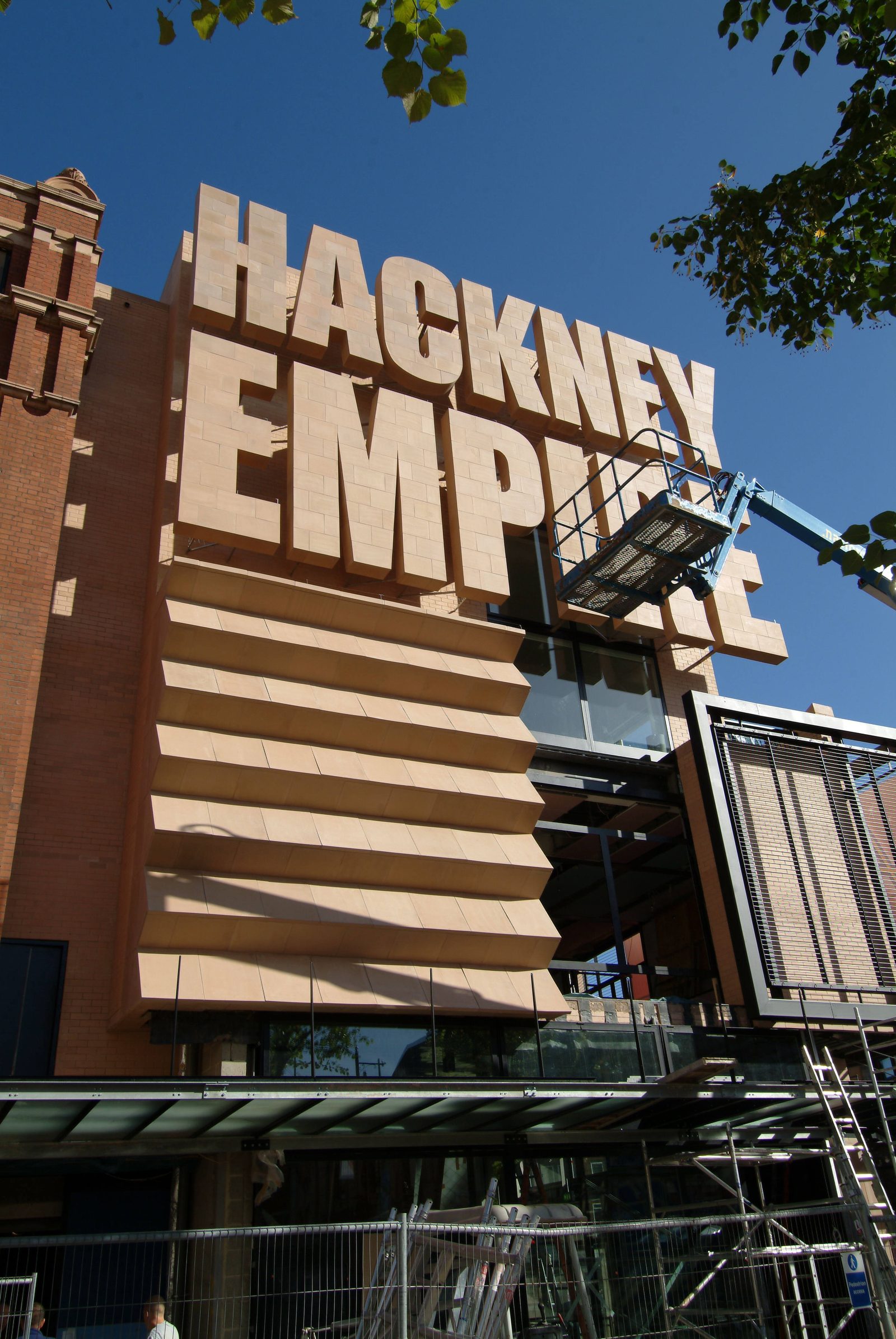
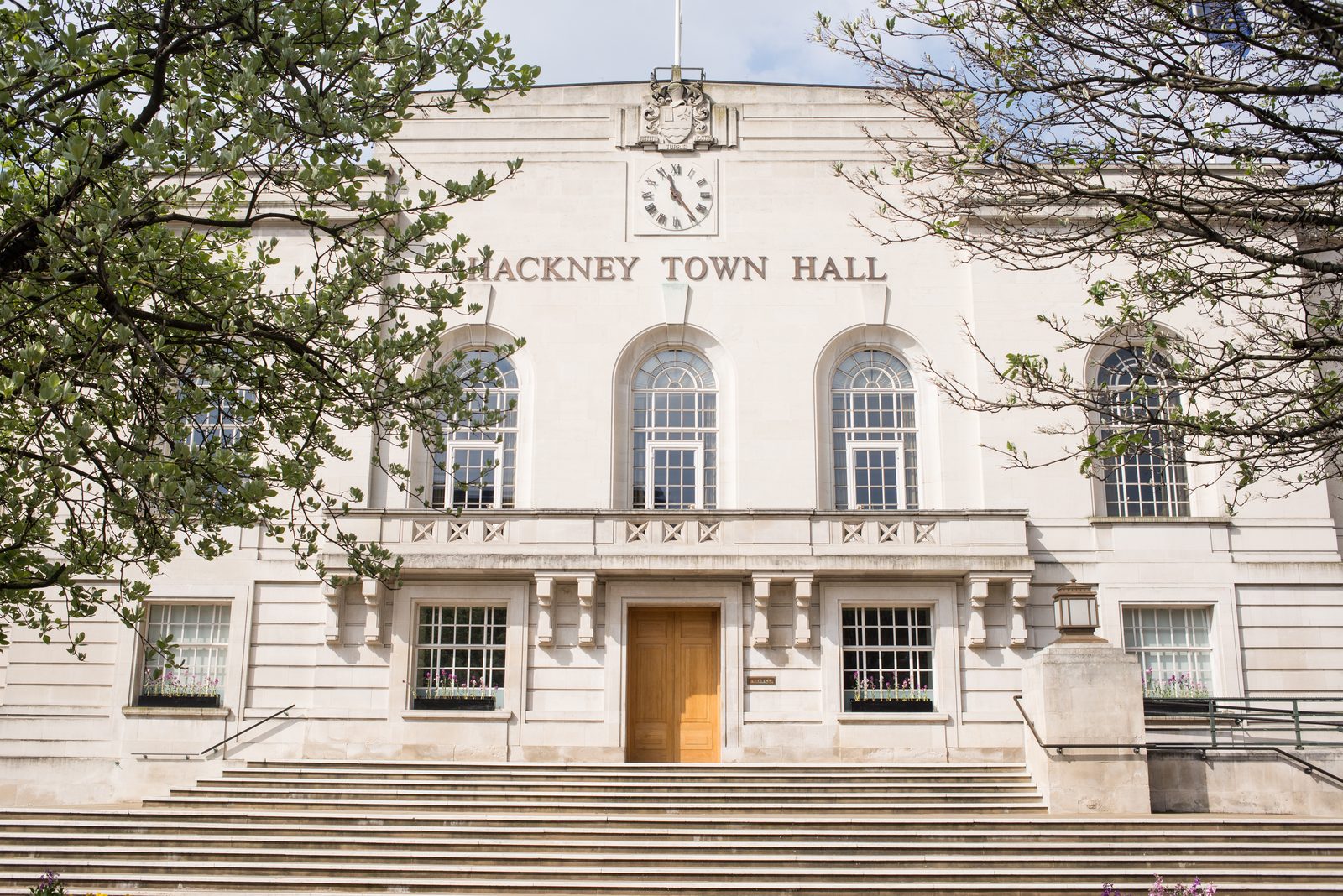
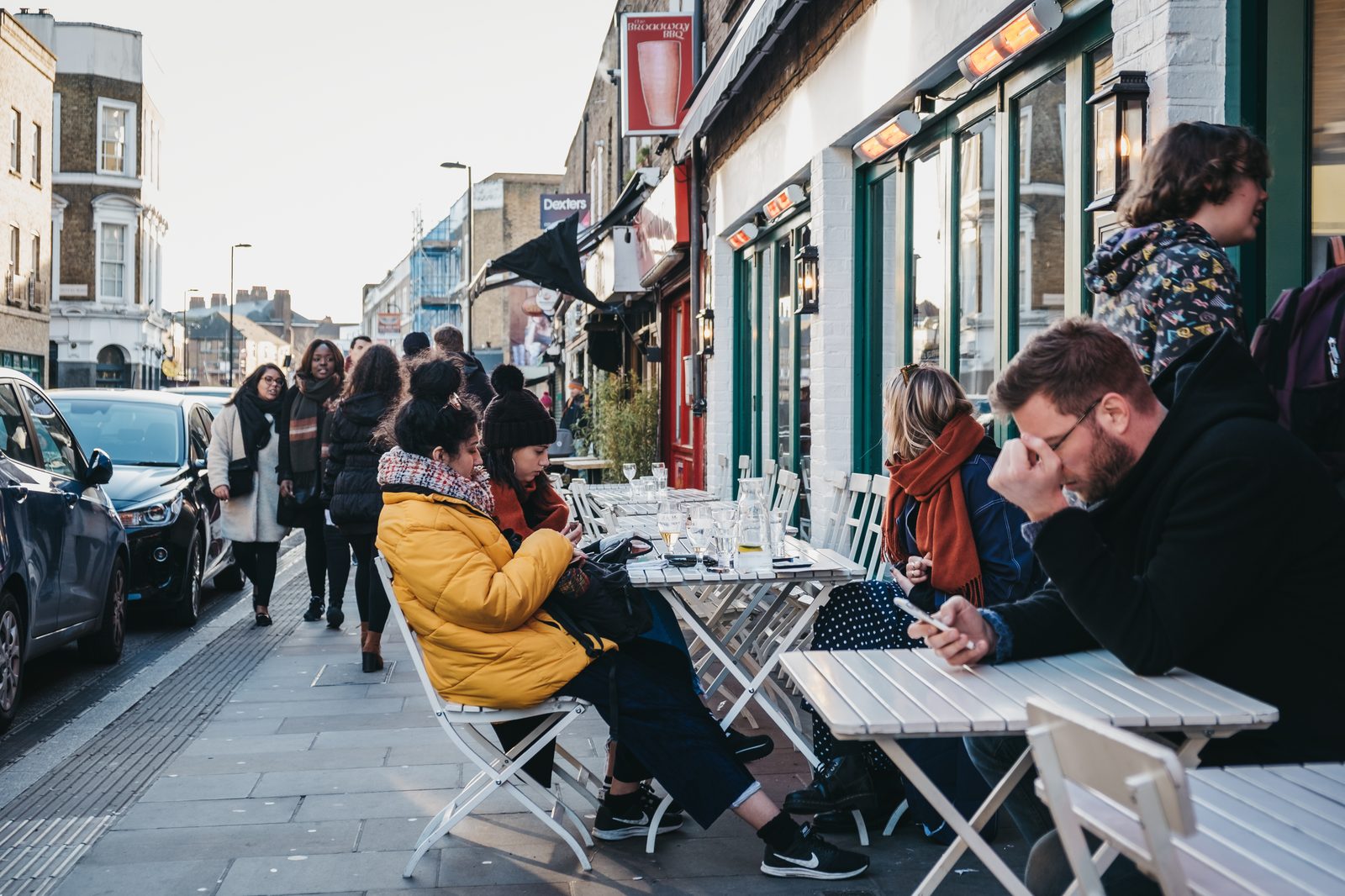
A Saturday morning in Hackney
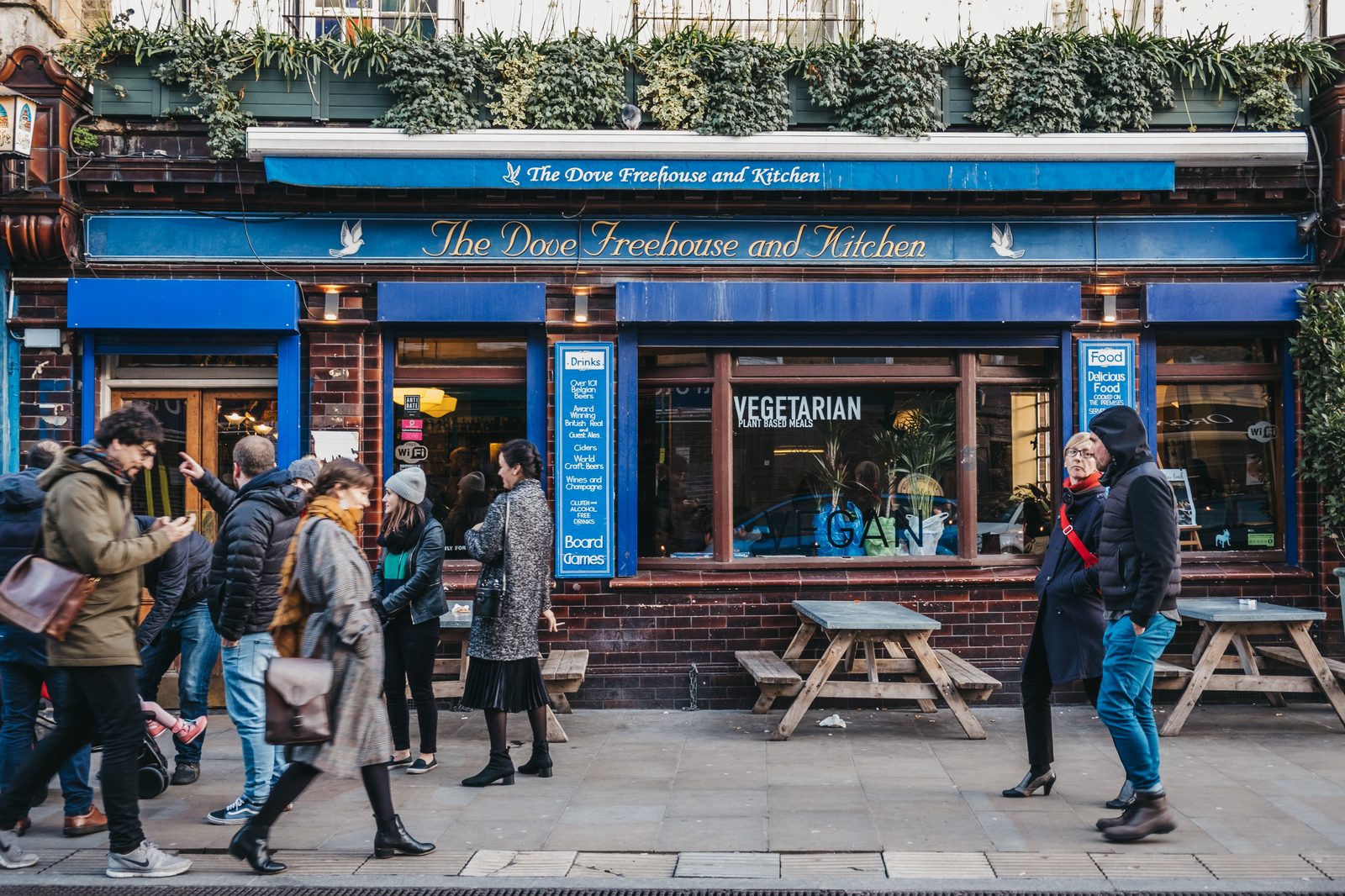
Start at Hackney Central and walk east along Mare Street. By 10am the independent coffee shops are full — pavement tables spilling onto the kerb outside the cafés near the Town Hall. Turn right onto Broadway Market and the character shifts. Over 100 stalls line the street every Saturday from 9am: sourdough from E5 Bakehouse, Ethiopian street food, Thai curries, stacks of vintage vinyl. The smell of wood-fired flatbreads drifts across from a stall halfway down. The crowd is local — parents with pushchairs, couples carrying tote bags of vegetables, a few dogs tied to railings outside the cheese counter.
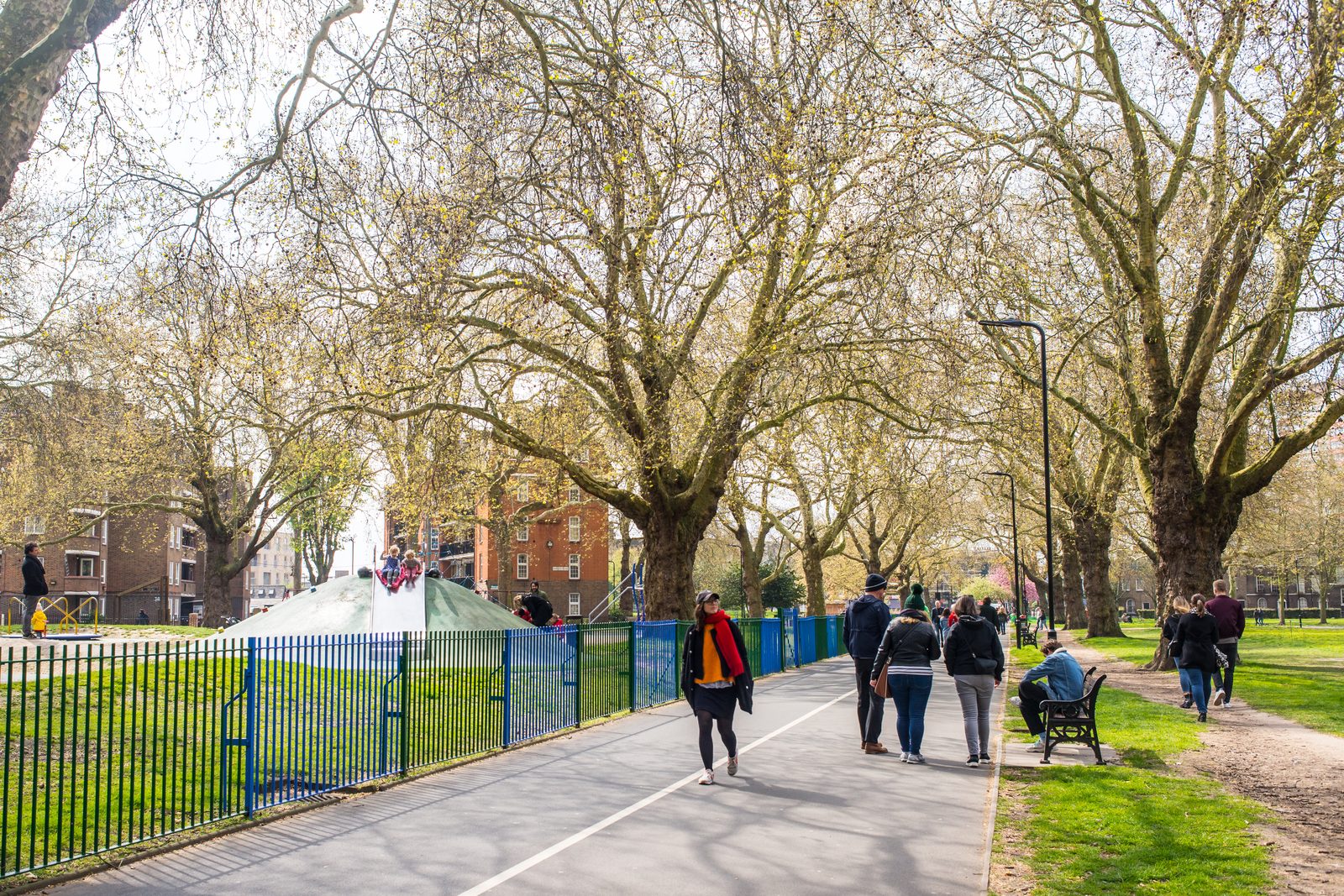
At the southern end, the market spills into London Fields. By 11am the park is filling up — runners doing laps, a cricket game assembling on the far pitch, the Lido queue building along the pavement. The heated 50-metre outdoor pool stays at 25°C year-round (Better, 2026), but in good weather the queue can run 20 minutes deep by midday.
Walk back via the Regent’s Canal towpath and you’re in a different borough — narrowboats, towpath cyclists, the quiet hum of Hackney Wick’s studio buildings visible across the water.
After dark
Hackney’s evening scene splits sharply by geography. Dalston is where the energy concentrates — Kingsland Road and its side streets host everything from the Ridley Road Market Bar (DJs, cheap drinks, free entry midweek) to Doña on Stoke Newington High Street (mezcal bar with basement cabaret and drag nights). Three Sheets on Kingsland Road does precise, understated cocktails in a room barely wider than a corridor.
Head a mile north to Stoke Newington Church Street and the pace drops. This is pub-and-wine-bar territory: The Londesborough for a Sunday roast and a sofa by the fire, or dan’s for natural wine by the glass in a room that seats about fifteen.
The honest picture: Mare Street itself quiets down noticeably after 9pm. The nightlife concentrates in the Dalston strip and doesn’t spread far. If you live south of London Fields, your Friday night options within walking distance are more limited than the borough’s reputation suggests. Resident forums are consistent on this — several Mumsnet threads from 2025 describe the contrast between “Dalston’s buzz” and the residential quiet a few streets away.
Five places locals actually use
E5 Bakehouse (Arch 395, Mentmore Terrace) — opened in a railway arch in 2011, now spanning three arches with its own flour mill and pastry department. Named one of the UK’s 50 best bakeries (Good Food Guide, 2026). The sourdough loaves sell out by noon on Saturdays. A third location opened at V&A East Storehouse in Hackney Wick in May 2025.
Mangal 2 (4 Stoke Newington Road) — a family-run Turkish restaurant that’s quietly reinvented itself. Ali Dirik opened the original Mangal in 1987; sons Ferhat and Sertaç now run the kitchen with an ingredient-led, small-plates approach that’s won attention from the National Restaurant Awards. Still does a proper kebab, but the menu has moved far beyond it.
Brat x Climpson’s Arch (Climpson’s Arch, Hackney Central) — Tomos Parry’s Michelin-starred operation, cooking over coal in a railway arch with a courtyard where you can hear the trains overhead. Basque-influenced whole turbot and wood-roasted vegetables. One Michelin star (MICHELIN Guide, 2026). Not a casual weeknight spot — book well ahead.
Sager + Wilde (193 Hackney Road) — a wine bar in the shell of the old British Lion pub, open since 2013. The list changes daily, leaning towards natural and organic producers. The grilled cheese sandwich is oddly famous. Locals treat it as a neighbourhood pub with better bottles.
London Fields Lido (London Fields West Side) — the 50-metre heated outdoor pool is an institution. Open year-round, heated to 25°C, and free with a Hackney library card (Better, 2026). In summer, the terrace fills with swimmers drying off in the sun. In January, you’ll share the lanes with a handful of devoted regulars. It’s one of the few genuinely free world-class amenities left in inner London.
Hackney through the seasons
Spring: The Regent’s Canal towpath between Broadway Market and Victoria Park comes alive — narrowboat gardens bloom, towpath runners multiply, and London Fields Lido starts to queue. The HOKA Hackney Half Marathon in May sends 20,000+ runners through Mare Street and Broadway Market, selling out in two days (Hackney Moves, 2026).
Summer: London Fields becomes Hackney’s communal garden — barbecues on the south side, cricket on the pitches, the Lido packed from opening. Broadway Market extends its hours and the canal towpath stays busy until dusk.
Autumn: Victoria Park is the place to be. The tree-lined walks transform into corridors of copper and gold — locals call it one of the finest autumn displays in east London. Broadway Market shifts to warmer stalls: mulled cider, game pies, seasonal squash.
Winter: Broadway Market adds Wednesday evening sessions through December (noon–7pm), with a Santa’s grotto, handmade gift stalls and festive lights. The Lido stays open but the crowds thin — winter swimming here feels like a well-kept secret, the steam rising off the 25°C water into the cold morning air.
Source: Google Maps, OS Open Greenspace & editorial research, 2026

Victoria Park, Broadway Market, 11 Outstanding primaries — Hackney pairs east London's creative depth with Zone 2 prices to match.
Hackney pairs inner-London culture with genuine connectivity. The median sold price is £600k (HM Land Registry, 12 months to March 2026) — firmly Zone 2, with more character than most Zone 2 alternatives.
Hackney scores 59/100 on the PAL Score — our weighted rating across six core criteria that define what makes a London neighbourhood work for buyers.
Score Breakdown
| Criterion | Score (/100) | What it means |
|---|---|---|
| School Quality | 66 | 31 schools within reach; notable proportion Outstanding or Good. Gayhurst, Shacklewell, and Queensbridge all rated Outstanding. Strong across primaries and secondaries. |
| Transport Connectivity | 70 | Overground to Liverpool Street in 17 minutes; no Underground station (nearest Bethnal Green 20-min walk). Limited night service (no night tube). |
| Property Price Affordability | 52 | Average flat £600k; terraced houses £1.15m. Carries 25–30% premium over comparable Walthamstow/Peckham/Stratford. |
| Green Space Access | 55 | London Fields (29 hectares with Lido), Victoria Park (86 hectares), Regent’s Canal towpath. Excellent green infrastructure for Zone 2. |
| Local Amenities | 63 | Broadway Market, Peckham Levels-style venue culture, independent food scene (Mangal 2, Brat, E5 Bakehouse). Genuine food and cultural destination. |
| Safety | 20 | Recorded crime 40% above the London average on a severity-weighted basis; on a residential basis the rate is 175 per 1,000 residents, 36% above the London average. Burglary well above average; largest category Theft (29%), 12-month trend Stable (-0.1%). An earned low mark. Dalston and Kingsland Road busier; De Beauvoir Town and Clapton Square quieter. |
Scores use the PAL 0–100 scale, z-score normalised across all London neighbourhoods.
What This Means
Schools (66/100) and transport (70/100) are Hackney’s headline strengths. A 17-minute Overground journey to Liverpool Street is one of London’s fastest commutes for City workers. The school provision — 31 schools with high proportions of Outstanding ratings — is rare in Zone 2. London Fields Lido and Victoria Park (55/100) provide genuine breathing room.
The clearest weaknesses are safety (20/100) and property affordability (52/100). Recorded crime runs 40% above the London average on a severity-weighted basis; on a residential basis the rate is 175 per 1,000 residents, 36% above the London average — burglary included — a genuine inner-city risk, not just nightlife footfall. At £600k for an average flat, Hackney also carries a Zone 2 premium over comparable east London alternatives (Walthamstow, Stratford). The absence of a Tube station — Bethnal Green is a 20-minute walk — is a further trade-off.
Hackney suits young professionals and creatives drawn to food and culture; young families prioritising schools and green space; and City workers valuing the Overground commute. If you need guaranteed late-night transport, a quieter neighbourhood, or lower prices, look at Walthamstow or Stratford instead.
Readers enjoying Hackney often look south next to Brixton, the Zone 2 creative capital that answers Dalston's Kingsland Road with Electric Avenue and Atlantic Road — the same flavour in a different postcode.
✗ May Not Suit
💰 Value Assessment
Hackney is a Zone 2 premium market. The median sold price is £600k (HM Land Registry), with flats averaging £550k — clearly above most east London neighbours. Terraced houses at £1.15m average reflect Conservation Area scarcity, particularly near London Fields and Broadway Market. The premium is the price of the Central line, the food scene and the school cluster; for buyers comparing to Stratford, Walthamstow or Peckham, it is a clear step up for a comparable home.
Our Recommendation
Who's Hackney Central for?
This is your kind of place if:
- Work in the City. Liverpool Street in 17 minutes direct via Overground — one of London’s shortest Zone 2 commutes. Bank takes 22 via the Central Line.
- Value independent culture over chains. Broadway Market, Mare Street and Dalston are built on independent food, music and retail — rare in London at this density.
- Have young kids and prioritise schools. 11 Outstanding primaries within reach. London Fields, Victoria Park and the Hackney Marshes give serious outdoor space alongside.
- Want a Zone 2 flat with rental fallback. Hackney flats average £550k (Land Registry). One-bed rents £1,950/month (ONS, March 2026) — rental demand stays strong.
- Cycle commute or work hybrid. Hackney Central to Bank in 15–20 minutes via protected cycle lanes (Hackney Cycling Campaign). WFH culture is strong; daily Tube is optional.
- Want to live car-free. Hackney sits in the “no car” tier with Camden, Islington and Westminster — over 70% of households are car-free (Healthy Streets Scorecard).
Think twice if you:
- Need a Tube station on your doorstep. Hackney has no Underground — Bethnal Green is a 20-minute walk. Overground works but runs less frequently off-peak.
- Drive daily. The CPZ is tight, on-street bays are scarce, and many streets are too narrow for a second car. Permit costs and stress add up.
- Want a quiet, suburban feel. Hackney is one of London’s densest boroughs — 17,239 people per sq km. Mare Street and Broadway Market are busy at all hours.
- Commute west to Paddington or Heathrow. No direct line — getting to Paddington takes 35+ minutes with at least one Elizabeth Line or Tube change.
- Need very low crime stats. Hackney carries genuinely elevated residential crime — recorded crime runs 40% above the London average, burglary included, and the PAL Safety Score is 20/100. It concentrates around Mare Street and Dalston but reaches into quieter streets like De Beauvoir and Clapton too.
- Have a budget under £400k. You’ll be looking at ex-council flats or studio conversions, not the Victorian terraces that define Hackney’s residential character.
The Real Picture
Hackney is for people who choose density and culture over space and quiet. The Overground gets you into the City fast, the food and drink scene rivals anywhere in London, and the green spaces — London Fields, Victoria Park, the Marshes — keep it livable. But this is one of the densest boroughs in the country, no Tube on your doorstep, and Zone 2 prices that reward established residents while squeezing new ones. If being in the thick of London suits you, Hackney rewards the commitment. If you’d rather have space, suburbs or central-west connections, look elsewhere.
Moving to Hackney Central: The Practical Side
Removals and access
Many Hackney streets are narrow Victorian terraces with no off-street parking. Expect to pay for a council parking bay suspension on moving day (£35–£50 per bay per day, Hackney Council). Streets around Broadway Market and London Fields can be particularly tight for large vans — a 3.5-tonne vehicle is the practical maximum on most residential roads. Book early on Saturdays, when the market restricts vehicle access on Broadway Market itself from early morning.
Broadband and connectivity
Hackney has strong fibre coverage. Full-fibre (FTTP) broadband from Hyperoptic and Community Fibre is available across most of the borough, with speeds up to 1Gbps. Standard fibre (FTTC) from BT, Sky and TalkTalk delivers 60–80Mbps on average. Openreach’s full-fibre rollout is well advanced. [Verify current availability at your specific postcode via Ofcom’s broadband checker.]
GP registration and NHS services
The nearest major hospital with A&E is Homerton University Hospital on Homerton Row — a 10-minute bus ride from Hackney Central. GP provision is reasonable but some surgeries have closed lists. The City and Hackney GP Confederation coordinates across the borough. Register as soon as you exchange contracts — don’t leave it until moving day. Hackney Ark (Morning Lane) provides children’s health services including speech therapy and developmental assessments.
School admissions
Hackney Council runs a standard coordinated admissions round. Apply by 15 January for primary reception (September start) and 31 October for secondary. In-year transfers are handled directly by the council’s School Admissions team. For popular primaries like Gayhurst and Queensbridge, check last-distance-offered data carefully — catchments can tighten significantly in oversubscribed years.
Council tax transfer
If you’re moving from another borough, your council tax account doesn’t follow you — you’ll need to register with Hackney separately. Do this within the first week. Single-person households get a 25% discount (apply at hackney.gov.uk/council-tax). Direct debit can start from any month, and you can choose 10 or 12 monthly payments.
Frequently Asked Questions
Common questions about living in Hackney Central, answered with data from our research.
Be honest with the numbers first: Hackney’s PAL Safety Score is 20/100, and recorded crime runs 40% above the London average on a severity-weighted basis; on a residential basis the rate is 175 per 1,000 residents, 36% above the London average — genuinely elevated for an inner-city borough, burglary included. In practice the well-lit main roads such as Mare Street and Kingsland Road stay busy and peopled until late. Resident forums consistently advise “common sense precautions” after dark, particularly around Dalston on weekend evenings. The Safer Neighbourhood Team runs dedicated ward officers across Hackney Central, Dalston and Hackney Downs (Metropolitan Police, 2025).
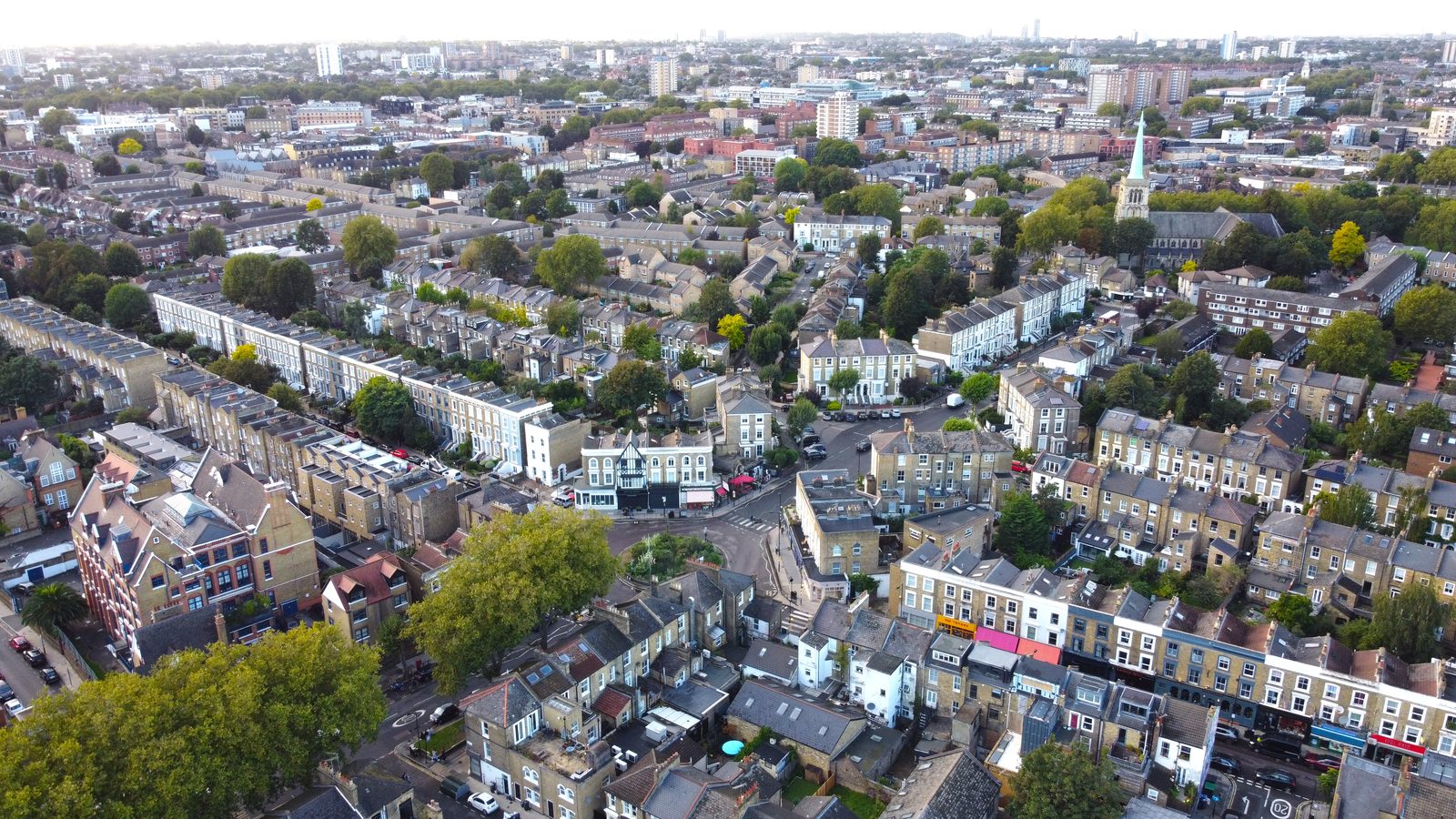
The streets bordering London Fields — Lansdowne Drive, Middleton Road, Mentmore Terrace — combine Victorian terraces with direct park access and proximity to Gayhurst Community School. Further north, the Clapton Square Conservation Area offers larger properties on quieter streets with Hackney Downs park and Shacklewell Primary nearby. De Beauvoir Town (bordering Islington) is popular with families for its village feel and low-traffic streets.
The short answer: it already has. Broadway Market’s transformation from a struggling market to a weekend destination happened over a decade ago. The current shift is more incremental — ex-industrial spaces in Hackney Wick converting to studios and flats, new developments along the canal corridor, and average flat prices now sitting at £550,000 (Land Registry, 2025), reflecting how much Hackney property prices have risen over the past 10 years. Long-standing communities remain, but the affordability picture has changed fundamentally.
Strong. Full-fibre (FTTP) coverage is widespread, with Hyperoptic and Community Fibre offering up to 1Gbps in many buildings. Standard fibre averages 60–80Mbps. New-build flats typically have fibre pre-installed. Check your specific postcode at Ofcom’s broadband availability checker before committing.
Dalston is part of Hackney — it’s one of the borough’s distinct neighbourhoods. The area around Dalston Junction and Kingsland Road has the nightlife, the Turkish restaurants, and the late-night bars. Hackney Central, half a mile south, is quieter after dark, more family-oriented, and centres on Broadway Market and London Fields. Same borough, quite different feel street by street.
Yes, if you mean kerb availability. The CPZ covers almost every residential street, and demand exceeds supply around Mare Street and Dalston. But resident permits are only £98/year (Hackney Council, 2025/26), which is cheap for Zone 2. Visitor vouchers are limited. If you have a car, you’ll keep it — but you’ll walk to it rather than park outside your door.
A mix of both. Ridley Road Market (open daily, busiest Saturdays) sells fruit, vegetables, meat and fish at well below supermarket prices — it’s one of east London’s last proper street markets. For supermarkets, there’s a large Tesco on Morning Lane, a Lidl on Kingsland Road, and Sainsbury’s Local and Tesco Express branches scattered along Mare Street. Broadway Market’s stalls and independent delis handle the artisan end.
Hackney is excellent for dogs. London Fields has a large, popular off-lead area. Victoria Park (1.2 miles east) has dedicated dog-walking routes and open parkland. The Regent’s Canal towpath gives you a flat, traffic-free walking route stretching miles in either direction. Hackney Marshes is wide-open green space with room to run. Most Broadway Market cafés are dog-friendly.
Homerton University Hospital, Homerton Row, E9 6SR — roughly 10 minutes by bus from Hackney Central. It has a 24-hour A&E department. The Royal London Hospital in Whitechapel is the nearest major trauma centre, about 15 minutes by bus or cab.
Rush hour (7:30–9am): the Overground from Hackney Central to Liverpool Street runs every 5–7 minutes but is standing-room-only. The 17-minute journey time doesn’t change much, but the experience does. Off-peak, trains run every 10–15 minutes with seats usually available. Cycling to the City (18 minutes) avoids the congestion entirely and is the preferred commute for a significant portion of residents.
Data from HM Land Registry, Ofsted, Metropolitan Police & TfL. Page last regenerated 2 September 2026.
Moving to Hackney Central?
Get our free moving checklist and local tips delivered to your inbox.
No spam. Unsubscribe anytime.