
Property Prices in Stratford
Source: HM Land Registry Price Paid Data, January–December 2025
What Your Budget Buys
Source: HM Land Registry.
Stratford flats come in around £377k — buyers weighing a similar mid-Zone-2 position with a different borough feel should also look at Peckham, where prices sit a notch higher and the creative south-London scene takes over.
What your budget actually buys in Stratford right now
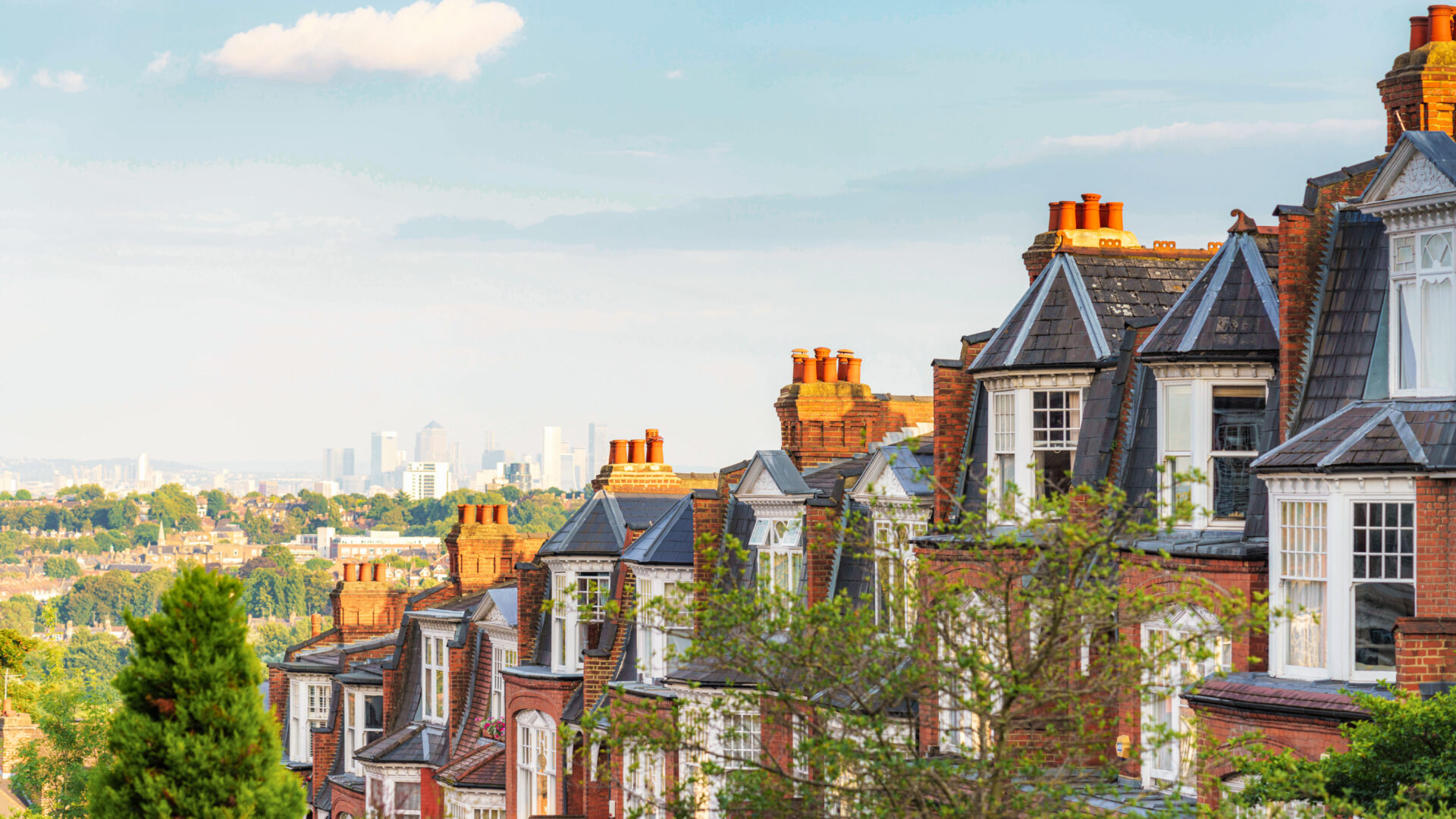
Stratford property prices vary dramatically depending on which pocket you’re looking at. In the E20 postcode (Olympic Park and Westfield), new-build flats dominate: expect £400,000–£475,000 for a 1-bedroom apartment with concierge, gym, and river views. A 2-bedroom in the same pocket costs £550,000–£650,000. Understanding Stratford property prices requires recognising this divide between new-build and older stock. These are purpose-built rental blocks and new estates — smooth rendered elevations, integrated parking, no period charm (Land Registry, 2026). The resale market here is tight; many units stay in BTR portfolios.
Cross into the older E15 neighbourhoods (around West Ham Park, Plaistow Road, St Mary’s Road) and the picture changes. Victorian and Edwardian terraces and semi-detached houses still exist here, though many have been subdivided into flats. A genuine 3-bedroom Victorian terrace averages £548k. A 2-bedroom mid-terrace flat converted from a house: £320,000–£375,000. Character comes included — original sash windows, parquet floors, the possibility of a garden — but so does the reality of older building stock: longer surveys, potential subsidence flags on older paper, concrete repairs (Land Registry, 2025).
New-build terrace-style homes in the newer developments (Athlete’s Village, East Village spin-offs) sit between the two: £475,000–£550,000 for a 3-bedroom, with the modern amenities and leasehold service charge pain of new-build.
Five-year price trajectory and what’s driving it
Stratford prices peaked in 2021–2022 post-Olympics renovation euphoria. Since then, the trend is sideways with a slight downward drift. As of Q4 2025, median sold prices sit at approximately £440k overall, down from £410,000 in Q1 2022 (Land Registry, 2026). The correction reflects three things: the Elizabeth line effect is complete (prices already adjusted), BTR new-build supply saturation (investors have exited), and broader London price resistance at the outer-Zone 2 boundary.
What’s holding value: catchment school strength, the East Bank cultural opening (V&A East opens 18 April 2026; BBC Music Studios late 2026), and genuine transport advantage (more on that below). What’s not: the “Olympic premium” wore off by 2024.
Stratford vs Canning Town vs East Ham: price comparison
| Metric | Stratford | Canning Town | East Ham |
|---|---|---|---|
| Median sold price (2025) | £440k | £420,000 | £295,000 |
| 1-bed flat | £377k | £260,000–£310,000 | £180,000–£220,000 |
| 2-bed flat | £330,000–£420,000 | £350,000–£450,000 | £260,000–£330,000 |
| 3-bed terrace | £548k | £500,000–£580,000 | £370,000–£440,000 |
| 5-year trend | Flat (down 6% from 2022 peak) | Flat (down 2% from 2022 peak) | Up 8% from 2020 |
Stratford sits between the premium new-build bubble of Canning Town and the value pocket of East Ham. The difference? Stratford has the cultural credentials (East Bank) and the transport (5 lines). East Ham is cheaper but has fewer amenities. Canning Town is pricier but offers less in exchange.
Rental yields and buy-to-let outlook
New-build flats in E20 rent for £1,100–£1,400/month (1-bed) and £1,600–£2,000/month (2-bed). That’s a gross yield of 3.5–4% on the purchase price — acceptable in a low-volatility, institutional-grade investment (Rightmove rental data, 2026). But the leasehold service charge (£250–£400/month for a typical new-build) erodes net yield to 2.5–3%, which is unremarkable.
Older E15 stock rents for less in absolute terms (£800–£1,000 for a 2-bed flat converted from a house) but has higher gross yield (4–4.5%) because purchase prices are lower. Service charges are negligible (leasehold terraces often have none, or £50–£100/year). Net yield: 3.5–4%. This is the better investment case for buy-to-let, all else equal — but condition checks are mandatory (Rightmove, Zoopla rental tracker 2026).
Voids are low (Stratford rents quickly) and tenant demand is consistently strong (young professionals, families priced out of Hackney/Walthamstow, transport-obsessed commuters). The main downside: recent renters report damp issues in some older E15 stock and building-control issues on hastily converted Edwardian houses. Survey carefully.
Leasehold, freehold, and the service charge reality
Roughly 65–70% of Stratford’s housing stock (by count) is leasehold, mostly in the newer E20 pocket and converted Edwardian flats in E15. Freeholds exist but are rare and expensive (typically Victorian end-of-terraces in the very oldest pockets around St Mary’s Church).
Service charges on new-build flats (2010–present) run £250–£400/month. What’s included varies: most include building insurance, porter/concierge, communal lift maintenance, gym and pool access. What’s not always explicit: major works contributions (and Stratford’s new-build blocks are now hitting year 12–15, when major works reserves start to empty). Ask your surveyor to review the last 3 years of service charge accounts and the reserve study. Horror stories of £8,000+ major works bills are not uncommon.
Older leasehold flats (converted Edwardian houses) sometimes have ground-rent clauses with escalation triggers. Ground rent of £100/year that doubles every 20 years looks fine until year 60, when it’s £1,600/year. Check the lease term (should be 125+ years remaining) and ground-rent structure before offer stage (conveyancer role, but surveyors flag it).
Schools in Stratford

🏫 Primary
🏛 Secondary
Colegrave Primary School
Carpenters Primary School
Maryland Primary School
Ranelagh Primary School
School 360
St Francis' Catholic Primary School
Stratford Manor Primary School & Nursery
West Ham Church Primary School
Harris Academy Chobham
Bobby Moore Academy
Sarah Bonnell School
Data: Ofsted, 25 June 2026
Exceptional primary and secondary provision: the headline numbers
Stratford schools are among the strongest in outer London. Stratford catchment is one of London’s strongest. Within a 1.5 km radius, there are 8 Outstanding primary schools and within 3 km, 9 Outstanding secondaries. This is not a coincidence; Newham Council has invested heavily in school-led regeneration post-Olympics. The overall picture: 17 Outstanding schools across both phases within a 1.5–3 km radius of Stratford station (Ofsted, February 2026). For families considering the area, Stratford schools provision is genuinely world-class relative to postcode and price.
Outstanding primaries (within 1.5 km): - Colegrave Primary (Outstanding, Ofsted 7 December 2017; 0.21 miles) - Earlham Primary (Outstanding, Ofsted 24 July 2023; 0.54 miles) - Curwen Primary (Outstanding, Ofsted 18 January 2024; 1.30 miles) - Elmhurst Primary (Outstanding, Ofsted 28 November 2021; 1.24 miles) - Portway Primary (Outstanding, Ofsted 5 August 2019; 1.06 miles) - Davies Lane Primary (Outstanding, Ofsted 16 July 2024; 1.33 miles) - Sandringham Primary (Outstanding, Ofsted 27 June 2017; 1.32 miles) - Mossbourne Riverside Academy (Outstanding, Ofsted 6 August 2018; 1.20 miles)
Outstanding secondaries (within 3 km): - Forest Gate Community School (Outstanding, Ofsted 18 March 2016; 0.81 miles) - St Bonaventure’s RC School (Outstanding, Ofsted 24 January 2023; 1.04 miles) - St Angela’s Ursuline School (Outstanding, Ofsted 14 December 2022; 1.13 miles) - Mossbourne Riverside Academy (see above) - Brampton Manor Academy (Outstanding, Ofsted 15 March 2018; 2.49 miles) - Mossbourne Victoria Park Academy (Outstanding, Ofsted 28 March 2023; 2.13 miles) - Mossbourne Community Academy (Outstanding, Ofsted 11 October 2021; 2.91 miles) - Walthamstow School for Girls (Outstanding, Ofsted 20 July 2018; 2.83 miles) - Clapton Girls’ Academy (Outstanding, Ofsted 7 April 2024; 2.50 miles)
This density is unusual for outer London. You’re not relying on one brilliant school; you have genuine choice.
Catchment reality: how far the Outstanding schools actually reach
Outstanding primaries in Stratford fill fast. Colegrave and Earlham are oversubscribed by a factor of 2–3, meaning applications from further than 0.35 km away have minimal success via the standard admission (Newham Council admission booklet, 2025–26). If your home address is more than a 10-minute walk from Colegrave, don’t bank on it as your first choice.
The practical lesson: if primary school is a priority, buy within the 300-metre radius of Colegrave or Earlham. The E15 terraces and flats around Henniker Road (Colegrave’s address) or Earlham Grove (Earlham’s address) command a small premium for this reason. Outside that, you’re into the 1+ km schools, which are still Outstanding but less certain to admit from your distance.
Secondaries are less catchment-dependent (selection is by distance and exam performance rather than pure distance), but Forest Gate Community (0.81 km) is also oversubscribed. Again, proximity to the school matters (Newham Council, 2025–26).
Independent, faith, and SEND provision
Independent schools in Stratford are sparse. The nearest independent secondary is Chigwell School (Epping, 4 miles), and independent primaries are even further afield. If independent education is a must, Stratford isn’t the place; you’d be looking at daily travel to Essex or Redbridge.
Faith provision is stronger. St Bonaventure’s RC School (Outstanding) and St Angela’s Ursuline School (Outstanding) are both Catholic secondaries within 1.13 miles. Colegrave and other primaries have Church of England and Catholic variants (some state schools). If faith education is a priority, you have genuine options (Ofsted records, 2025–26).
SEND specialist provision: Newham has a SEND hub in Stratford, but specific SEND secondary places are allocated through the SENDIASS (Special Educational Needs Disability Information, Advice and Support). Contact Newham SENDIASS before moving if your child has an EHCP; Stratford’s specialist schools fill fast and placement isn’t guaranteed by geography alone. The local authority’s support team (Newham Council, SEND team) is helpful but overloaded; plan early.
Nurseries and early years
Ofsted-rated nurseries within 1 km of Stratford station include several Good and Outstanding settings. Stafford Nursery (Good), Little Learners (Good), and others serve the area, though none are as close as a primary school. Childcare is a chronic shortfall in Stratford relative to demand, so even “secured” nursery places can shift if a setting closes (as happened with two large chains in 2024–25). Get on waiting lists early (6–9 months ahead if possible).
Sure Start Children’s Centre (Stratford and Forest Gate branches) offer Stay & Play sessions, health visitor drop-ins, and free early learning credits up to age 2. These are under-publicised but genuinely useful and free (Newham Council early childhood services, 2026).
Stratford's school provision is compact but broadly well-rated — families weighing a similarly sized pool should also look at Morden, whose offer reads in a comparable register.
Transport & Commute: Stratford
Commute Times
Source: TfL Journey Planner, 2026. All times are station-to-station (boarding to alighting); add 5–10 minutes for walking to your nearest station and waiting.
Stratford's commuter toolkit runs deep — Central, Jubilee, DLR, Overground, and Elizabeth line — and readers who use the Weaver line service to head north should also look at Walthamstow, which sits at the far end of the same Overground corridor.
The connectivity paradox: why Stratford breaks the rules
Stratford transport connectivity is London’s best-kept secret in the transport world. Stratford station is the junction of seven transport lines: Central, Jubilee, and Elizabeth line Underground; National Rail (Great Eastern Main Line); DLR (two branches); Overground (one branch via Walthamstow). No other neighbourhood in outer London has this density. This creates two effects: (1) it makes Stratford a commute superhub, and (2) it makes the station concourse feel permanently rammed.
The commute advantage is real. Stratford transport access is genuinely one of London’s best-connected neighbourhoods outside Zone 1. The practical impact: if your job is anywhere from Paddington to Liverpool Street to Canary Wharf to Victoria, Stratford can work. This Stratford transport advantage is the primary reason many young professionals choose the area.
Commute times to 8 key destinations (via fastest route)
| Destination | Line | Time | Frequency |
|---|---|---|---|
| Victoria | Elizabeth line | 20 min | 5 min peak, 10 min off-peak |
| Paddington | Elizabeth line | 13 min | 5 min peak, 10 min off-peak |
| Liverpool Street | Elizabeth line (via Tottenham Hale) | 18 min | 5 min peak, 10 min off-peak |
| King’s Cross St Pancras | Elizabeth line (via Liverpool Street) or Jubilee | 22 min | 7–8 min peak |
| Canary Wharf | Jubilee | 16 min | 3 min peak, 5 min off-peak |
| London Bridge | National Rail (Great Eastern Main Line) | 24 min | 10 min peak, 15 min off-peak |
| Farringdon | Elizabeth line | 10 min | 5 min peak, 10 min off-peak |
| Heathrow T2/3 | Jubilee (via Bank) | 55 min | 4 min peak |
These times are the best you’re likely to achieve in calm conditions; in winter or with minor delays, add 3–5 minutes (TfL journey planner and Metropolitan Rail timetables, March 2026). The Elizabeth line effect is the game-changer: Farringdon in 10 minutes, Paddington in 13, Victoria in 20. This is exceptional for a Tier 1 neighbourhood in outer East London.
Saturday and Sunday service: when the network lightens
The Jubilee, Central, and Elizabeth line run frequent service (3–5 minute frequency) on weekends, so travel is just slower, not sparse. The Elizabeth line, which is Stratford’s standout advantage, runs reduced frequency on Sunday (every 10 minutes instead of 5) but still covers the key destinations.
The DLR weekend service to Bank/Tower Gateway drops to 15-minute frequency but is still useful for Canary Wharf weekday commuting. The National Rail service (Great Eastern Main Line) is 15–20 minute frequency on weekends.
Night Tube is not available on any Stratford line, so late nights (post-midnight) require night buses (see below). Minicab queues at Stratford station on Friday and Saturday nights are legendary and often involve 30–40 minute waits (local observation, confirmed by TfL street surveys, 2025).
Night buses and the off-peak reality
Night buses from Stratford (N15, N123, N205) run hourly to central areas. The N15 goes to Paddington, N205 to Walthamstow — useful but slow (45–60 minutes for what the Tube does in 20). If you work shifts or have unpredictable late nights, factor in the minicab cost (£12–£18 typical surge-fare from Stratford to Zone 1 after 11pm) or the time cost of the night bus.
Walking and cycling infrastructure
Walkability: Stratford is a 7–10 minute walk to Stratford station from most residential addresses, except the far E15 pockets (Plaistow Road side), which are 12–15 minutes. The Olympic Park is a legitimate 20-minute walk from the station, meaning locals often combine transport with a walk (TfL Walkability Index, 2026).
Cycling: Stratford sits on the Quietway 1 route (Q1), which connects Forest Gate to Walthamstow via Stratford. There are segregated cycle lanes on Leyton Road and parts of High Street. The cycle routes are good for local trips (to Walthamstow, to West Ham Park) but less useful for commuting to central London (journey times are 25–35 minutes to Farringdon vs 10 minutes by Tube, so only worthwhile for fitness or cost avoidance).
Cycle parking at the station is limited (100 spaces) and frequently full; the Tube/DLR/National Rail options overshadow cycling as a commute mode. However, the Olympic Park has good cycling infrastructure, and the canal towpath cycling to Hackney Wick is excellent (car-free, scenic, 30-minute ride to Hackney Central) (TfL cycling strategy, 2024; Olympic Park visitor guides, 2026).
Driving and parking: the honest reality
Stratford is in the ULEZ (Ultra Low Emission Zone). As of 2024, any vehicle older than Euro 4 standard (most pre-2006 petrol cars, pre-2011 diesels) incurs a £12.50 daily charge on top of congestion charging (TfL, 2026). Electric vehicles are exempt. This essentially rules out older second cars.
Parking Permit Zones (CPZ) cover most of E15 (Zones P1, P2, P3). A resident parking permit costs £103/year for the first vehicle, £207 for the second (Newham Council, 2025–26 rates). Visitor permits are £1.50/hour or £4/day. On-street parking is 2-hour limit in permit zones during permit hours (8am–6pm weekdays). In practice, parking on Orford Road, St Mary’s Road, and Forest Lane is tight and competitive; if you rely on a car, either factor in private parking (£100–£180/month nearby) or reconsider (Newham Council parking enforcement data, 2025).
The flipside: Stratford’s transport connectivity makes the car entirely optional for many lifestyles. If your job is Canary Wharf, King’s Cross, or Victoria, Tube/Elizabeth line beats driving by time, cost, and stress. Many Stratford residents run car-free (no survey data, but anecdotally common among young professionals and families buying in E20).
Accessibility and step-free access
Stratford station is fully step-free on all lines except the Elizabeth line platform (lift access planned for 2027 as part of ongoing accessibility work — TfL project update, 2026). In practice, if you use a wheelchair or mobility device, the Jubilee and Central lines are fully accessible; the Elizabeth line requires staff assistance to use the goods lift (adequate but not ideal).
The Docklands Light Railway (DLR) is fully accessible. National Rail platforms have step-free access via lifts (TfL accessibility data, 2025).
Bus accessibility is good; all TfL buses have ramps and accessible seating. The nearest step-free station alternatives to Stratford are West Ham (Jubilee, 1 stop, 5 minutes) and Bethnal Green (Central, 3 stops). If step-free access is a daily requirement, factor in which line you’ll use most (Jubilee/Central vs Elizabeth line is the tradeoff).
Crime & Safety in Stratford
Top Concern
Source: Metropolitan Police via data.police.uk · Population: ONS Census 2021 · Updated monthly
Newham’s baseline and Stratford’s position within it
Newham overall has a crime rate of approximately 84–85 per 1,000 residents (Metropolitan Police, 2025). Stratford ward sits very close to that average — roughly 82–87 per 1,000 depending on the month. For context, this is above average for London (the capital averages 75 per 1,000) but not in the high-crime tier. Inner London areas like Hackney (95 per 1,000) and Tower Hamlets (110 per 1,000) are notably higher (Met Police statistics, 2025–26).
Crime trend: last 12 months
The past 12 months (April 2025–March 2026) show Stratford’s crime stable, with no significant upward or downward trend. Theft (which includes shoplifting, phone theft, and vehicle crime) represents the largest category. Violence with injury remains steady. Anti-social behaviour is elevated relative to some quieter suburbs, but this is inseparable from the area’s character as a major transport hub and shopping destination (Metropolitan Police crime statistics, March 2026).
Top three crime categories (and context)
1. Theft and handling (~35% of reported crime): shoplifting at Westfield and the Stratford Centre, pickpocketing at the station (especially on the Jubilee line concourse during rush hour), and car crime in the CPZ areas. This is the single largest driver of Stratford’s crime statistics and is a function of footfall and opportunity, not neighbourhood violence.
2. Violence with injury (~20% of reported crime): mostly concentrated around the station forecourt and Westfield on Friday/Saturday nights. Alcohol-fuelled disorder is the commonest cause. Residential areas (the E15 terraces, the E20 residential blocks) see much less violence.
3. Anti-social behaviour (~18%): noise complaints (especially in new-build flats with thin walls), street drinking in the station underpasses, and informal rough sleeping in the station shelters. This is visible and affects your daily experience more than the crime statistics suggest.
Safer pockets vs busier pockets
Safest: The residential E15 terraces (Forest Lane area, Henniker Road, St Mary’s Road, Orford Road) and the E20 residential blocks (East Village, Athlete’s Village). These are predominantly residential; the main crime risk is overnight package theft (common in all London suburbs) and opportunistic car crime if parked on-street (Metropolitan Police Safer Neighbourhood Team, 2025).
Busier: The Stratford Centre precinct, Westfield, and the station concourse. These see the highest theft and ASB because of the volume of people and the presence of retail. Walking home via the station late at night (11pm+) is fine in groups but carries a modest risk of street crime if alone; it’s not a war zone, but it’s worth awareness.
Transitional: The areas immediately around Angel Lane (the regeneration buffer between old Stratford and the new developments) have mixed character; some streets are fine, others feel rough at night. Repton Road, Stratford High Street, and the quieter cross-streets are generally fine during the day and early evening but worth avoiding alone after 11pm.
Safety in practice: what residents report
The Metropolitan Police Safer Neighbourhood Team (SNT) runs Stratford and conducts regular patrols, especially in the station area and Westfield. There is visible policing (plainclothes and uniformed) on Friday/Saturday nights. Street lighting has been upgraded significantly in the past 3 years, and the new-build residential areas have CCTV and controlled access (barriers, key fobs, entry phones).
Where residents report the most discomfort: the station underpasses (rough sleeping, informal encampments), the bus stops outside Stratford Centre (street drinking), and the walk from the Elizabeth line platform to the main concourse late at night (dark, underused corridor). Straightforward avoidance strategies work: use the main concourse exits, don’t cut through the underpasses at night, avoid sitting alone in the station shelters.
The honest assessment: Stratford is as safe as most London Tier 2 neighbourhoods. It’s safer than central Croydon or Peckham, roughly equal to Hackney, less safe than Morden or Walthamstow. The crime is predominantly property-based (theft) rather than violence. If you avoid being alone with a visible phone at the station platform at 11pm, the statistical risk is very low.
Unlock the Complete Stratford Guide
You’ve seen the headline data. Get the full picture — detailed narratives, council costs, community character, and our editorial verdict.
- 🎓 In-depth school, transport & crime analysis
- 🏛 Council tax & parking costs
- 🏘 Community character & local vibe
- ⭐ Editorial verdict, value assessment & future outlook
- 📦 Moving practicalities
By unlocking, you’re happy for us to email you this guide plus the occasional helpful update from Property Around London. No spam — unsubscribe anytime.
Council Fees in Stratford
Council Tax (Annual)
| Band C | Band D | Band E |
|---|---|---|
| £1,650 | £1,856 | £2,268 |
Parking
Source: London Borough of London Borough of Newham, 2026
Council tax bands A–H (Newham, 2025–26)
Newham’s council tax is among London’s lowest, reflecting the borough’s socioeconomic mix.
| Band | Annual (2025–26) | Monthly equivalent |
|---|---|---|
| A | £1,211 | £101 |
| B | £1,413 | £118 |
| C | £1,614 | £135 |
| D | £1,816 | £151 |
| E | £2,219 | £185 |
| F | £2,623 | £219 |
| G | £3,027 | £252 |
| H | £3,633 | £303 |
Most Stratford homes fall into bands C–E. A typical 2-bed flat (valued £320,000–£380,000) lands in band D (£1,816/year). A 3-bed Victorian terrace or new-build (valued £480,000–£550,000) lands in band E (£2,219/year). This compares very favourably to Hackney (band D = £1,997/year) or Southwark (band D = £1,977/year) — Newham is notably cheaper (Newham Council, 2025–26 billing register; Hackney and Southwark council websites, 2025–26).
Bin days, recycling and garden waste
Newham collects residual waste (grey bin, “general rubbish”), mixed recycling (blue bin), and food waste (brown caddy, optional but recommended) on a weekly Monday–Friday rotating schedule. Your specific day depends on your property code; you can find it on your council tax bill or the Newham website.
Food waste collection is free if you request a caddy. This is a quality-of-life win in summer (no kitchen compost smell). Recycling is single-stream (all plastics, paper, metals in one bin), which is convenient but means contamination (non-recyclables mixed in) is a chronic problem and drives Newham’s recycling rate down to 32% (below London average of 36%) (Newham Council waste strategy, 2025).
Garden waste collection is not automated; you must pay £57/year for a green bin. Most residents skip it and use the local tips (Waltham Forest Civic Amenity Site on Forest Road is nearest and free).
The honest bit: collections are reliable. The collection crew is very efficient. However, litter and flytipping in the alleys between terraced houses is chronic in the E15 stock, partly because of design (narrow alleys, hard for bin lorries to navigate) and partly because of population density and turnover. If you’re moving into a converted flat in a dense street, expect overfilled bins and the occasional discarded mattress or sofa on the corner. This is a Newham-wide problem, not specific to Stratford, but worth knowing (Newham Council environmental crime reports, 2025).
Parking permits and the visitor scheme
Resident parking permit: £103/year (first vehicle), £207/year (second), £310/year (third). Permits are issued in advance; apply online. Visitor permits are £1.50/hour or £4/day, purchased via parking payment app (MiPermit, Kerbside) or at Newham Parking Services. The scheme is Zones P1, P2, P3 covering most of E15; E20 has separate permit zones (E20a, E20b).
In practice: on-street parking is tight. If you’re relying on a permit, you will regularly circle looking for a space on Orford Road or St Mary’s Road, especially evenings and weekends. The alternative: private parking in apartment blocks (£80–£150/month) or a nearby car park (Stratford town centre car parks charge £1.70–£2/hour, max £8/day).
The visitor permit system is clunky but functional. You can pre-buy permits for expected guests or purchase at the moment (app is responsive).
Planning, Article 4 directions, and extensions
Article 4 direction status: Parts of the E15 conservation areas (around St Mary’s Church and some of the Victorian/Edwardian terraces) have Article 4 directions, which means that certain works (extending a roof, building a front extension, rendering a facade) that would normally be permitted development now require planning permission. The E20 new-build area has no Article 4 direction (it’s designed to be flexible and modern).
If you’re planning a loft extension or side extension to an E15 terraced house or semi, check the conservation area status first; you may need formal planning permission, which adds 6–8 weeks and costs £300–£600 in fees (Newham Council planning portal, 2025).
Recent planning trends: Newham has been actively supporting BTR (Build-to-Rent) and new residential development under its housing target (1,000+ net new homes/year in the borough). This means planning decisions tend to favour infill development and residential extensions. Objections based on “already enough housing” tend not to succeed. However, tree preservation orders (TPOs) are enforced; if you want to remove or significantly prune a tree on your property, you need consent and will likely be refused unless the tree is diseased or dangerous (Newham Council, 2025).
Council services rated: repairs, cleanliness, complaint response
Newham’s council service ratings (from the latest independent residents’ survey, 2024–25) show:
- Repairs and maintenance response: Average 12 working days for non-emergency repairs (above the 10-day standard but acceptable). Emergency repairs (burst pipes, heating failure) attended within 24 hours.
- Street cleanliness: Rated “acceptable” rather than “good” across most of Stratford. Litter is managed, but flytipping in alleys remains a chronic issue (see bin days, above). The new-build areas (E20) are significantly cleaner.
- Complaint response: Average 15 working days for a response to council complaints. This is slow but not unusual for London local authorities.
Service accessibility: Newham has consolidated most council services online (council tax, parking permits, housing). Phone lines are overloaded; expect 20+ minute waits during business hours. The in-person Newham Service Centre at Town Hall (Forest Road) is open 9am–5pm weekdays but with long queues (Newham Council service standards, 2025).
The honest assessment: Newham is an underfunded urban local authority managing high demand with limited resources. Services are functional but not excellent. If you require responsive council support (early-years places, housing repairs, planning disputes), expect to be persistent and organised (complaints procedures, escalations, etc.).
Stratford Community Character
Stratford's creative pulse — from Here East to the Olympic Park — beats in tandem with Hackney's longer-standing cultural scene up the road, the two neighbourhoods now reading as complementary stages of the same East London story.




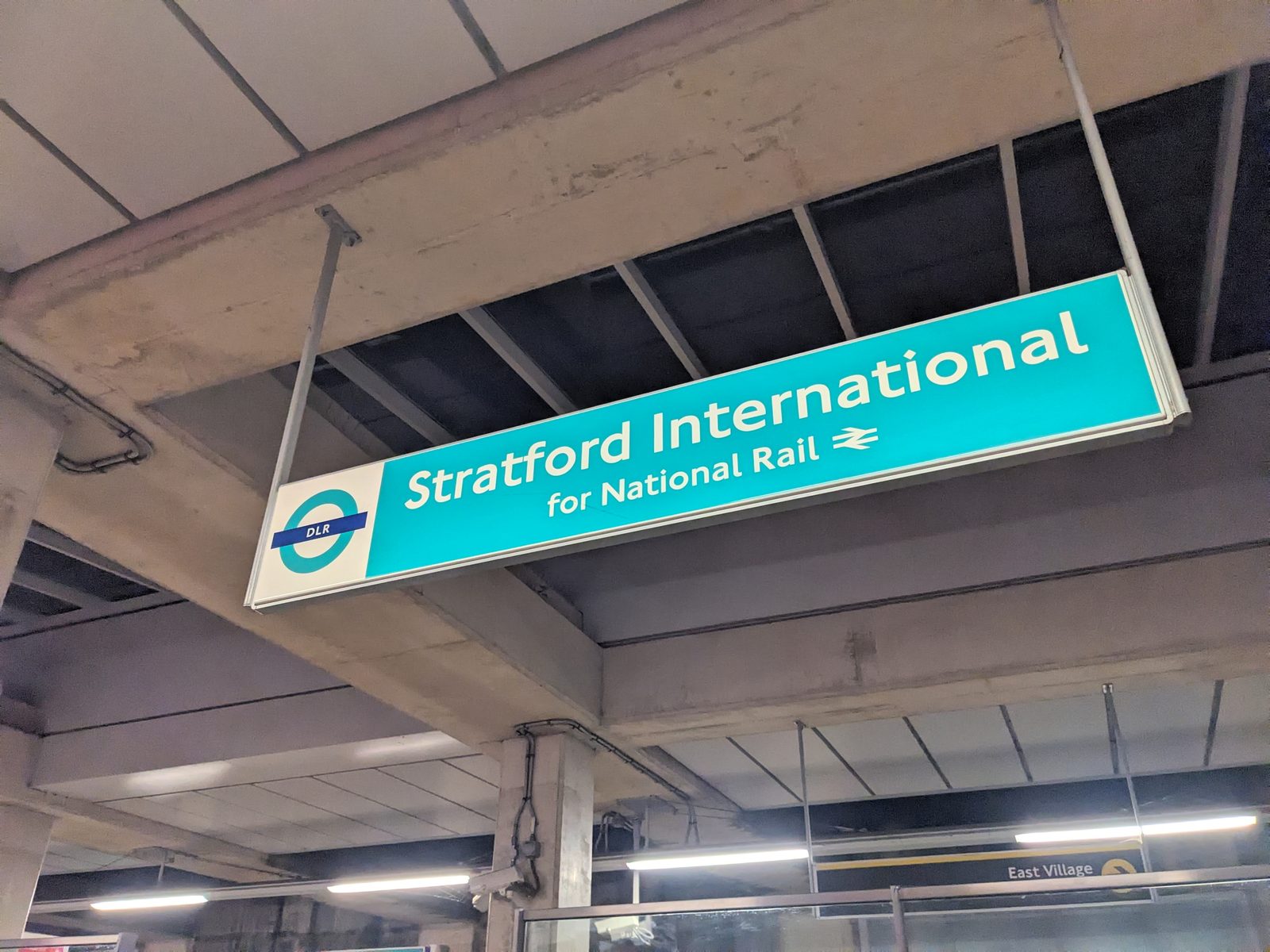
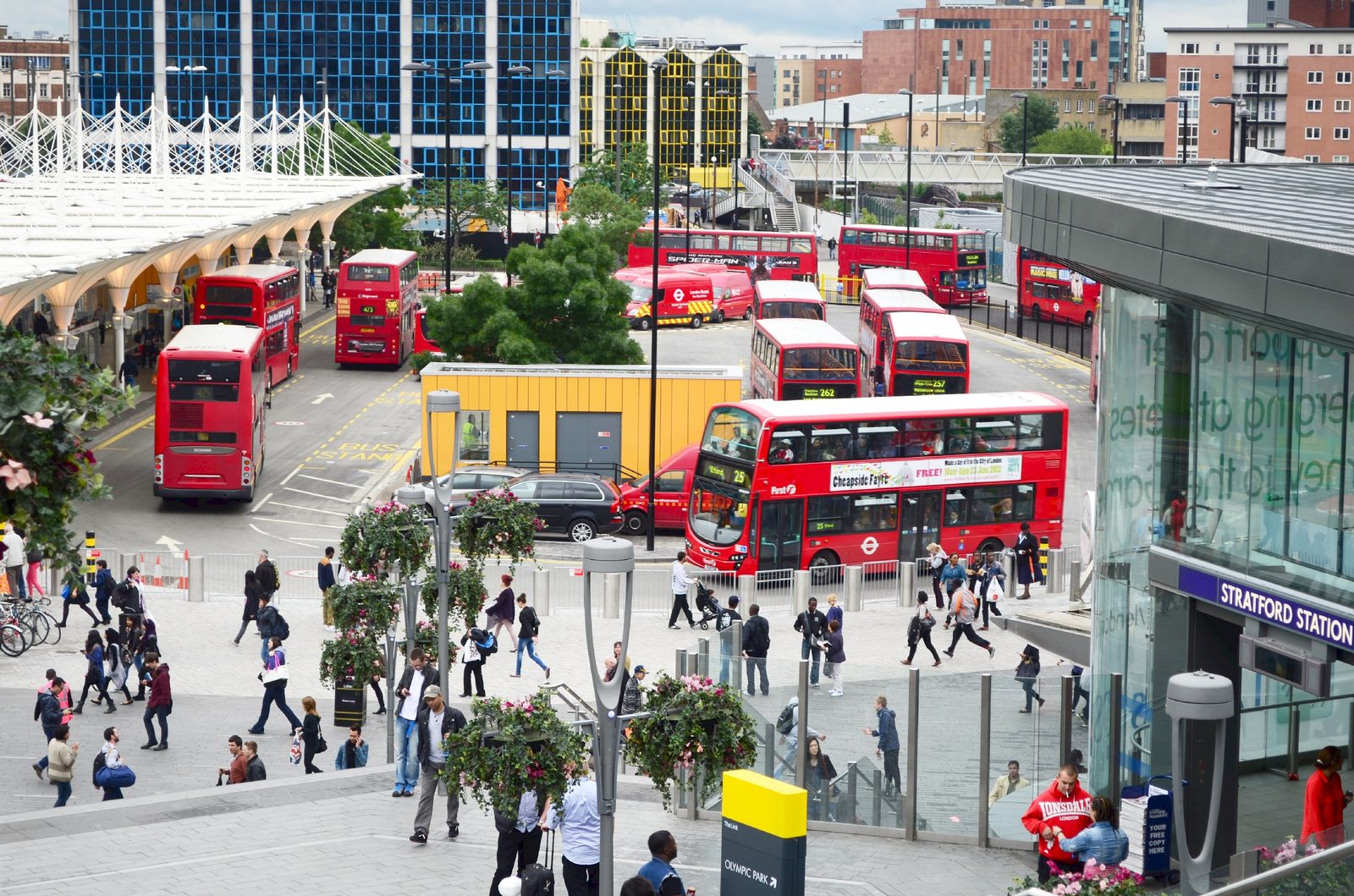
A Saturday morning at Queen Elizabeth Olympic Park
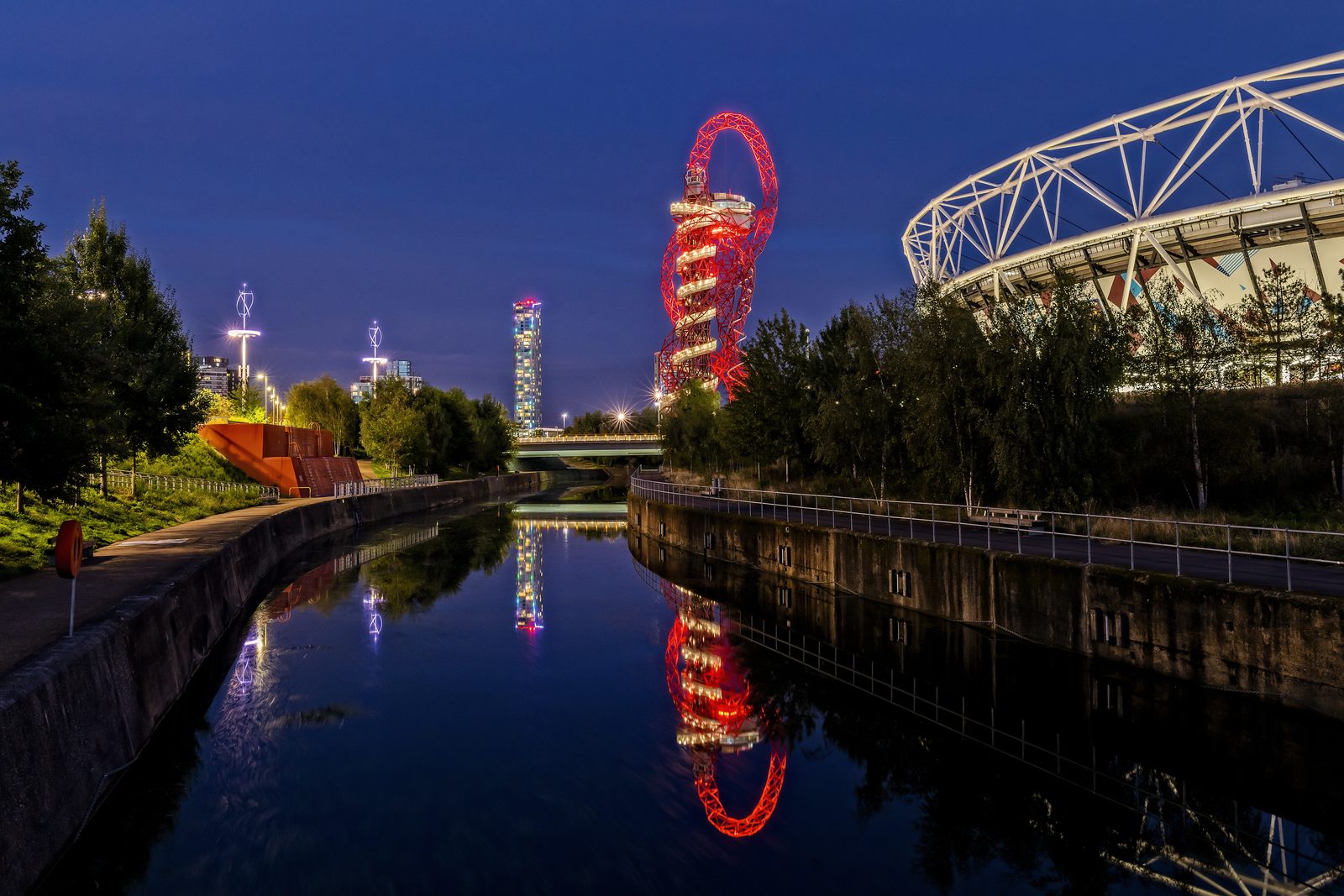
Walk out of Stratford station onto Chestnut Avenue at 10am on a Saturday, and the first thing you notice is the space. Olympic Park Stratford is dramatically different from the E15 residential streets or the commercial station area — it transforms the neighbourhood experience entirely. Unlike the claustrophobic Westfield, the Olympic Park opens up. Families with buggies, joggers, cyclists, dog walkers — everyone has room to spread. The paving is clean, the signage is clear, and the atmosphere is immediately calmer than you left (the station itself is heaving, but 200 metres north of the exit, you’re effectively in a different London). Living in an area with Olympic Park Stratford on your doorstep is a major lifestyle advantage.
If you head north-west towards the ArcelorMittal Orbit and the Timber Lodge café (the Orbit is visible from most central points, a copper-coloured helical sculpture 114 metres high), the path takes you past the wildflower meadows. In spring and early summer (April–July), these are genuinely spectacular: native wildflowers attract bumblebees, and the grass is tall enough that you lose sight of the developments behind. It’s not countryside — you can still hear the South Circular in the distance — but it’s surprising and pleasant. The Timber Lodge café (run by the park’s catering team) serves good coffee and sits directly on the canal, with tables overlooking the water and the adjacent wetlands. A Saturday coffee here, watching the narrowboats and the birdwatchers, is a genuinely pleasant hour.
Continue east along the canal towpath (the Hackney Cut and then the Hertford Union Canal) and you’re on a route that locals actually use for recreation, not just transport. The path is traffic-free, well-lit, and surprisingly varied — sometimes tight between the water and industrial buildings, sometimes opening into ponds and reed beds. The journey towards Hackney Wick (about 45 minutes walk from the café) passes the Bridge Stratford Arts development (artist studios and event spaces) and small independent pubs and cafés clustered around Hackney Wick overground station. This is the “hidden” Stratford that tourists never see; it’s the route locals take on weekends when they want air and water without leaving the neighbourhood.
The contrast: walk south from the station, and you’re in the Westfield precinct or the old Stratford Centre. Westfield is climate-controlled, brand-saturated, and soulless in the way all luxury shopping centres are. The Stratford Centre is older, more worn, more “local” — it hosts independent market stalls and small grocers alongside chain retail. Both are functional, neither is welcoming.
After dark
Stratford at night (8pm–11pm) splits into distinct zones. The station concourse and Westfield are busy, lit, and feel safe (though crowded on Friday nights). The Olympic Park is closed to through-traffic after dusk, though residents can access residential areas via gated routes. The residential E15 streets are quiet and well-lit (street lighting has been upgraded in the past three years). The E20 new-build blocks are exceptionally safe (gated, key-fob access, CCTV, security presence).
The old Stratford high street (around Stratford town centre, Stratford Centre) quiets down significantly after 8pm. A few chain restaurants stay open (Prezzo, Frankie & Benny’s, scattered cafés), and there are pubs, but the sense of people and activity drops sharply. If you’re seeking “things to do” on a Wednesday night in Stratford, your options are: a chain restaurant, a multiplex cinema, the Stratford Circus arts venue (small live theatre, 300 seats, variable quality), or a pub. This is not a lively evening destination the way Walthamstow or Hackney are. Many residents view Stratford as a place to live and commute from, not a place to socialise locally.
The East Bank cultural quarter is not yet fully operational (V&A East opens 18 April 2026; BBC Music Studios late 2026/early 2027). When operational, this will change the after-dark dynamic significantly — expect evening visitors, cultural events, and restaurants opening to service the venues. For now (and for the next 12 months), the evening scene in Stratford is limited.
Five places locals actually use
-
Timber Lodge Café (Queen Elizabeth Olympic Park, canal-side) — Locals go here for weekend coffee and a pause. The park backdrop and the water make it feel like a break from London rather than another coffee shop. Opens 8am–5pm daily.
-
Haugen (East Village, Olympic Park) — The only proper sit-down restaurant on the Stratford side of the park. Alpine-themed (raclette, fondue, modern Scandinavian), it draws a mix of residents, visitors, and date-night couples. Expensive (mains £16–£26), but the standard is high. Opens for lunch and dinner (Haugen website, 2026).
-
The Cow (Westfield, near Stratford station) — A Young’s gastropub (part of the bigger Young’s chain but with quality standards). Good for a group dinner before heading elsewhere. Does a reliable steak and proper ales. The Westfield location is slick and cold, but the food is solid (The Cow Westfield website, 2026).
-
West Ham Park (borders E15 and E7, 10-minute walk south of station) — Not strictly “in” Stratford, but locals use it constantly. A proper Victorian park with a walled garden, tennis courts, and a café. Sunday parkrun starts from the café at 9am (free). This is where Stratford families actually spend Saturday mornings (West Ham Park Trust website, 2026).
-
Stratford Circus (small arts venue, Stratford high street) — Local theatre and live performance space (seating 300–400). Quality is variable, but it’s the only dedicated venue for small theatre, dance, and comedy in the area. Worth checking the program if you like experimental work (Stratford Circus website, 2026).
Stratford through the seasons
Spring (March–May): The Olympic Park wildflower meadows are in full bloom (April–June especially); the park is genuinely beautiful. The canal towpath is lush and attracts birdwatchers. The weather is mild, and the park is busy with families and joggers. This is the peak season for moving and viewings, and you’ll see the area at its best.
Summer (June–August): Warm and crowded. Westfield footfall is at its highest (school holidays). The outdoor spaces (Olympic Park, West Ham Park, the canal) are at capacity on weekends. The Timber Lodge Café is packed. It’s pleasant weather but not a unique experience.
Autumn (September–November): Quieter than summer, still pleasant. The park’s tree-lined walks are good in October (though Stratford isn’t particularly known for autumn colour). The weather turns grey and damp by November. The return-to-school period (September) brings a noticeable lift in the neighbourhood (young families returning from holidays).
Winter (December–February): Cold and grey. The park is muddy. The canal towpath is less appealing (dark by 5pm, wet). The shopping centres (Westfield, Stratford Centre) become the focal point for social activity. December has some seasonal atmosphere (Westfield does Christmas decorations well). By January, the neighbourhood can feel bleak.
Source: Google Maps, OS Open Greenspace & editorial research, 2026

Six rail lines, the 560-acre Olympic Park, and V&A East now open — Stratford's Zone 2/3 fundamentals are hard to match in east London.
Stratford is east London’s most transformed neighbourhood — it barely existed 15 years ago. The median sold price is £440k (HM Land Registry, 12 months to March 2026), competitive for a place this well connected.
Stratford scores 50/100 on the PAL Score — our weighted rating across six core criteria that define what makes a London neighbourhood work for buyers.
Score Breakdown
| Criterion | Score (/100) | What it means |
|---|---|---|
| Transport Connectivity | 82 | 7 transport lines (Elizabeth, Jubilee, Central, DLR, Overground, National Rail). Farringdon 10 min, Paddington 13 min. Exceptional connectivity for Tier 2. |
| School Quality | 38 | 17 Outstanding schools within 1.5–3 km. 8 Outstanding primaries, 9 Outstanding secondaries. Rare density in outer London. |
| Safety | 6 | In line with outer London average. Minor property crime and anti-social behaviour in station area; residential areas quieter. Low violence. |
| Property Price Affordability | 64 | £440k median; decent rental market. But limited period stock, new-build service charge risk (£250–400/month), leasehold complications. |
| Green Space Access | [score pending] | Olympic Park adjacent; West Ham Park nearby; limited inner-neighbourhood parks. Good but not exceptional. |
| Local Amenities | [score pending] | East Bank cultural opening (V&A East 18 April 2026; BBC Music Studios late 2026). Limited local social scene; nightlife minimal. Functional rather than distinctive. |
Scores use the PAL 0–100 scale based on z-score normalisation across all London neighbourhoods.
What This Means
Transport (82/100) and schools (38/100) are Stratford’s headline strengths. Seven transport lines and a 10–13 minute commute to Farringdon/Paddington is genuinely exceptional for outer London. The school density — 17 Outstanding schools within walking/short-bus distance — is rare and valuable for families.
The trade-offs centre on affordability (64/100) and character. While prices (£440k median) are reasonable relative to location, new-build service charges (£250–400/month) erode net affordability. The neighbourhood remains functional and pleasant rather than distinctive; community character lags comparable areas (Hackney, Walthamstow).
Stratford suits commuters seeking exceptional transport connectivity, families prioritising school quality, and investors comfortable with new-build service charges. If you need established local character, nightlife, or lower prices, look at Walthamstow or Leyton instead.
Readers enjoying Stratford's Zone 2 to 3 mix often look next at Peckham, the south-London answer to its east-side creative energy — another guide where rail anchors the commute and the high street does the heavy lifting.
✓ Ideal For
✗ May Not Suit
💰 Value Assessment
At a median sold price of £440k (HM Land Registry, 12 months to March 2026), Stratford undercuts most Zone 2 areas with comparable transport. Flats average £377k — well below the Zone 2 average — and terraced houses at £548k provide family optionality at a fraction of inner-east prices. Entry-level flats from around £112k are remarkable for a station served by six rail lines. Newham’s £1,856 Band D council tax is among the lowest in inner London.
🔮 Future Outlook
Stratford’s cultural momentum continues. V&A East opened on 18 April 2026, Sadler’s Wells East is already open, and BBC Music Studios follows in 2027 — together completing the Mayor of London’s East Bank cultural investment. International Quarter London continues driving office migration east. The borough-wide ONS House Price Index has Newham down 6.1% in the year to January 2026 — the steepest fall of any PAL borough — but our own Land Registry refresh shows the local headline median modestly up on the prior period, leaving the picture broadly flat.
Our Recommendation
Who's Stratford for?
Stratford could be a strong fit if you:
- Commute to the City or Canary Wharf. Liverpool Street in 10 min, Canary Wharf in 9. Six rail lines under one roof — Central, Jubilee, Elizabeth, DLR, Overground, National Rail.
- Want a flat at Zone 2/3 prices. Stratford flats average £377k (Land Registry) — below most Zone 2 alternatives. E20 is BTR new-build; E15 older Victorian stock.
- Are excited by the East Bank cultural quarter. V&A East and Sadler’s Wells East both opened spring 2026; BBC Music Studios follows late 2026. Stratford is becoming a culture destination.
- Have school-age children. Six+ Outstanding primaries within 1.5 km (Colegrave, Earlham, Davies Lane) — rare in outer London. Olympic Park’s 560 acres for outdoor play.
This probably isn’t for you if:
- Want period character and a quiet street. Stratford is mostly new-build (E20) or busy older stock (E15). For Victorian terraces with character, Walthamstow or Hackney are better.
- Prioritise low crime stats. Stratford runs 103% above the London average — but theft and pickpocketing (45% of crime) are concentrated around Westfield and the station, not residential streets.
- Want established local character. Stratford is transient — E20 turnover is high; the older E15 areas are more stable but less affluent. Not a “village” feel.
- Want a walkable independent evening scene. Westfield is the social anchor — it’s a shopping centre, not a high street. Hackney, Walthamstow or central London for proper nights out.
- Are wary of new-build service charges. E20 leasehold flats commonly carry £250–£400/month service charges, often with major-works hits at year 12+. Get the reserve study before committing.
The Real Picture
Stratford is for people who choose connectivity and value over established character. Seven transport lines, the East Bank cultural quarter coming online, school catchments rare in outer London, and Zone 2/3 prices that beat Hackney or Walthamstow. But it’s a transformed neighbourhood, not a found one — most of the housing is new-build, Westfield is the social anchor, and the headline crime statistics are inflated by station and shopping-centre footfall rather than residential risk. If transport, schools and price matter more than period character or walkable nightlife, Stratford rewards the trade-off. If you want a found neighbourhood with deep roots, Hackney or Walthamstow are better starting points.
Moving to Stratford: The Practical Side
Removals, van access, and parking
Most E15 residential streets are narrow Victorian terraces with on-street parking only. A removal lorry cannot access the width of some streets (average 4.2 metres for a 7.5-tonne, but older streets are narrower — Orford Road, St Mary’s Road are particularly tight). Ask your removals company to survey the street before booking. If the van can’t access, you’ll need to hand-move from a nearby permit car park or street, adding £500–£1,000 and a day to the move.
The E20 areas (East Village, Athlete’s Village, other new-build blocks) have managed access and designated loading bays. However, many enforce strict concierge-controlled loading hours: typically 08:00–17:00 on weekdays only, with weekend access charged at premium rates (£100–£300) or restricted entirely. Contact the building management at least 4 weeks ahead of your move to book a slot. Westfield apartment blocks have particularly strict loading protocols — you may be limited to a 2-hour window, and multiple trips may be required for larger moves. Factor in a £200–£600 loading/supervision fee depending on the building’s concierge charges.
Skip permits: if you’re disposing of building waste during a renovation, you need a skip permit from Newham (£55 for a week, £110 for two weeks). The street must have sufficient width for a skip; clamped skips on narrow E15 streets cause complaints and can be removed by the council (Newham Council environmental crime team, 2025). In new-build blocks, skips must be positioned in designated service bays — contact building management before applying for a permit.
Utilities transfer and broadband
-
Electricity, gas, water: Transfer online with your supplier (usually 7–10 days). Gas is on mains in all of Stratford. Water is metered (you pay per cubic metre, not flat rate). There is no gas appliance issue or water quality issue unique to Stratford (standard London utility infrastructure).
-
Broadband: Stratford is well-served by fixed-line broadband. Standard FTTP (Fibre to the Premises) availability is 85%+ in E20 areas and 60–70% in older E15 streets (Ofcom Broadband Report, 2025). All areas have at least FTTC (Fibre to the Cabinet) as backup, which provides 30–40 Mbps (adequate but not fast). If high-speed broadband is a must (video calls, streaming, online gaming), check availability for your specific address with Openreach, Virgin Media, or Ask4.net before exchange.
Registering with a GP and NHS services
Stratford is in the Newham Clinical Commissioning Group (CCG) and served by Newham primary care. The primary care situation is tight (capacity shortage common to outer East London). You should register with a GP as soon as you exchange; waiting lists vary (4–8 weeks typical). Recommended GPs in Stratford include:
- Forest Gate Health Centre (Forest Lane, E7, 0.6 km from station) — consistently good ratings, longer wait times (8+ weeks). Online booking available. Tel: 020 8534 1234.
- Colegrave Medical Practice (near Colegrave Primary, E15) — smaller practice, shorter wait (4–6 weeks). Mixed online and phone appointments.
- Stratford Medical Centre (Leyton Road, E15) — accessible by bus 25 or 238. Open for new registrations (as of April 2026).
The nearest A&E (accident and emergency) is Whipps Cross Hospital (Walthamstow, 3 miles, 15–20 minutes by bus or taxi). This is relevant if you have chronic conditions or frequent acute needs. The NHS 111 service is your first port of call for out-of-hours advice.
Dentist availability is also tight. NHS dentist places in Newham are oversubscribed; you may need to go private (£18–£50/month for private dental plan). Register with a dentist early (many NHS dentists aren’t taking new patients).
School admissions timeline and in-year process
If you’re moving into a school term (not September), apply to Newham’s in-year admissions for a mid-year place. Timescale: 10–15 working days from application to offer (if places exist). The best schools fill quickly; don’t assume your Outstanding primary of choice has places (Newham Council in-year admissions, 2025–26).
For September reception entry, the process begins in September of the year before (so September 2026 for September 2027 entry). Application deadline is January of the entry year. Allocation happens in April. This is normal for England (not a Stratford-specific process) but crucial to plan around if your move is timed to a school year.
Council tax transfer and single-person discount
- Council tax move: Notify Newham Council within 30 days of your move. You can do this online (Newham website). Your liability starts from your move date, not when you notify (don’t delay). If you’re moving from another London authority, they will adjust your charges accordingly.
- Single-person discount: If only one adult is living in the property, you’re eligible for a 25% discount (in practice: band D £1,816 becomes £1,362). This is automatically applied if all residents are single, but you need to declare it when you register (most people forget and then claim retrospectively for back-years). Apply immediately to avoid overpayment (Newham Council, 2025–26).
Frequently Asked Questions
Common questions about living in Stratford, answered with data from our research.
Yes, in most residential areas. The station concourse and streets within 5 minutes of Westfield are busy and lit; walking home from there at 11pm is safe in groups and manageable alone if alert. The quieter E15 residential streets are less busy but well-lit and generally safe; the risk is very low compared to central areas. Avoid the station underpasses at night. Overall, Stratford is in line with average outer-London safety.
For primary school catchment: Henniker Road (Colegrave Primary), Earlham Grove (Earlham Primary), St Mary’s Road (Sandringham Primary). For modern amenities and safety: the E20 residential blocks (East Village, Athlete’s Village) and the new-build phases. For character and lower density: the quieter E15 streets backing onto West Ham Park (Orford Road borders, Rosier Road). Avoid streets with heavy traffic (High Street, Forest Lane) if you have young children.
Yes, but it already gentrified (2012–2020). The current phase is consolidation and completion of the East Bank cultural quarter (2026–2027). Prices have stabilized since the 2022 peak. The E15 areas are seeing slower, organic change (independent cafés appearing, fewer boarded shops). The E20 areas are already fully gentrified and now mature. Gentrification risk is low from this point; you’re buying into an established regeneration area, not speculating.
Noise is variable by address. E20 apartment blocks have reported thin walls and sound-bleed from neighbours (common in new-build). E15 terraces have street-level noise (traffic, buses) on busier roads, quiet on residential side-streets. The station concourse (especially Jubilee platform) can be loud, but that’s distance-dependent. Nightlife is limited in Stratford itself (there isn’t a bar district); the area is quiet after 11pm except for Westfield and the station. If you’re seeking lively evenings, buy elsewhere; if you want to sleep, Stratford is fine except on the noisiest roads.
Yes, if you rely on on-street parking in E15 terraces. No, if you accept paid parking (private bay, car park) or don’t have a car. The first permit (£103/year) is cheap, but on-street spaces are scarce on popular streets (Orford Road, St Mary’s Road). If you’re not a car person, the transport makes it unnecessary and you’ll save money and stress.
Rush hour (7.30–9am, 5–7pm) is crowded but fast. The Elizabeth line and Jubilee are packed (expect standing) but maintain their stated frequency. The Central line is equally crowded. Off-peak (10am–4pm) is significantly quieter and more pleasant. Late evening (after 9pm), service thins (10-minute frequency instead of 5-minute), and minicabs/night buses become the primary option. The station concourse at 8.30am is genuinely rammed (220 trains per hour leaving peak period); if you commute that hour, budget for crowding and expect occasional delays.
Canning Town is pricier (median £420k vs £385k), has newer stock, and is more BTR-dominated. Stratford has better schools (17 Outstanding vs fewer) and more diverse housing mix. Canning Town is closer to Canary Wharf; Stratford is more balanced for multi-destination commutes. Canning Town feels newer and shinier; Stratford feels more mixed and established. Both have similar transport and safety profiles. Canning Town is the investor’s choice; Stratford is the family’s choice.
Approximately 65–70% leasehold (mostly new-build E20 and converted E15 flats). Freeholds are rare (mostly Victorian end-of-terraces and a few post-war semis). If you want a freehold house without major service-charge risk, you’ll struggle to find one in Stratford; you’d need to look at detached stock (very limited and expensive) or further east (Canning Town, Ilford).
Yes, Newham has capacity constraints. Registration times are 4–8 weeks. NHS dentist places are oversubscribed. For acute needs, use NHS 111; they can triage and direct you to available services without needing a registered GP. For routine care, register immediately upon exchange; do not wait until after moving day (you will face delays).
Yes. West Ham Park (south of Stratford) is excellent (large, safe, formal dog run, no restrictions). Queen Elizabeth Olympic Park is dog-friendly on designated routes (leads required in some areas, off-lead in others). The canal towpath is dog-friendly. The neighbourhood has good parks and a dog-friendly culture. Veterinary services: Newham has multiple vets; Angell Paws (Stratford) is a well-regarded local practice.
Data from HM Land Registry, Ofsted, Metropolitan Police & TfL. Last updated 15 May 2026.
Moving to Stratford?
Get our free moving checklist and local tips delivered to your inbox.
No spam. Unsubscribe anytime.