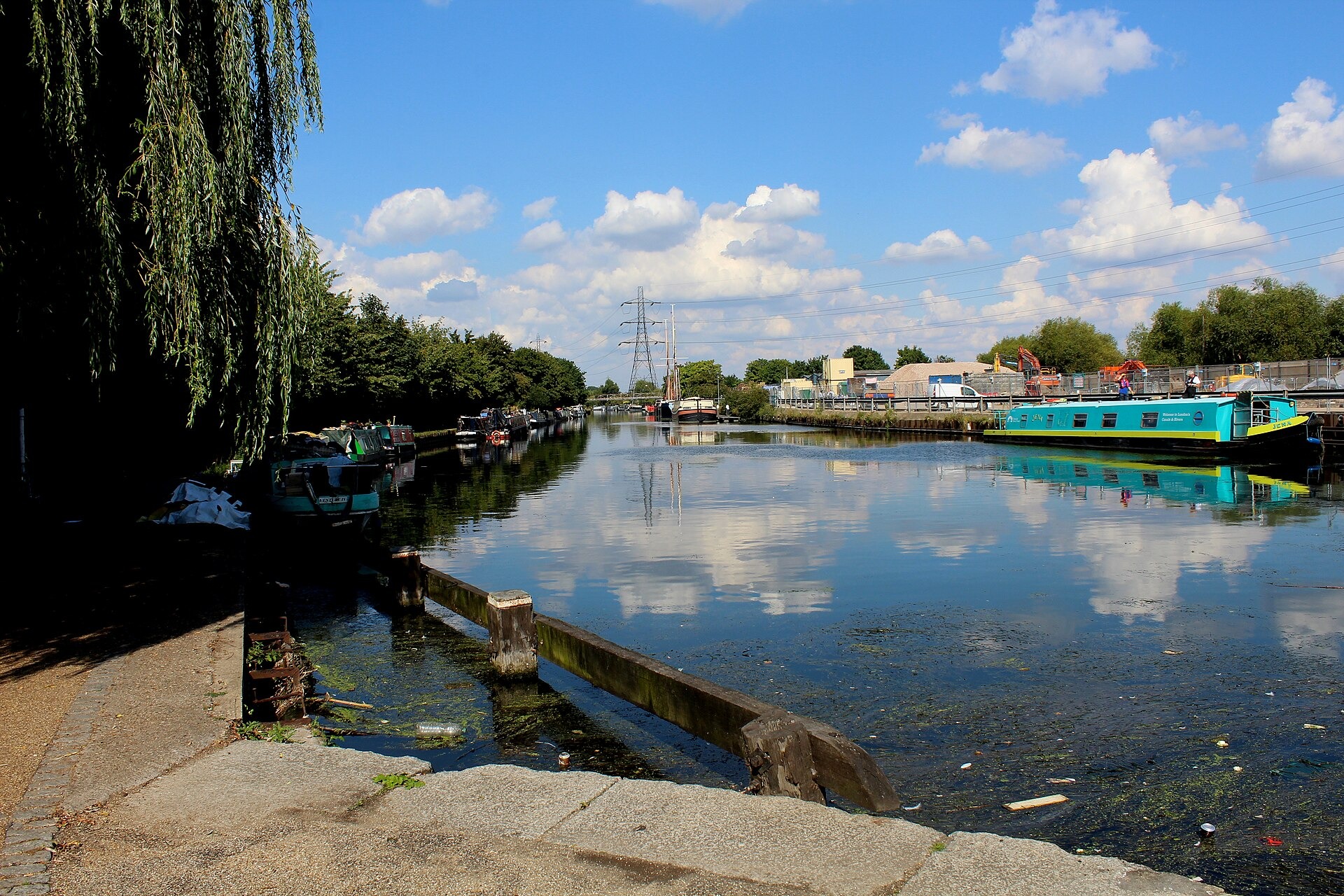
Property Prices in Tottenham Hale
Source: HM Land Registry Price Paid Data — median sold prices over a rolling 12-month window
What Your Budget Buys
Source: HM Land Registry.
Market Snapshot
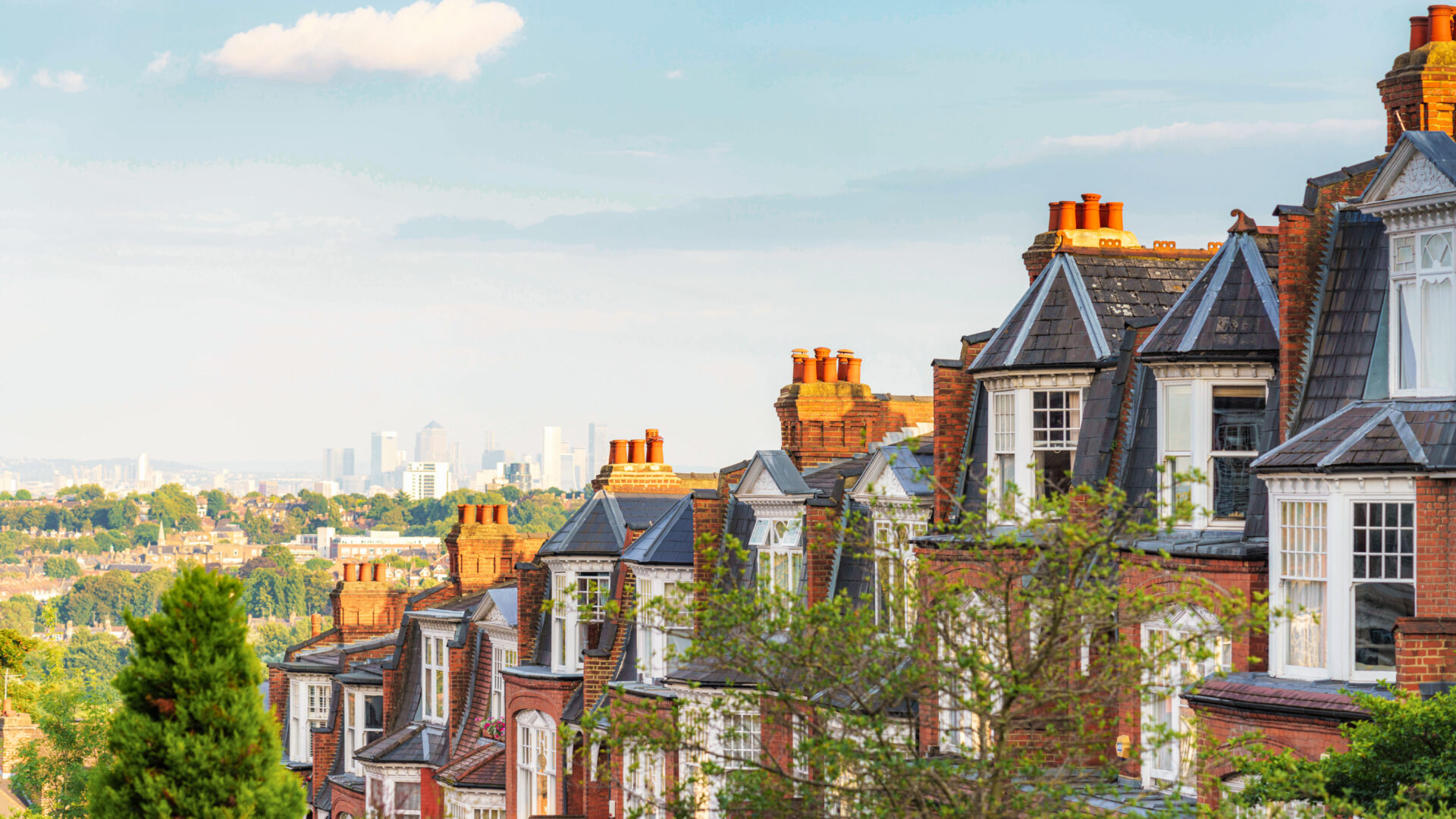
Tottenham Hale’s property market divides along a clear generational line. Hale Village and Hale Works — the modern flat developments clustered around the station — represent the regeneration face of N17: concierge access, roof terraces, integrated supermarkets, and the service-charge commitments that come with them. The Victorian and Edwardian terraced streets immediately west of the High Road offer a different proposition: whole houses rather than flat conversions, older fabric with more character, and considerably less monthly overhead once you own.
What makes the data here unusual for outer London is that flats and terraced houses change hands in near-equal numbers. Most outer London areas with a significant new-build element show a strong flat-to-house imbalance. Here, the terraced housing market is deep enough to stand as a genuine alternative to the new-build offer, not merely a footnote.
The overall median across all transaction types is £456k (HM Land Registry). Flats average £345k and terraced houses £552k — figures that represent materially more physical space per pound than comparable Zone 2 addresses, with a floor-area rate well below established inner London benchmarks.
Price Trends and Context
The trend over recent years has been downward from the regeneration-driven peaks of the early 2020s, with the market now consolidating around fundamentals (HM Land Registry). Interest-rate sensitivity has driven much of the recent softening. On a five-year view the trajectory remains positive — the regeneration cycle has added value even as the short-term trend is flat or down. The current market is not a discount play; it is buying into an established regeneration area where much of the uplift has already been priced in.
Semi-detached houses are a thin market with very few annual sales, so the £503k median for that type carries wide uncertainty and should not be treated as a reliable benchmark. Detached properties are effectively absent from the market here. Buyers seeking a standalone house need to look at neighbouring Tottenham addresses or further afield.
Cross-Area Comparison
Tottenham Hale sits at the more affordable end of Victoria line Zone 3 options, positioned by regeneration and transport rather than by established residential character. For live cross-area comparisons showing how Tottenham Hale prices track against Seven Sisters, Walthamstow, and other comparable north London addresses, the Price Explorer and the in-guide comparison widget reflect current Land Registry releases and are the correct tool — any table written here would be outdated within months of publishing.
Rental Yields
Two-bed flats in Hale Village achieve gross rents of approximately £1,700–£2,100/month; in older High Road conversion flats, £1,400–£1,800. Gross yields on new-build stock run at 5–6%, but service charges — typically £200–£350/month on Hale Village developments — compress net returns significantly. Older stock with lower overhead delivers better net yields at similar or lower rent. Tenant demand is consistent: Victoria line access keeps voids short and draws a broad renter base. The key risk for investors buying near the Lea Valley is flood insurance: properties in the highest-risk flood zone may attract specialist cover requirements from lenders, which affects both acquisition finance and resale marketability (Environment Agency, NaFRA2 data — 29% of N17 properties assessed at High flood risk).
Who’s Buying Here
Three buyer profiles account for most activity. Commuters targeting King’s Cross and Victoria value the Victoria line’s speed above everything else; at this price point they are getting Zone 3 cost with travel times that compete with Zone 2 addresses several stops south. Families form the second cohort, drawn by the exceptional primary school provision — three Outstanding-rated schools within walking distance of the station. The third group is investors buying new-build flats, primarily in Hale Village and Hale Works, taking a view on the regeneration uplift still to come across the wider High Road West scheme while accepting the service-charge overhead.
How Tottenham Hale compares nearby
Median sold price, all property types, against the nearest comparable areas we cover.
HM Land Registry · prices last updated 5 August 2026
Schools in Tottenham Hale

🏫 Primary
🏛 Secondary
Brook House Primary School
Holy Trinity CofE Primary School
The Willow Primary School
Bruce Grove Primary School
Ferry Lane Primary School
Lancasterian Primary School
Lea Valley Primary School
Risley Avenue Primary School
St Francis de Sales RC Infant School
St Francis de Sales RC Junior School
St Paul's and All Hallows CofE Infant School
St Paul's and All Hallows CofE Junior School
The Devonshire Hill Nursery & Primary School
The Mulberry Primary School
Harris Academy Tottenham
Data: Ofsted, 2 September 2026
School Overview
Tottenham Hale is one of north London’s better-served areas for school quality at the primary and secondary levels. Within the N17 catchment, 4 schools hold Outstanding ratings from Ofsted — a ratio that places it in the top third of Outer London areas by Ofsted profile. Every school in the immediate area is rated Good or Outstanding; none is currently listed as Requires Improvement or Inadequate (Ofsted, June 2026).
Primary Schools
Three state primaries serving the N17 area hold Outstanding ratings:
- Brook House Primary School, 881 High Road, N17 8EY — Outstanding (Ofsted, July 2023). Approximately 0.3 miles from the station.
- Holy Trinity CofE Primary School, Somerset Road, N17 9EJ — Outstanding (Ofsted, October 2022). Voluntary aided Church of England school; faith criteria apply to a proportion of places — check the school’s admissions policy before assuming proximity alone is sufficient.
- The Willow Primary School, Adams Road, N17 6HW — Outstanding (Ofsted, May 2017). Note: this inspection is now nine years old. Readers placing significant weight on this rating should verify the school’s current Ofsted status at reports.ofsted.gov.uk before making housing decisions around it.
Good-rated primaries in the wider N17 area include Bruce Grove Primary School (Ofsted, March 2024), Ferry Lane Primary School (Ofsted, September 2023), Lancasterian Primary School (Ofsted, June 2023), Lea Valley Primary School (Ofsted, May 2023), and Risley Avenue Primary School (Ofsted, November 2022). The density of Good-rated provision means families who do not access an Outstanding primary still have solid alternatives within walking distance.
Secondary Schools
Harris Academy Tottenham, Ashley Road, N17 9LN, is the Outstanding-rated secondary serving the immediate catchment — rated Outstanding by Ofsted in May 2017. As with The Willow, the inspection date matters: nine years is a long gap, and current status should be verified directly. The school’s exam performance in the most recent national data is strong: Progress 8 score of +0.66 and Attainment 8 of 54.1, both above London averages; A-level average points per pupil of 25.35 (Department for Education, 2023–24 data). Academic outcomes are a more current signal than the Ofsted grade for prospective families.
Catchment Reality
Haringey operates a straight-line distance admissions model for community schools. Outstanding primaries fill on proximity, and in oversubscribed years the last-distance-offered for Brook House and Holy Trinity can be under 500 metres from the school gate. Buying on a street that looks close on a map may still leave you outside the effective catchment in a competitive year.
If a specific primary school is a deciding factor in your purchase, check the most recent last-offer distances via Haringey Council’s admissions booklet before committing to an address. The booklet is published annually at the start of the autumn term (haringey.gov.uk/admissions). In-year admissions for mid-year moves are handled by Haringey’s School Admissions team directly and depend on current vacancies.
Harris Academy Tottenham does not operate selective admissions or an entrance examination — distance is the primary criterion. In-year places are available when vacancies exist; contact the school or Haringey admissions for current availability.
Transport & Commute: Tottenham Hale
Commute Times
Source: TfL Journey Planner, 2026. All times are station-to-station (boarding to alighting); add 5–10 minutes for walking to your nearest station and waiting.
Rail and Tube
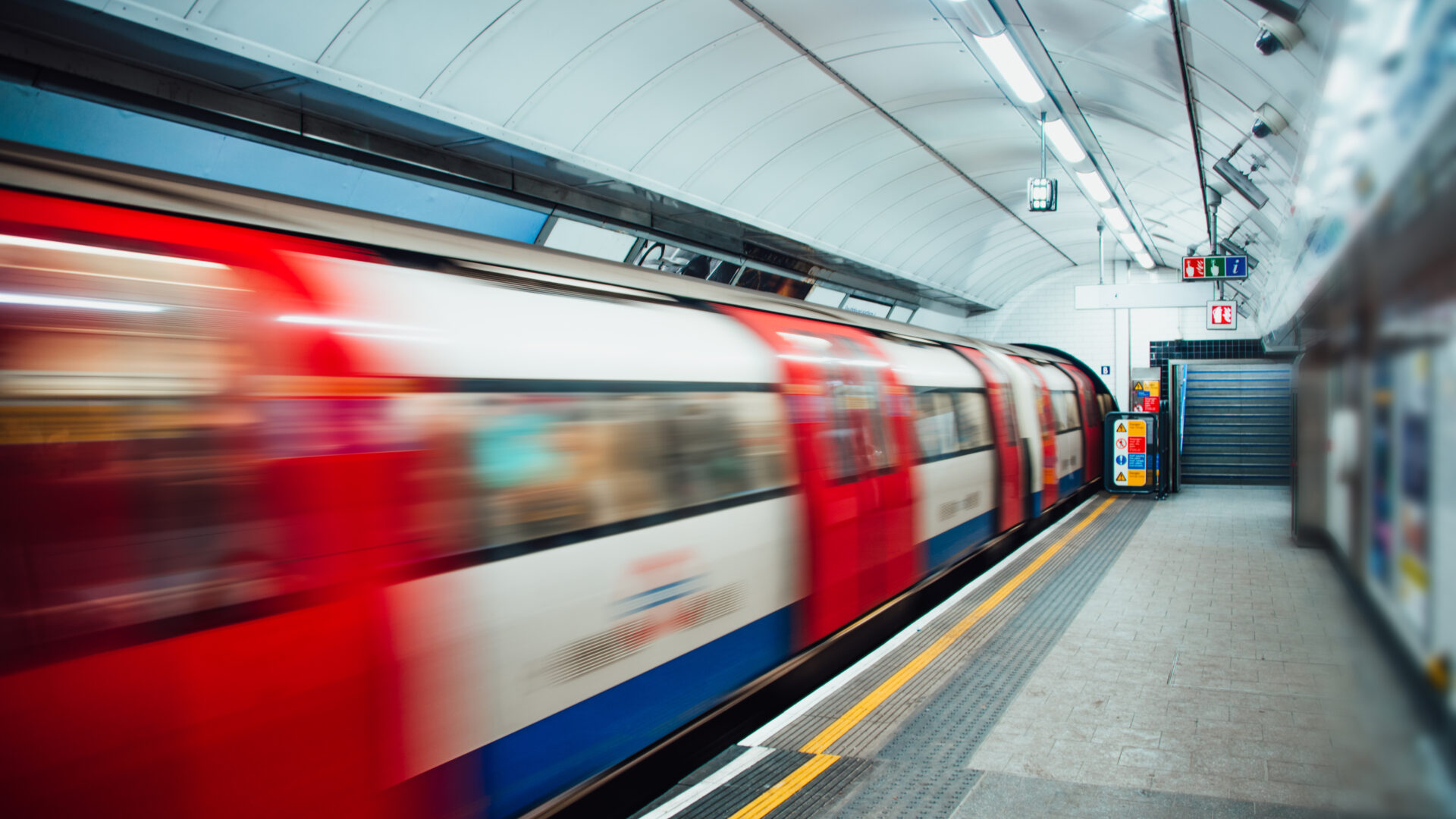
The Victoria line is Tottenham Hale’s defining transport asset. Northbound trains run to Walthamstow Central; southbound trains reach King’s Cross in 12 minutes and Victoria in 21 minutes (TfL journey planner, June 2026). Tottenham Hale is in Zone 3, which matters for monthly pass costs — but Seven Sisters, the next stop south, sits in Zone 2, and the distinction in travel time is one minute.
Greater Anglia national rail services run directly to Liverpool Street from the same station, taking 17 minutes — a fast City route that supplements the tube and serves an important financial district destination without requiring a change. London Overground services also call here, extending the area’s reach into the orbital network eastward to Stratford and northward toward Enfield.
Three modes from one station — Victoria line, Greater Anglia, and Overground — give Tottenham Hale a connectivity range that outperforms most Zone 3 addresses.
Bus Network
Buses along the A10 High Road corridor connect the area north to Wood Green and south through Stoke Newington towards Islington and the City. TfL’s journey planner (tfl.gov.uk) gives the current, definitive picture of routes serving a specific address; bus provision on the High Road changes more frequently than rail timetables and any route numbers listed here should be verified before relying on them.
Cycling and Walking
The Lee Valley Regional Park begins immediately east of the station, giving direct access to the Lea Valley cycle route — one of the quieter, traffic-free cycling corridors in north London, running through Tottenham Marshes and beyond. Cycling to Hackney, Stratford, or Walthamstow along this route is realistic for those comfortable with distance commuting. The Hale Village development has adequate cycling infrastructure and pavement-level connections; the High Road itself is more demanding, with some stretches requiring caution. TfL’s cycling map (tfl.gov.uk/modes/cycling) shows the full local network.
Walking to the station from anywhere inside Hale Village takes under five minutes. From the older terraced streets on the High Road side, the walk is typically seven to twelve minutes depending on address.
Commute Times
All times are station-to-station from Tottenham Hale (TfL journey planner / National Rail, June 2026). Door-to-door times will be longer depending on the walk to and from each station.
| Destination | Journey time |
|---|---|
| Victoria | 21 min |
| Bank | 29 min |
| Waterloo | 27 min |
| King’s Cross St Pancras | 12 min |
| Liverpool Street | 17 min |
| Canary Wharf | 28 min |
| Westminster | 27 min |
Crime & Safety in Tottenham Hale
Top Concern
Source: Metropolitan Police via data.police.uk · Population: ONS Census 2021 · Updated monthly
The Numbers
Tottenham Hale’s residential crime rate is 166 per 1,000 residents (the latest 12-month period, data.police.uk), 29% above the London average. On a severity-weighted basis, recorded crime runs 39% above the London average. The PAL Safety Score is 20/100 — a low mark that reflects real residential exposure. Violence and sexual offences is the largest single recorded category at 24% of total offences. The most recent 12-month trend is Falling (-9.4%): sustained downward movement from an elevated starting point.
What the Data Tells You
This is genuinely elevated crime relative to the London average — 39% on a severity-weighted basis, and 29% above the London average on a residential basis (166 per 1,000 residents), means the gap is real and extends across residential offence types, not just through proximity to a busy station or retail park. The Violence and sexual offences figure that dominates the category breakdown is an honest signal of the area’s risk profile: this is the category that most directly affects residents in their day-to-day lives. The falling trend over 12 months is the most positive data point available — a drop of this magnitude suggests that the physical changes associated with the Hale Village development (controlled access, improved street lighting, reordered street layouts) are having a measurable effect on recorded crime. One year does not establish a settled trend, but the direction is right.
Street-Level Context
The controlled-access residential blocks at Hale Village and Hale Works have their own security: entry phones, CCTV, and managed access throughout. This reduces the typical exposure residents face on street-facing terraced properties or older estates. The High Road corridor carries higher ambient risk than the managed-access blocks: the combination of pedestrian volume, late-night food and drink outlets, and the busy bus interchange creates the conditions the crime data reflects. The Tottenham Marshes end — particularly Ferry Lane and the approaches to the marshes themselves — is a different environment: low footfall, poor lighting, and isolated at night. Micro-geography matters here more than a ward average: where you live within N17 will shape your day-to-day experience considerably.
What Residents Say
The Tottenham Hale Metropolitan Police Safer Neighbourhood Team covers the ward. Their public panel meetings (held quarterly, dates at met.police.uk) provide the most current picture of which streets are flagging issues in any given period. The broad residents’ experience: Hale Village feels managed and comparatively secure; the older High Road streets have more variable day-to-day experience; the Marshes-adjacent and Ferry Lane areas consistently attract more caution after dark. Standard city habits — valuables out of sight, avoiding unlit routes alone at night, using well-lit station exits — carry more weight here than they would in a lower-crime area, and are worth internalising rather than dismissing.
Unlock the Complete Tottenham Hale Guide
You’ve seen the headline data. Get the full picture — detailed narratives, council costs, community character, and our editorial verdict.
- 🎓 In-depth school, transport & crime analysis
- 🏛 Council tax & parking costs
- 🏘 Community character & local vibe
- ⭐ Editorial verdict, value assessment & future outlook
- 📦 Moving practicalities
By unlocking, you’re happy for us to email you this guide plus the occasional helpful update from Property Around London. No spam — unsubscribe anytime.
Council Fees in Tottenham Hale
Council Tax (Annual)
| Band C | Band D | Band E |
|---|---|---|
| £2,057 | £2,314 | £2,828 |
Parking
Source: London Borough of Haringey, 2026
Council Tax Bands
The responsible local authority is the London Borough of Haringey. The 2026–27 council tax rates (Haringey Council billing register, 2026–27) for the most common bands in Tottenham Hale are:
| Band | Annual charge |
|---|---|
| C | £2,057 |
| D | £2,314 |
| E | £2,828 |
Most Tottenham Hale flats in Hale Village fall into bands C and D. Victorian terraced houses typically assess at bands D and E depending on floor area and condition. For the full band A–H schedule, including bands applicable to the smallest ex-council conversions, see the Haringey Council website (haringey.gov.uk/council-tax).
Local Authority Services
Haringey manages council services for N17. The council’s online portal (haringey.gov.uk) handles most routine transactions — council tax, parking permits, green waste registration, and bulky waste booking — without requiring an in-person visit. Phone lines experience high demand during business hours; online access is consistently faster for time-sensitive changes such as single-person discount applications.
The area benefits from Haringey’s North Tottenham regeneration investment, which has improved street-level public realm around the station and along Ferry Lane. The High Road West regeneration scheme — a longer-horizon programme covering a larger stretch of the High Road from the Tottenham Hotspur Stadium area northward — will bring further public realm improvement and new housing over the coming decade (London Legacy Development Corporation / Haringey Council, planning documentation, 2025).
Waste and Recycling
Haringey collects general waste fortnightly and recycling weekly (Haringey Council, 2026). Garden waste collection costs £67/year for a subscription; bulky waste collection (for larger items like furniture) is charged at £20 per item. Contact the council online to book a bulky waste collection at least five working days ahead of your preferred date.
Libraries and Leisure
The Haringey library network covers the borough; the nearest branch to Tottenham Hale station is Marcus Garvey Library on Tottenham High Road (Haringey Library Service — verify opening hours at haringey.gov.uk/libraries as these have been subject to change). Bruce Castle Museum, on Lordship Lane (approximately 1.3 miles from the station), is a Grade I listed building housing the borough’s local history archive; admission is free (Haringey Council, 2026).
For leisure facilities, Down Lane Park (0.2 miles from the station) has free-to-use tennis courts (registration required via Haringey’s Active Lives portal), football pitches, basketball courts, and an outdoor gym. Tottenham Marshes and Markfield Park (0.7 miles) provide further green-space leisure options. The Lee Valley Regional Park — of which Tottenham Marshes is a part — spans the full length of the Lea Valley and includes the Lee Valley VeloPark and the Lee Valley White Water Centre further north, accessible by regional Overground services.
Tottenham Hale Community Character
Source: Google Maps, OS Open Greenspace & editorial research, 2026

Victoria line to King's Cross in 12 min, 4 Outstanding schools, Zone 3 prices. Crime 39% above London average.
Tottenham Hale represents London’s most substantial ongoing neighbourhood transformation, anchored by the Victoria line’s direct City access in 29 minutes and coordinated regeneration creating new residential, retail, and public realm around the station.
How We Score
The PAL Score rates each neighbourhood from 0 to 100 across six criteria: transport connectivity, school quality, safety, access to green space, property value, and local amenities. Each criterion is scored on the same 0–100 scale using independently verifiable data — TfL journey times, Ofsted inspection results, Metropolitan Police crime data, Land Registry prices, Ordnance Survey green-space mapping, and OpenStreetMap amenity counts. The six scores are equally weighted to produce the overall figure; persona-weighted ratings (showing how the area compares for families, commuters, or investors specifically) are shown separately in the ratings section.
The Breakdown
| Criterion | Score | What it reflects |
|---|---|---|
| Transport | 63 | Victoria line direct to King’s Cross (12 min) and Victoria (21 min); Greater Anglia to Liverpool Street (17 min); Overground connections. |
| Schools | 51 | 4 Outstanding schools across primary and secondary; 100% Good or Outstanding within the catchment. |
| Safety | 20 | Crime 39% above the London average (severity-weighted; 29% above the London average on a residential basis); Violence and sexual offences is the largest single category. |
| Green Space | 55 | Tottenham Marshes (100+ acres), Down Lane Park, Markfield Park, and the Lee Valley Regional Park all within 0.7 miles. |
| Property Value | 59 | £456k median overall; flats average £345k; Zone 3 pricing with strong transport credentials. |
| Amenities | 42 | Hale Village retail cluster, Tottenham Hale Retail Park, and High Road independent food scene. |
Overall PAL Score: 48/100 — Fair.
What This Means for You
Transport and schools are Tottenham Hale’s genuine strengths. The Victoria line’s reach to King’s Cross in 12 minutes and the school quality at primary level are above what most Zone 3 addresses offer for the price. The area’s overall score of 48/100 is pulled downward substantially by the safety score — without that, the combined transport-schools-green-space-value picture would read considerably better. If your household’s priorities align with transport and school quality over low crime, Tottenham Hale represents a genuine value proposition at Zone 3. If safety is your primary filter, the score is an honest signal to explore lower-crime alternatives such as Arnos Grove or Walthamstow.
✗ May Not Suit
Buyers prioritising safety — the PAL Safety Score of 20/100 is a genuine reflection of severity-weighted crime 39% above the London average. Buyers wanting settled neighbourhood character and period streets away from active construction. Anyone with significant flood-risk concerns, especially for properties near the Lea Valley. Those seeking an established independent bar and restaurant scene rather than a developing one.
💰 Value Assessment
At £456k overall median (HM Land Registry), Tottenham Hale prices Zone 3 competitively — particularly for buyers commuting to King’s Cross or Liverpool Street, where the travel time advantage over cheaper addresses further out outweighs the cost difference. Flats average £345k and terraced houses £552k, at a floor-area rate that delivers genuine value by London standards. The regeneration programme adds a longer-horizon growth argument; the safety score (20/100) and High flood risk designation (29% of properties at risk, Environment Agency) are the credible downside risks that buyers should price into their decision.
Our Recommendation
Strongest case for families who prioritise Outstanding school access and City commute speed and can absorb the safety trade-off. The Victoria line places King's Cross within 12 minutes and the primary school provision is genuinely rare at this price point in north London. Go in with clear eyes on the safety score, commission a specialist flood risk report on anything near the marshes, and treat the regeneration timeline as a ten-year story, not a five-year one.
Who's Tottenham Hale for?
Tottenham Hale is likely to suit you if:
- You commute to King’s Cross or the City. King’s Cross in 12 minutes and Liverpool Street in 17 minutes from the same platform — two of London’s most important rail hubs within 20 minutes, without a change.
- School quality is your first filter. 4 Outstanding-rated schools across primary and secondary means genuine choice at both phases — unusual at this price point in north London.
- You want to buy into a regeneration story before it fully completes. The High Road West programme and the station-area transformation are live but not finished. The remaining uplift has not fully priced in.
- You want Zone 3 space at a price that Zone 2 won’t give you. Flats average £345k and terraced houses £552k, at a floor-area rate that buys materially more than comparable Zone 2 addresses a few stops south.
- Access to green space matters. Tottenham Marshes (100+ acres), the Lee Valley cycle route, and three parks within 0.7 miles of the station make outdoor access genuinely convenient rather than aspirational.
Think twice if you:
- Crime statistics are a primary concern. The safety score is 20/100 — an honest low mark reflecting 39% above the London average on a severity-weighted basis (29% above the London average on a residential basis). The trend is improving, but the starting point is elevated.
- You want a settled, character-rich neighbourhood. Active construction, a dominant new-build pocket, and a high street in mid-regeneration mean the area lacks the feeling of settled local character that older parts of Walthamstow or Hackney offer.
- You’re buying near the Lea Valley and flood risk is a concern. 29% of N17 properties are assessed at High flood risk (Environment Agency, June 2026). A specialist flood risk report is worth commissioning before exchange on any property within 0.5 miles of the marshes.
- You want a walkable evening scene. The restaurant provision is genuine (see the community section), but Tottenham Hale doesn’t have the density of independent bars and late-night social infrastructure that Hackney or Walthamstow provide.
The Real Picture
Tottenham Hale rewards the buyer who values speed to Zone 1, school quality, and space per pound above established character and low crime. The Victoria line makes King’s Cross genuinely close and Liverpool Street almost as fast. The school provision is legitimately strong — especially at primary level. What the area asks in return is tolerance of active regeneration, honest acknowledgement of the safety score, and careful flood-risk due diligence on properties near the Lea Valley. This is not a hidden gem or an undiscovered secret — it is a regenerating area where the transport and school case is real, the crime is real, and the remaining opportunity is tied to a regeneration programme with a long but credible timeline.
Moving to Tottenham Hale: The Practical Side
Council Tax
Register with Haringey Council within 30 days of your move date — liability begins from move-in, not notification date (haringey.gov.uk/council-tax). If you are the sole adult in the property, apply immediately for the 25% single-person discount; it is not applied automatically and you will otherwise overpay until you claim it. If you are moving from another London borough, Haringey will contact your previous authority to close the old account; you do not need to do this yourself, but keep a note of the date you vacated your previous address.
Parking
The N17 controlled parking zone (CPZ) operates Monday to Friday, 8am–6:30pm. A resident permit costs £55/year (first vehicle); a second vehicle permit costs £65/year; visitor vouchers are £5/day (Haringey Council, 2026). On-street parking in Hale Village is restricted — managed spaces in the development are available to residents but typically subject to separate annual charges through the building management. On the older High Road terraced streets, CPZ restrictions mean unregistered vehicles cannot be left kerb-side during operating hours without a penalty. Apply for your permit before you move if possible; permit turnaround from Haringey is typically five to ten working days.
GP Surgeries
There are 15 GP practices covering the N17 area, with 77.8% rated Good or Outstanding by the Care Quality Commission (CQC, June 2026). North Middlesex University Hospital on Sterling Way is the nearest major hospital — currently rated Requires Improvement by CQC (June 2026), which is relevant context for those with planned or ongoing secondary care needs. Haringey’s GP registration situation is better than many comparable north London boroughs; register as soon as you exchange rather than waiting until after moving day, and if your first choice practice is not taking new patients, Haringey’s NHS Clinical Commissioning team can help identify alternatives.
Utilities and Broadband
Gas is available on mains throughout N17. Water is metered across Hale Village and the newer development blocks; older High Road terraced properties may still be on unmetered supply — check your tenancy or title documents. Broadband availability in N17 is strong: FTTP (Fibre to the Premises) is available in Hale Village and across much of the newer development; older terraced streets may have FTTC (Fibre to the Cabinet) providing 30–80 Mbps, which is adequate for video calling and streaming. Check availability for your specific address at Openreach’s address-level checker or via Virgin Media before exchange if high-speed connectivity is a requirement.
Removals and Access
Hale Village and Hale Works have managed loading access with designated bays. Building management typically requires advance booking — contact the concierge or building management company at least four weeks before your move date, specifying the dimensions of your removal vehicle, as loading bays are sized and some larger lorries cannot access them. Weekend loading access may be restricted or charged separately.
The older High Road terraced streets have standard London on-street removals conditions: roads are wider than in some Victorian areas, but parking and double-yellow restrictions mean you will need a temporary parking suspension (Haringey Council) for the removal lorry. Apply online at least ten working days ahead; the council charges around £50–£80 for a standard parking suspension permit. If you are disposing of building waste, skip permits in the CPZ require council approval — apply via haringey.gov.uk/parking before arranging delivery.
Frequently Asked Questions
Common questions about living in Tottenham Hale, answered with data from our research.
That depends on your priorities, and the honest answer is: yes for some, no for others. The Victoria line access — King’s Cross in 12 minutes, Liverpool Street in 17 by Greater Anglia — is a genuine advantage that justifies the Zone 3 price for commuters who use those routes. The primary school provision is strong: 3 Outstanding-rated primaries within the N17 catchment. Against that, the safety score of 20/100 reflects crime 39% above the London average on a severity-weighted basis (29% above the London average on a residential basis; data.police.uk), and the area is still mid-regeneration rather than settled. Whether that trade-off works for you depends entirely on how you weight transport and schools against safety and character.
Tottenham Hale scores 20/100 for safety on the PAL Score — a low mark reflecting crime 39% above the London average on a severity-weighted basis (29% above the London average on a residential basis; the latest 12-month period, data.police.uk). Violence and sexual offences is the largest single category at 24% of recorded offences. The trend over the most recent 12 months is Falling (-9.4%), which is genuinely encouraging — and the controlled-access residential blocks at Hale Village have a notably different environment to the older High Road streets. The score is an honest signal that this is a higher-crime area than the London norm; it is not a reason to rule the area out entirely, but it is a factor to weigh honestly against the transport and school arguments.
The overall median is £456k across all property types (HM Land Registry, June 2026). Flats average £345k — from around £123k at the entry end up to £625k for the largest. Terraced houses average £552k, running from £220k to £1.10m at the top. The area delivers materially more floor area per pound than comparable Zone 2 addresses. Prices have softened over the past year but remain well above levels seen five years ago.
Strong at primary level: 3 Outstanding-rated primaries within the N17 catchment, with Brook House Primary (Outstanding, Ofsted July 2023) and Holy Trinity CofE Primary (Outstanding, Ofsted October 2022) being the most recently inspected. At secondary level, Harris Academy Tottenham holds an Outstanding rating (Ofsted May 2017, though that inspection is nine years old) and posted a Progress 8 score of +0.66 and Attainment 8 of 54.1 in the most recent national data (DfE, 2023–24). Catchment distances for the Outstanding primaries can be tight; check Haringey Council’s last-offer distance data before buying specifically for school access.
Very good for its Zone 3 position. The Victoria line runs direct to King’s Cross in 12 minutes, Victoria in 21 minutes, and Bank in 29 minutes. Greater Anglia trains to Liverpool Street take 17 minutes on the national rail network. Rush hour on the Victoria line is busy but fast — the line maintains frequency in peak periods. Off-peak is noticeably quieter and more comfortable. The main commuter caution: Tottenham Hale is in Zone 3, so monthly travelcard costs are higher than Zone 1–2 options; calculate your annual travel budget against the property price saving before assuming this is the cheaper route overall.
Yes, and it is material. The Environment Agency assesses 29.22% of N17 properties as being at High flood risk from surface water and rivers (Environment Agency, June 2026). The proximity of the River Lea and the Tottenham Marshes means properties on the eastern side of the High Road and in the Ferry Lane area are the most exposed. Before exchanging on any property within 0.5 miles of the marshes or the river, commission a specialist flood risk assessment from a qualified surveyor; a standard Level 2 survey may not flag flood risk in sufficient detail. Standard building and contents insurers may decline or charge significantly higher premiums on properties in the highest-risk flood zones — check insurance availability and cost before exchange, not after.
Yes. Tottenham Hale is within the Greater London Ultra Low Emission Zone (ULEZ), which covers all of Greater London. Drivers of non-compliant petrol vehicles (generally registered before 2006) or non-compliant diesel vehicles (generally registered before 2015) pay £12.50/day to drive in the zone. Exempt vehicles (electric, hydrogen, or compliant petrol/diesel) pay nothing. If you drive regularly and your vehicle is non-compliant, check at tfl.gov.uk/ulez before moving; the daily charge adds up quickly for non-compliant vehicles (Transport for London, 2026).
For families prioritising school quality and a Zone 1 commute at Zone 3 prices, it is one of the stronger options in north London — 3 Outstanding primaries and one Outstanding secondary, with 100% Good or Outstanding across all rated schools. For families prioritising a low-crime environment, settled community character, or period housing with gardens, there are better alternatives within Victoria line reach: Walthamstow and Arnos Grove offer lower crime scores and more established residential character at comparable or moderately higher prices. The flood risk note (29% of properties at High risk) is also particularly relevant for families with long planning horizons — flood risk and future climate conditions are a factor in a 20-year ownership view.
Data from HM Land Registry, Ofsted, Metropolitan Police & TfL. Page last regenerated 31 August 2026.
Moving to Tottenham Hale?
Get our free moving checklist and local tips delivered to your inbox.
No spam. Unsubscribe anytime.